Pool Resurfacing Cost in Florida (Marcite, Pebble & Tile)
Pool resurfacing cost in Florida by finish - marcite, quartz, pebble, tile - plus what a resurface includes,…
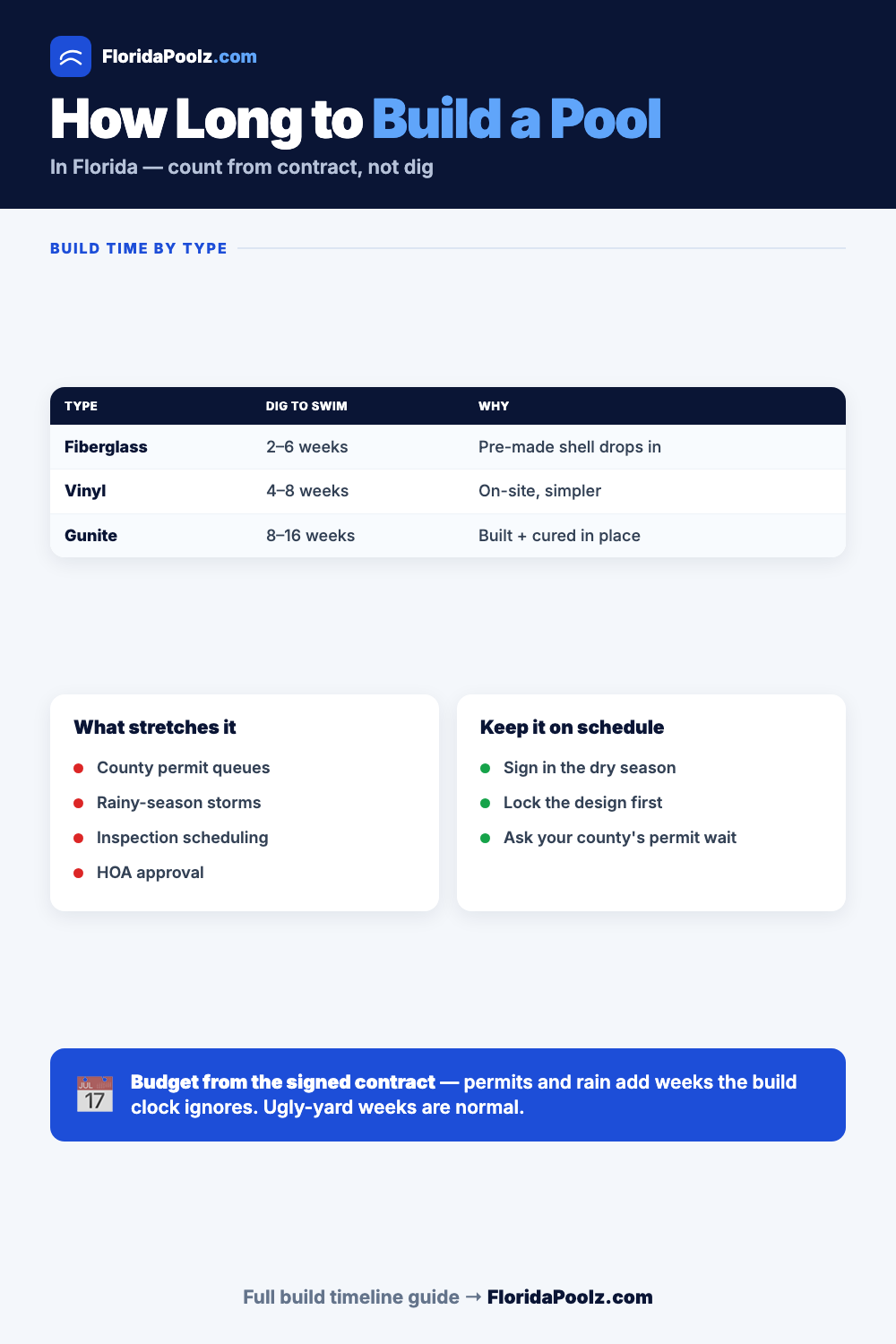
Read more →How long does it take to build a pool depends first on the type: a fiberglass pool can be swimmable in 2–6 weeks, a gunite pool typically takes 8–16 weeks, and vinyl lands in between. But those are the build-clock numbers — in Florida the real timeline is often longer, because permits, rainy-season weather, and county inspection queues stretch things in ways national estimates ignore. This guide walks the timeline stage by stage and names exactly what causes the delays here.
| Type | Build time (dig to swim) | Why |
|---|---|---|
| Fiberglass | ~2–6 weeks | Pre-made shell drops in; less on-site work |
| Vinyl liner | ~4–8 weeks | Built on-site but simpler than gunite |
| Gunite / concrete | ~8–16 weeks | Built and cured in place, many stages |
Add permitting time before the dig even starts — often several weeks on its own in Florida — and the calendar from “signed contract” to “first swim” is usually longer than the build-clock alone. Set expectations from the contract date, not the dig date.
A gunite build (the most involved) runs roughly through these phases — fiberglass compresses several into days:
The build clock is the optimistic case. Here’s what actually adds weeks:
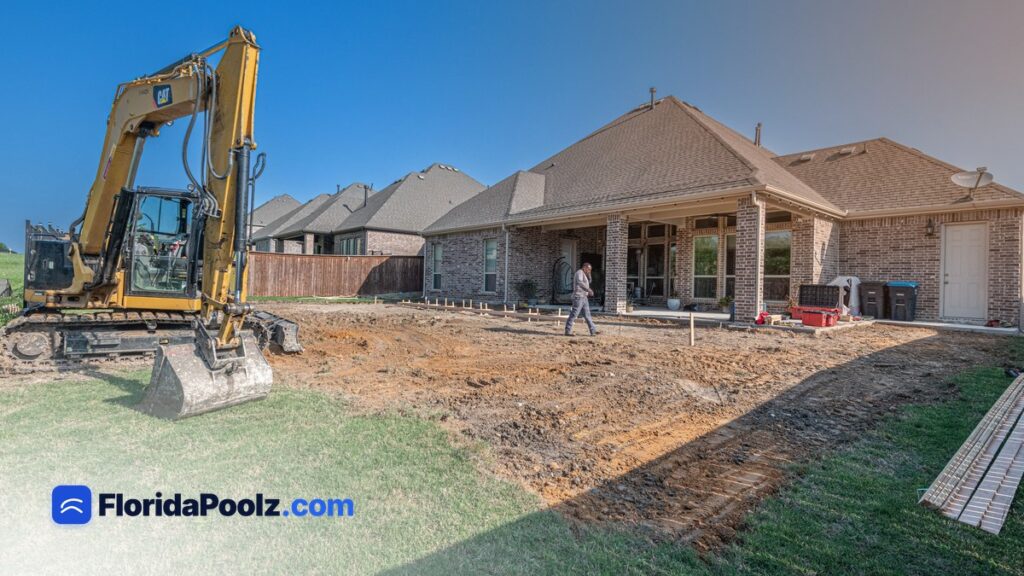
Every pool build goes through a phase where the yard looks like a disaster zone — a muddy hole, exposed pipe, a rebar cage, equipment stacked on the deck. This is normal, and in Florida a stretch of rain can park a build at “ugly” for longer than you’d like. A good builder tells you this up front. The gap between stages isn’t the crew slacking; it’s usually curing time, an inspection wait, or weather.
The realistic Florida takeaway: budget from signed contract, add buffer for permits and rain, and pick a builder who communicates when a stage stalls. Find license-verified Florida builders in the directory, and price the project with our cost guide.
Build time is roughly 2–6 weeks for fiberglass and 8–16 weeks for gunite — but count from the signed contract, not the dig. Florida permitting, inspection queues, and rainy-season weather typically add weeks on top, so the full contract-to-swim calendar runs longer than the build clock alone.
Usually permits, inspections, or weather — not the crew. Florida county permit queues vary widely, each build stage waits for a county inspector, and summer storms stall excavation, concrete, and decking. Curing time between stages also looks like “nothing happening” when it’s necessary.
Yes, clearly. The shell arrives pre-made and drops into the hole, collapsing weeks of on-site shell work into days — 2–6 weeks versus 8–16 for gunite. If speed is a priority, fiberglass is the faster route; see our fiberglass vs gunite guide.
The dry season — roughly late fall through spring — dodges the summer afternoon storms that stall excavation and concrete work, and permit/inspection queues can be lighter outside peak demand. A dry-season build tends to run closer to the optimistic timeline.
Often not in the “pool built” milestone — the cage is frequently its own permit and crew, added after the pool is finished. If a screen enclosure matters to you, ask how it fits the schedule, since it can add its own stretch of time.

We build Florida's pool contractor directory from county permit records, DBPR license data, and verified Google reviews — and write these guides from the same data, with input from the licensed builders and service pros listed on the site.
Straight-talking, Florida-specific help — written from permit data and local pros.
Pool resurfacing cost in Florida by finish - marcite, quartz, pebble, tile - plus what a resurface includes,…
Read more →
Pool heater cost in Florida by type - heat pump, gas, solar - installed prices, running costs, replacement…
Read more →
Pool service cost in Florida by tier - chem-only vs full service - what each includes, why FL…
Read more →