
Pool Resurfacing Cost in Florida (Marcite, Pebble & Tile)
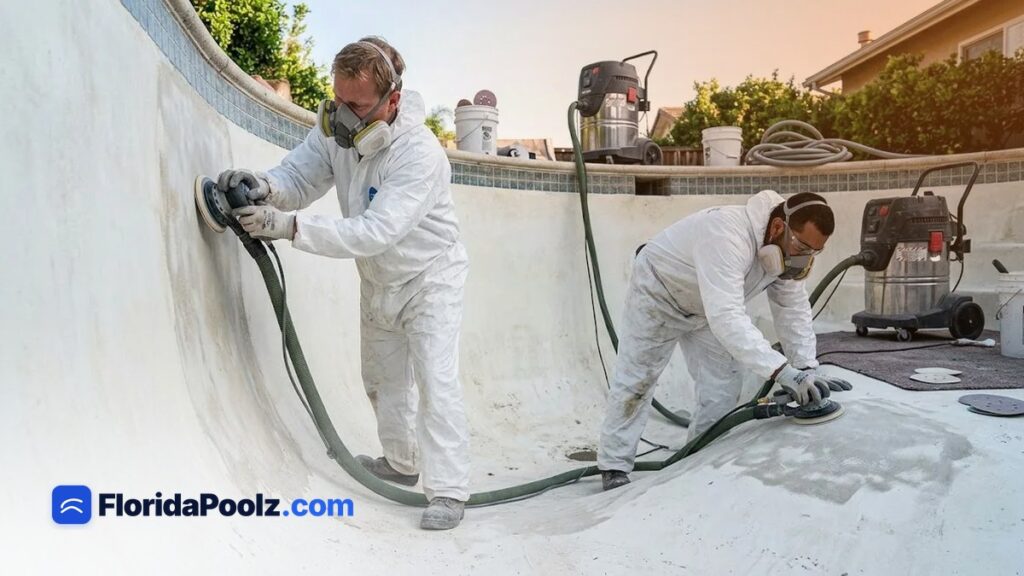
Pool resurfacing cost in Florida depends almost entirely on the finish you choose — a basic marcite redo and a full pebble-and-tile transformation are different projects at different prices. As a 2026 frame, resurfacing a typical Florida residential pool runs from the low thousands for basic marcite up into the high five figures for premium pebble or all-tile. This guide breaks the cost down by finish, explains what the price actually buys, and flags the Florida-specific warnings — starting with the one that can turn a resurface into a disaster.
Numbers here are general ranges to budget around; your pool’s size, condition, and finish choice set the real figure, so confirm with local quotes.
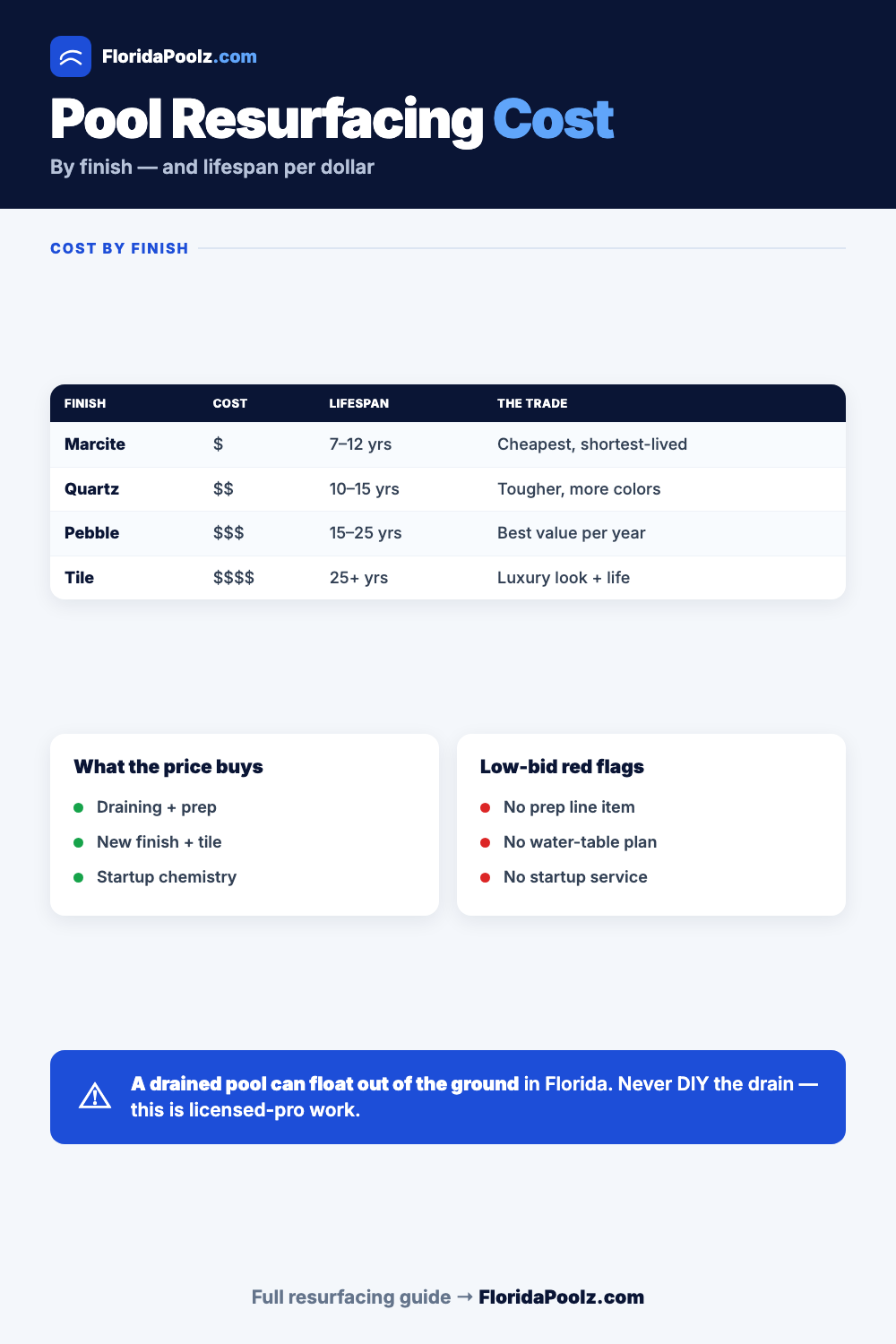
Cost by finish (lifespan per dollar)
| Finish | Relative cost | Lifespan | The trade |
|---|---|---|---|
| Marcite / white plaster | $ (lowest) | ~7–12 yrs | Cheapest, but shortest-lived |
| Quartz | $$ | ~10–15 yrs | Tougher, more color options |
| Pebble | $$$ | ~15–25 yrs | Premium, longest-lasting, best value/yr |
| Tile (full) | $$$$ (highest) | 25+ yrs | Luxury look and life, top price |
The counterintuitive truth: the cheapest finish is often the most expensive per year. Marcite is the lowest sticker but resurfaces soonest, especially under Florida sun and year-round chemistry. Pebble costs more upfront and frequently wins on cost-per-year because it lasts so much longer — worth the math if you’re staying in the home.
What a resurface actually includes
A proper resurface isn’t just new plaster troweled on. The price covers:
- Draining the pool (with a Florida caveat — see below);
- Prep — chipping out or bonding over the old surface, the step low bids skimp on;
- The new finish applied and troweled;
- New waterline tile and often coping, depending on scope;
- Acid wash / startup and the careful first-month water chemistry a fresh finish demands.
If a bid is dramatically cheaper than the others, the difference is almost always in the prep — and a resurface over bad prep fails fast.
The Florida water-table warning
Resurfacing means draining, and a drained pool in Florida can float out of the ground. High groundwater — the norm across much of the state, and a near-certainty in the rainy season — exerts upward pressure on an empty shell and can lift it like a boat. “Pool popped” is a five-figure catastrophe. A competent resurfacing contractor manages this with a hydrostatic relief valve and correct timing; it’s a core reason this is licensed-pro work, not a DIY drain. Never let anyone drain your pool without a plan for the water table.
When resurfacing becomes remodeling
Once the pool is drained and tiled, it’s the cheapest moment to change other things — new coping, updated waterline tile, added LED lighting, even reshaping steps. Many owners fold a light remodel into a resurface because the access is already paid for. If you’re considering it, price both together; the marginal cost is lower than doing them separately later.
Signs you need to resurface (not just clean)
- Rough, chalky, or sandpaper-textured walls that snag skin and swimsuits;
- Persistent stains that return no matter how you treat the water;
- Plaster failure — spidering, flaking, or exposed aggregate underneath;
- Black algae that keeps coming back — porous old plaster shelters the roots, and resurfacing is the real cure;
- Structural cracks that leak — a resurface plus repair, not a patch.
Red flags in a low resurfacing bid
The bid that undercuts everyone usually skips something that matters:
- No prep line item — bonding over a failing surface guarantees a redo;
- No water-table plan — the drain risk above;
- Vague finish spec — “plaster” without naming the product or color;
- No startup service — a fresh finish needs weeks of careful chemistry, and skipping it stains the new surface immediately;
- Unverified license — check it on the DBPR portal before you sign.
Resurfacing is a big-ticket, once-a-decade decision — worth two or three quotes from licensed Florida contractors on the same finish spec. Find verified resurfacing pros in the directory, and see the full budget picture in our Florida pool cost guide.
FAQ
How much does it cost to resurface a pool in Florida?
From the low thousands for basic marcite up into the high five figures for premium pebble or full tile, depending on pool size and finish. Quartz and pebble cost more upfront but last far longer — often winning on cost-per-year. Get quotes on one finish spec for your real number.
How long does a pool resurface last in Florida?
Marcite roughly 7–12 years, quartz 10–15, pebble 15–25, full tile 25+. Florida sun and year-round chemistry push plaster finishes toward the shorter end, which is why pebble’s longevity often makes it the better value, higher sticker and all.
Can I resurface my pool myself?
Strongly discouraged in Florida — the drain step alone risks the shell floating out of the ground on a high water table, and plaster application is a skilled trade. DIY plaster kits fail fast. This is licensed-contractor work with a hydrostatic-relief and timing plan.
What’s the best pool finish for Florida?
Pebble is the popular premium choice — it resists the sun, lasts 15–25 years, and hides staining better than white marcite. Quartz is a solid mid-tier. Marcite is cheapest upfront but resurfaces soonest. Match the finish to how long you’ll own the home.
Why is one resurfacing bid so much cheaper?
Almost always the prep — bonding over a failing surface instead of properly chipping it out — or a missing startup service and water-table plan. A resurface over bad prep fails within a couple of years. Compare bids on identical finish and prep specs.
References
More articles
Pool Heater Cost in Florida (Install, Replace & Run)
Pool heater cost in Florida by type - heat pump, gas, solar - installed prices, running costs, replacement math, and which wins…
Pool Service Cost in Florida (What Monthly Really Buys)
Pool service cost in Florida by tier - chem-only vs full service - what each includes, why FL costs more than national,…
How Much Does an Inground Pool Cost in Florida? (2026)
Inground pool cost in Florida in 2026: real price ranges by type, the line items that surprise buyers, cage and permit costs,…