
Pool Service Cost in Florida (What Monthly Really Buys)

Pool service cost in Florida typically runs from around $100–$150/month for chemical-only service up to $150–$250+/month for full weekly service — higher than the national average, for reasons that are pure Florida. The wide range confuses people because “pool service” means very different things at different prices. This guide shows exactly what each tier includes, why Florida costs more, and how the DIY math actually compares once you count your own time and chemicals.
Ranges here are general 2026 figures to budget around; your pool size, location, and the specific plan set the real price, so get a couple of local quotes.
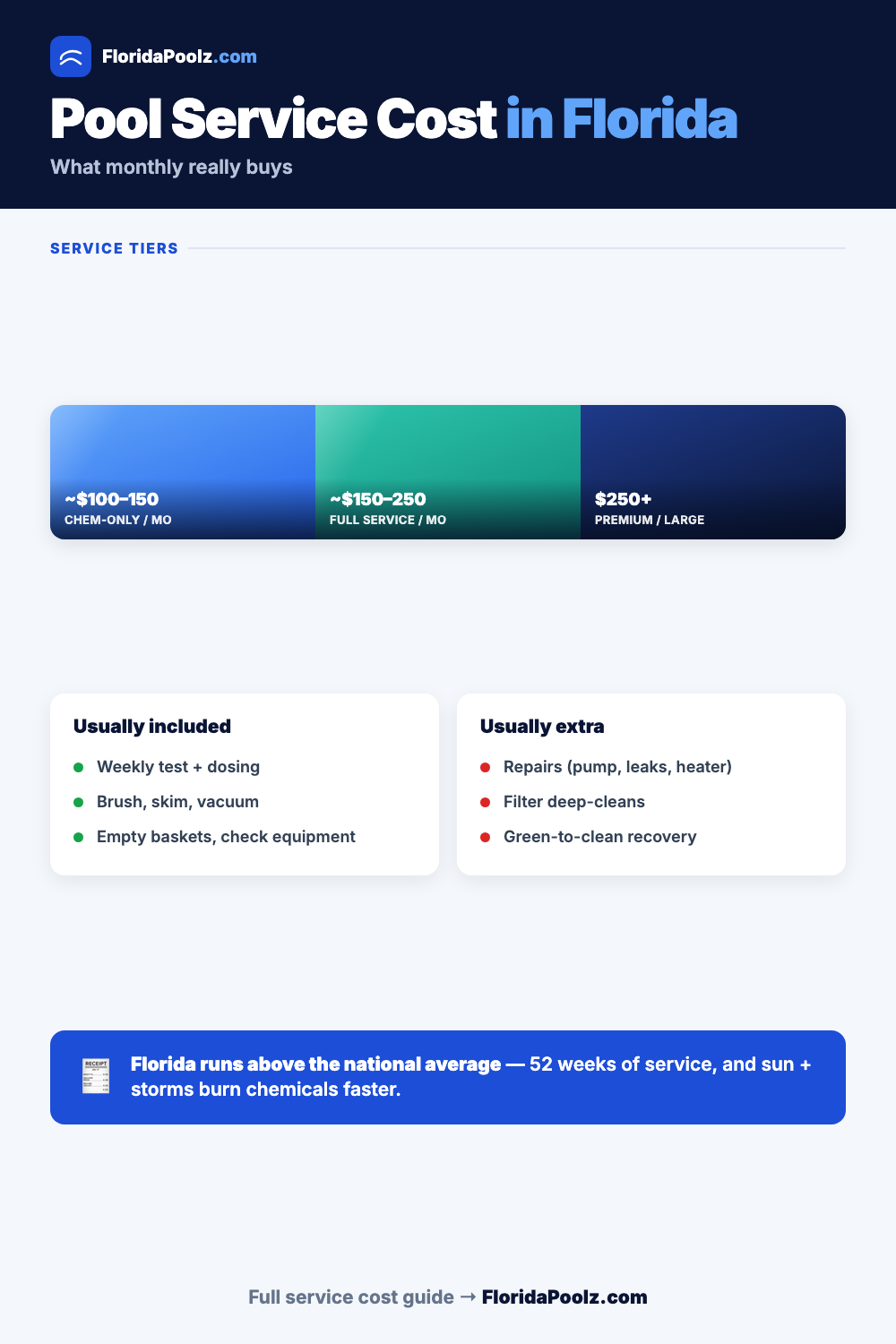
What each tier includes
| Tier | Typical FL cost | What you get |
|---|---|---|
| Chemical-only | ~$100–$150/mo | Tech tests + doses chemicals weekly; you handle cleaning |
| Full service | ~$150–$250+/mo | Chemicals + brush, skim, vacuum, empty baskets, check equipment |
| Premium / large pool | $250+/mo | Full service on big pools, spas, or twice-weekly visits |
The key distinction: chemical-only keeps the water safe; full service keeps the whole pool clean. Chem-only is cheaper but you’re still brushing, skimming, and vacuuming yourself. Full service is the “never touch it” option most Florida homeowners actually want, especially for a screened pool that still collects pollen and storm debris.
Why Florida costs more than the national average
National pool-service averages assume pools that close for winter. Florida’s don’t, and that changes the math:
- Year-round service — 52 weeks of visits, not a summer season, so the annual cost is simply higher;
- Faster chemistry — 88°F water and relentless sun burn through chlorine, so more product per visit (the stabilizer-and-sun problem);
- Storm and pollen load — summer thunderstorms and spring pollen mean more cleaning, more often;
- Screen cages help but don’t exempt you — fine pollen and storm nutrients still get through.
The flip side: because the season never ends, a good Florida service is genuinely working every week, not coasting.
What’s usually NOT included
Monthly service covers routine care. These are extra, and worth clarifying before you sign:
- Chemicals beyond normal — a green-to-clean recovery, a big shock, or specialty treatments;
- Filter deep-cleans — cartridge teardown or DE recharge, often quarterly add-ons;
- Repairs — a failing pump, a leak, or heater issues are separate;
- Equipment or salt-cell replacement — parts are on you.
DIY vs pro: the honest math
DIY looks far cheaper until you count everything. The real comparison:
- DIY cost: chemicals run a steady monthly spend in Florida (more in summer), plus a test kit and gear. Call it materially less than full service in dollars;
- DIY time: a few hours a week of testing, dosing, brushing, vacuuming, and filter care — every week, forever, including the weeks you’re on vacation;
- The hidden DIY cost: mistakes. One green-pool recovery or a stained finish from bad chemistry can wipe out months of savings;
- The pro premium: you’re paying for the labor and the not-thinking-about-it — plus a trained eye that catches a leak or failing pump before it’s expensive.
The sweet spot for many Florida owners: DIY the easy months, or run chem-only and handle cleaning yourself — but hand off entirely if the routine keeps slipping. A pool that turns green twice a summer is costing more in chemicals and stress than service would.
How to choose a pool service
- Confirm what’s included in writing — chemicals, cleaning tasks, visit frequency, what’s extra;
- Ask about the tech — same person weekly, or a rotating route? Consistency catches problems;
- Check licensing and insurance — verify on the DBPR portal;
- Read reviews for reliability — the #1 complaint about pool services everywhere is missed visits.
Price transparency is the whole game here — a good service tells you exactly what your money buys. Compare license-verified Florida pool services in the directory, and if you’d rather do it yourself, our pool care guides cover the full routine.
FAQ
How much does pool service cost per month in Florida?
Roughly $100–$150/month for chemical-only and $150–$250+/month for full weekly service, higher for large pools or twice-weekly visits. Florida runs above the national average because service is year-round and the sun-and-storm load is heavier. Get local quotes for your pool.
What does full pool service include?
Weekly testing and chemical dosing plus brushing, skimming, vacuuming, emptying baskets, and an equipment check. Chemical-only service is cheaper but covers only the water chemistry — you still do the cleaning. Repairs, filter deep-cleans, and green-to-clean recoveries are typically extra.
Is it cheaper to maintain a pool myself in Florida?
In dollars, yes — chemicals cost less than full service. But it’s a few hours a week year-round, and one chemistry mistake (a green pool or stained finish) can erase months of savings. Many owners run chem-only or DIY the easy months and hand off when the routine slips.
Why is Florida pool service more expensive than up north?
Florida pools never close, so it’s 52 weeks of service, and the 88°F water plus sun and storms burn chemicals faster and dump more debris — more product and cleaning per visit. Screen cages help but don’t exempt a pool from pollen and storm load.
What’s usually not covered by monthly pool service?
Beyond-normal chemicals (green-to-clean, big shocks), filter deep-cleans, all repairs (pump, leaks, heater), and equipment or salt-cell replacement. Always confirm the included tasks, visit frequency, and what triggers an extra charge before signing.
References
More articles
Pool Resurfacing Cost in Florida (Marcite, Pebble & Tile)
Pool resurfacing cost in Florida by finish - marcite, quartz, pebble, tile - plus what a resurface includes, the water-table warning, and…
Pool Heater Cost in Florida (Install, Replace & Run)
Pool heater cost in Florida by type - heat pump, gas, solar - installed prices, running costs, replacement math, and which wins…
How Much Does an Inground Pool Cost in Florida? (2026)
Inground pool cost in Florida in 2026: real price ranges by type, the line items that surprise buyers, cage and permit costs,…