
Pool builders by service
Gunite pool builders are not using a special material. Gunite is the dry-mix shotcrete process: dry mix down a hose, water added at the nozzle, fired at a steel cage hard enough to compact itself. That makes the person holding the nozzle the most important variable on the job. Below, what happens on shoot day, what goes wrong, and the builders across Florida who do it.
114 listings here
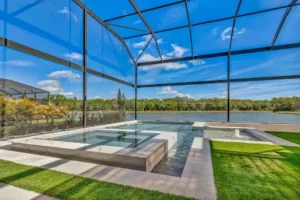

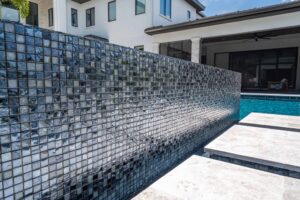
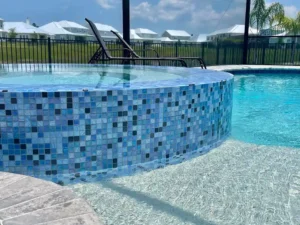




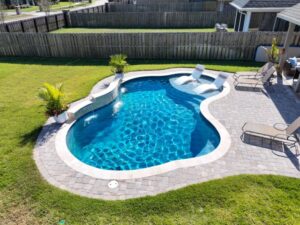

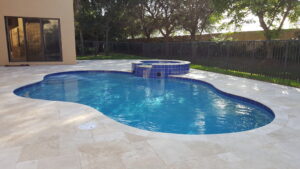
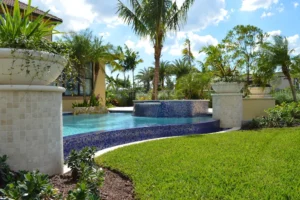
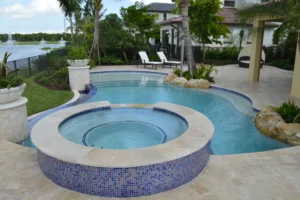
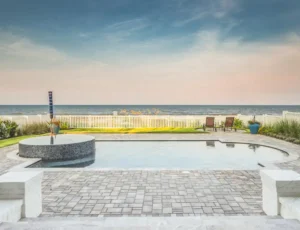
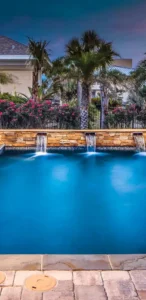
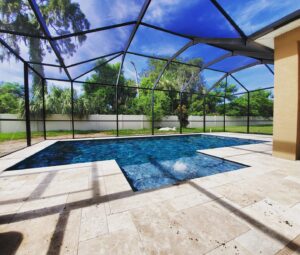
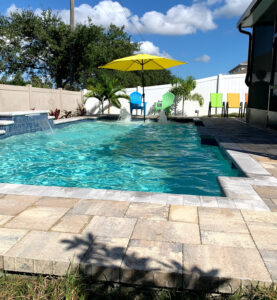
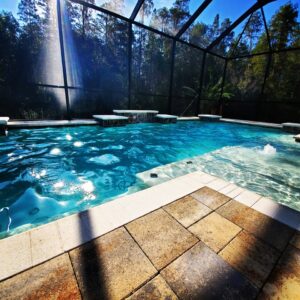






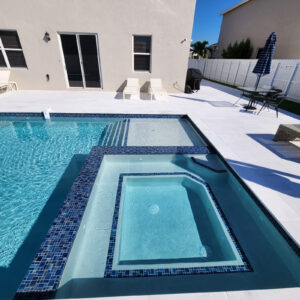
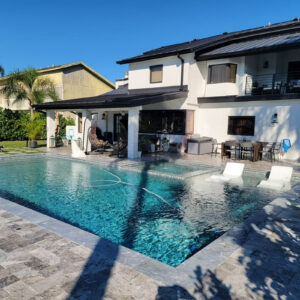
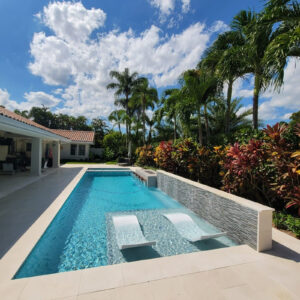
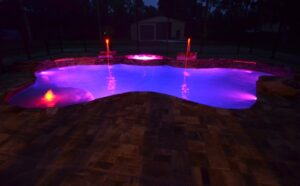
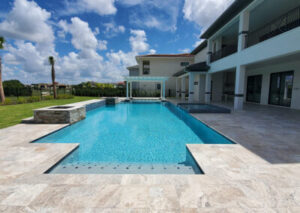



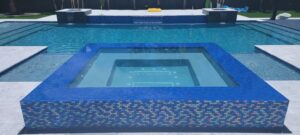



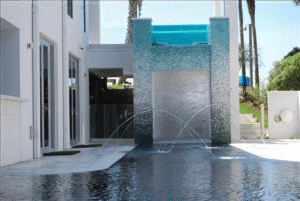









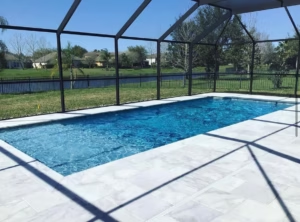
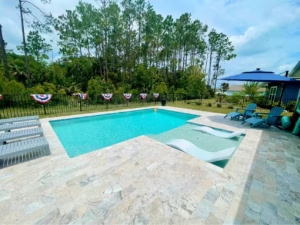
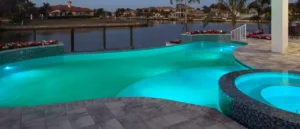
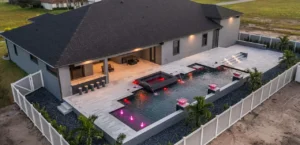

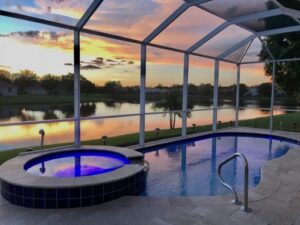
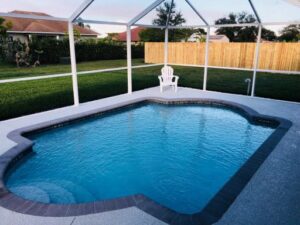
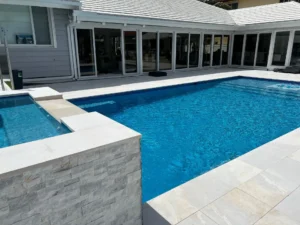
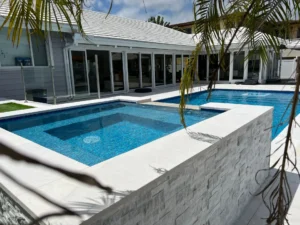

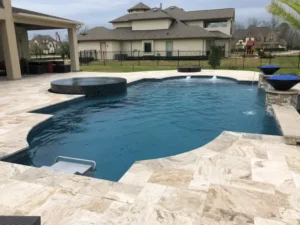
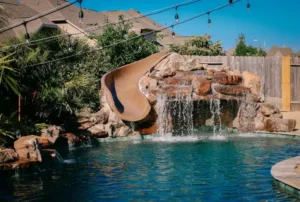
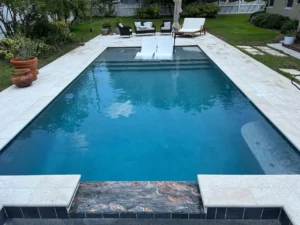
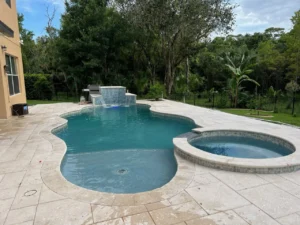

Gunite is not a material. It's a placing process, and knowing that changes how you read every quote in front of you.
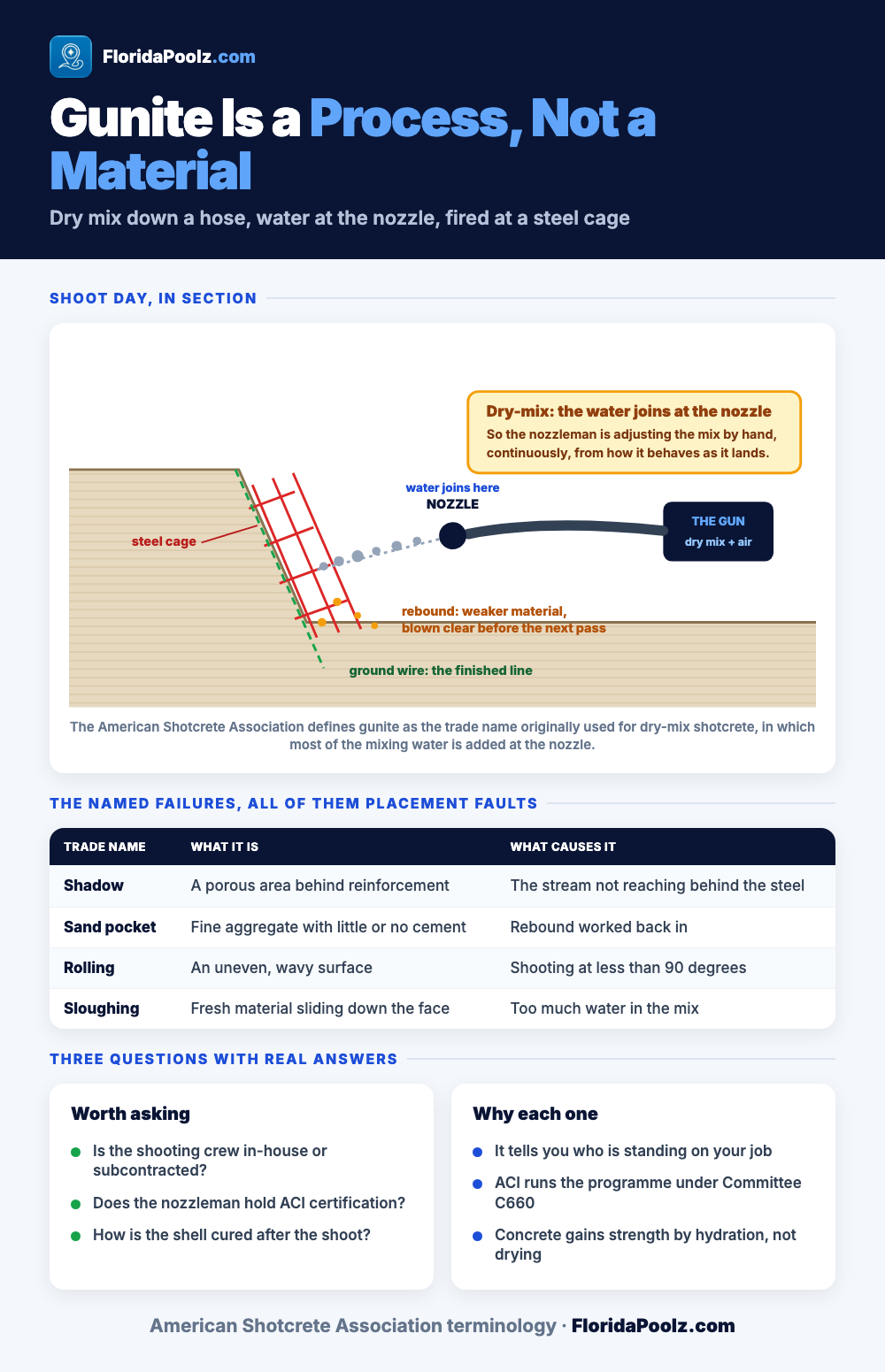
The American Shotcrete Association defines the family precisely. Shotcrete is concrete conveyed through a hose and projected pneumatically at high velocity, which compacts it as it lands. Dry-mix shotcrete is the version where most of the mixing water is added at the nozzle. And gunite is, in the Association's own words, the trade name originally used for dry-mix shotcrete. The dry material and the water meet in the last few inches before the wall.
That is why the person holding the nozzle matters more on a gunite pool than on almost any other residential concrete job. The mix is being adjusted continuously, by hand, in real time, by someone judging consistency from how the material behaves as it hits. The Association describes the nozzleman's role in exactly those terms: manipulating the nozzle, controlling material consistency in the dry process, and controlling the final placement. Nobody else on site is doing that.
The trade has a certification for it. The American Concrete Institute runs a Shotcrete Nozzleman Certification programme under its Committee C660, with ASA as the primary sponsoring group, credentialled separately for wet-mix and dry-mix. Asking whether the crew shooting your pool holds it is a reasonable question with a real answer.
The shoot is a single continuous operation and it is the most consequential day of the build. Everything before it is preparation and everything after it is finishing.
Steps two and six are a pair, and they are why a gunite pool ends up the shape it was drawn. A ground wire, which the trade calls an alignment or screed wire too, is high-strength wire strung to the exact finished line. The rodman then cuts the fresh material back to it. Material cut off in that process has a name of its own, cuttings, which tells you how routine it is.
Step five is not a detail. Rebound is the material that bounces off the wall instead of sticking, and the Association is blunt about what it is: rebound has inadequate cementitious content compared with the original shotcrete. That is weaker material. The blowpipe exists to blow it out of the work before the next pass buries it, and a crew without somebody on that job is building rebound into your shell.
Almost none of this is visible once the interior finish is on, which is why the questions get asked in the days the shell stands bare.
Curing is the one worth pressing hardest, since it is the cheapest thing to skip and the most expensive to have skipped. Concrete gains strength by hydration, a chemical reaction between the cement and water, so it does not dry so much as it sets. The Association defines curing as the action taken to maintain moisture and temperature so that hydration can occur. In a Florida June, a shell left uncovered and unwatered is being deprived of the water it needs to become strong.
One piece of vocabulary is worth carrying into the conversation. The industry standard terminology says the word waterproof should not be used at all, since nothing is impervious to water under infinite pressure over infinite time. The correct word is watertight. A builder who talks about waterproof concrete is using a word their own trade body has ruled out.
The failure modes here are specific, they have industry names, and every one of them is a placement fault rather than a material fault.
| The name | What it is | What causes it |
|---|---|---|
| Shadow | A porous area behind an obstacle, typically rebar | The stream not reaching behind the steel |
| Sand pocket | A zone of fine aggregate with little or no cement | Rebound worked back in, or poor consistency |
| Rolling | An uneven, wavy, textured surface | Shooting at less than ninety degrees to the wall |
| Sloughing | Fresh material sliding down the face | Too much water in the mix |
Shadow is the one that matters most and the one nobody sees. The Association defines it as the area behind an obstacle that is not adequately impacted and compacted by the shotcrete stream, and in hardened shotcrete, any porous area behind reinforcement. A heavily reinforced section shot at the wrong angle by an inexperienced nozzleman leaves voids behind the steel, and the shell looks perfect from the inside.
Rolling is the one you can see, and it is a useful proxy. A wavy, uneven surface says the stream was not hitting the wall square, and a crew that produced it on the visible surfaces was doing the same thing where the surfaces are not visible.
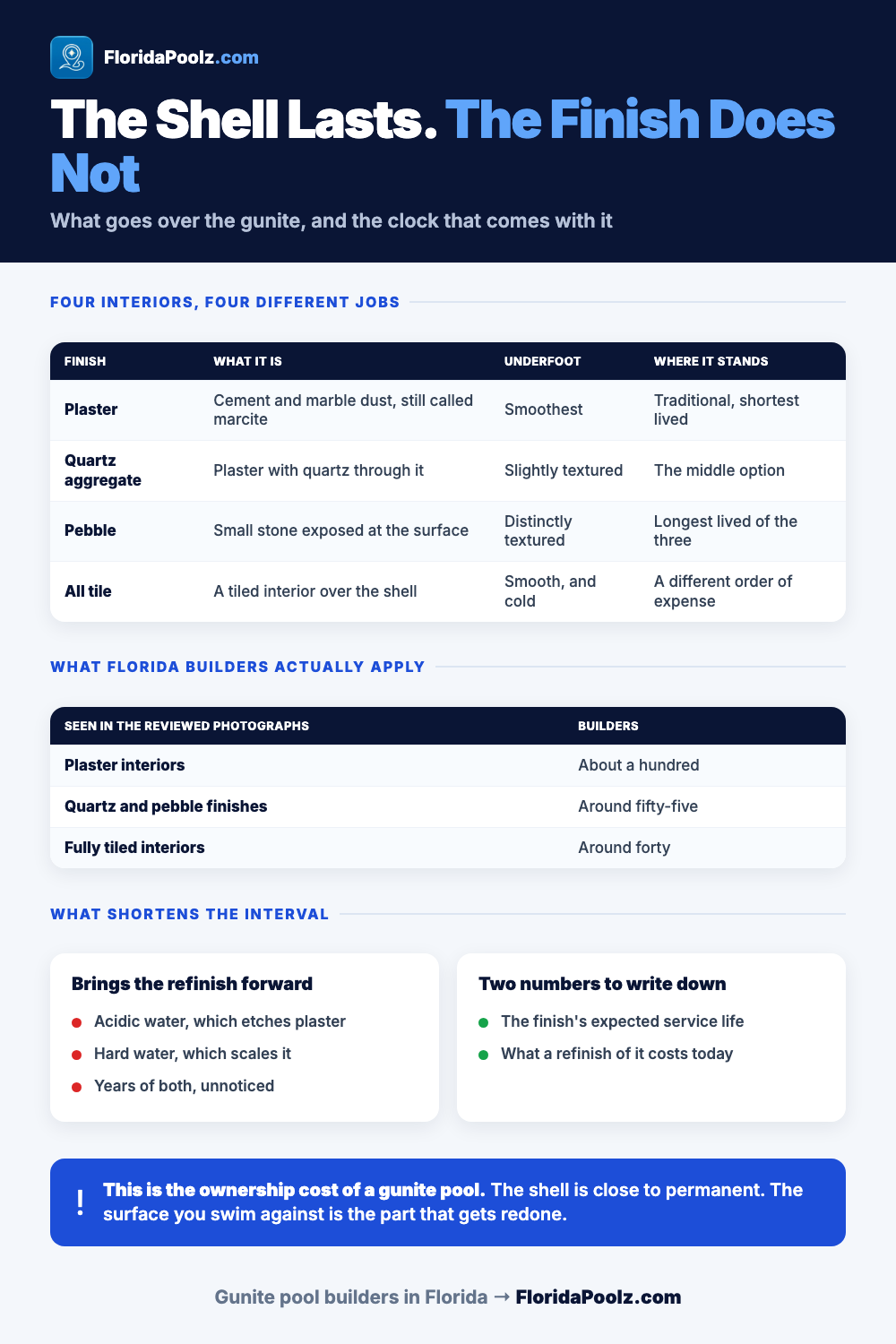
A gunite shell is not the surface you swim against. The finish applied over it is, and it is the largest recurring cost of owning one.
| Finish | What it is | Underfoot | Where it stands |
|---|---|---|---|
| Plaster | Cement and marble dust, still called marcite here | Smoothest | The traditional finish, shortest lived |
| Quartz aggregate | Plaster with quartz through it | Slightly textured | The middle option on price and life |
| Pebble | Small stone exposed at the surface | Distinctly textured | Longest lived of the three |
| All tile | A tiled interior over the shell | Smooth, and cold underfoot | A different order of expense entirely |
Of the builders whose photographs were reviewed for this directory, plaster interiors appear most often, then quartz and pebble finishes, with fully tiled interiors a distinct minority. That ordering matches the price ordering, which is what you would expect.
Whichever goes on, the sentence to have in mind is the same: this is the part of the pool that gets redone. Ask any builder quoting a finish what its expected service life is and what a refinish of that specific finish costs today. Write both down. That is the difference in ownership cost between a gunite pool and a delivered shell, and it is the number that most often goes unspoken at the point of sale.
The shell is drawn rather than ordered, so the price follows the drawing and the ground rather than a catalogue.
The two that move most between quotes are the steel and the finish, and only one of them is visible in the finished pool. A quote that names the finish but not the steel schedule is describing the half you will see.
The shell itself is close to permanent. Everything expensive about owning one is the surface on it and the chemistry against it.
Plaster, quartz and pebble all wear and all get redone. That is a scheduled, substantial expense on a cycle measured in years, and it is the honest difference in running cost between this and a moulded shell.
Acidic water etches a plaster interior. Hard water scales it. Neither shows up quickly and both bring the next refinish forward, which turns water balance from a chore into a maintenance budget.
Pump, filter, heater, salt cell and lighting wear at the same rate whatever the shell is made of. Nothing about gunite makes the equipment pad cheaper or dearer.
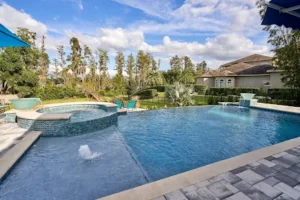
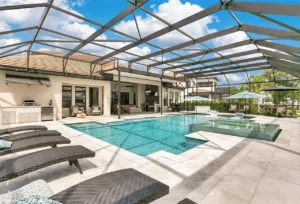
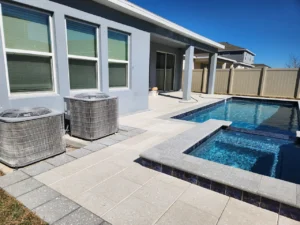
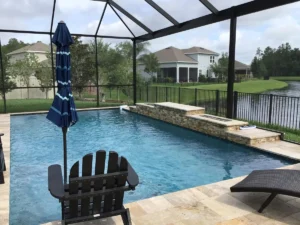
The roster above is every builder profile tracked here that names gunite among its services, counted live. There is no photographic evidence to set beside that, and the reason is worth stating: a finished pool photograph shows the interior finish, never the shell underneath it. The method is invisible the moment the plaster goes on.
That puts the weight on questions rather than pictures. Three worth asking, each with a right answer: is the shooting crew in-house or a shotcrete subcontractor, does the nozzleman hold ACI certification, and how is the shell cured after the shoot? None of the three has a wrong answer that a builder cannot explain, and all three separate a company that does this weekly from one that does not.
Gunite is one way of building a concrete pool, and the two words describe the same trade often enough that a builder using one and a buyer using the other are usually agreeing. The real alternative is a moulded fiberglass shell, which trades shape for speed and loses the refinishing cycle.
Everything shot with the shell has to be decided before the shoot, which is the practical reason this page keeps saying "on the drawing". A spa is shot with the pool. So is an infinity edge wall, a raised wall for a waterfall, and a sun shelf. Afterwards come the pool deck, the screen enclosure and the equipment.
Supply is statewide, with the deepest rosters in Orlando, Miami and Tampa, and across Palm Beach and Orange counties.
A concrete pool built by the dry-mix shotcrete process. The American Shotcrete Association defines gunite as the trade name originally used for dry-mix shotcrete, in which most of the mixing water is added at the nozzle rather than in a truck. Dry material travels down a hose, water joins it in the last few inches, and the mixture is fired at a steel cage hard enough to compact itself against it. Every gunite pool is a concrete pool. The name describes how the concrete arrived, not what it is.
The shell is close to permanent. What wears is the interior finish on it, and that is the defining ownership cost of the type: plaster, quartz and pebble finishes all get redone on a cycle measured in years. Two things shorten that cycle, and both are chemistry rather than construction. Acidic water etches a plaster interior and hard water scales it, and neither shows up quickly. Ask any builder quoting a finish what its expected service life is and what a refinish of that finish costs today.
Shotcrete is the process and gunite is one version of it. The American Shotcrete Association defines shotcrete as concrete conveyed through a hose and projected pneumatically at high velocity, and gunite as the trade name originally used for the dry-mix form, where most of the mixing water is added at the nozzle. In the wet-mix version the concrete is fully mixed before it reaches the hose, and the compressed air joins at the nozzle. The practical difference is who controls the consistency: on dry-mix, the nozzleman does, continuously, by hand.
On a dry-mix job, more than anyone else on site. The Association's own definition has the nozzleman manipulating the nozzle, controlling material consistency in the dry process, and controlling final placement, which is three jobs nobody else is doing. There is a formal credential for it: the American Concrete Institute runs a Shotcrete Nozzleman Certification programme under Committee C660, with the ASA as primary sponsoring group, credentialled separately for wet-mix and dry-mix. Asking whether the crew holds it is a fair question with a real answer.
Rebound is the material that bounces off the wall instead of sticking to it, and the industry definition is unambiguous about what it becomes: rebound has inadequate cementitious content compared with the original shotcrete. That is weaker material. That is the whole reason a helper works an air lance, called a blowpipe, during the shoot, clearing loose material out of the work before the next pass covers it. A crew shooting without somebody on that job is building weak material into the shell.
Hairline crazing in the interior finish is common and is a surface matter. Structural cracking is rare and traces back to decisions taken before the finish went on: the steel schedule the engineering called for, whether the excavation was on undisturbed ground, and whether the shell was cured properly. Curing is the one most often skipped. Concrete gains strength by hydration rather than by drying, so a shell left uncovered and unwatered in a Florida June is being denied the water it needs to reach strength.
Start from the roster on this page and narrow by city. Photographs will not help you on this one term, since a finished pool shows the interior finish and never the shell beneath it, so the method is invisible the moment the plaster goes on. Three questions do the work instead: is the shooting crew in-house or subcontracted, does the nozzleman hold ACI certification, and how is the shell cured after the shoot. Each has a real answer, and none of the possible answers is wrong if the builder can explain it.
Still weighing it up? These are the choices most people compare with Gunite Pool Builders in Florida.