
Pool builders by county
Pool builders serving Polk County. Four cities inside the county run their own building departments alongside the county division, each with a separate portal and review queue. Start with the shortlist, then confirm which one has your address.
13 listings here 13 based here
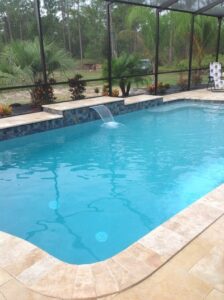
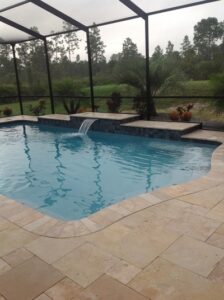
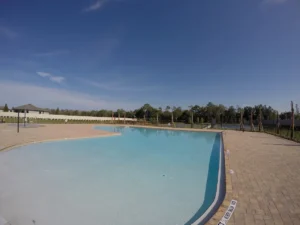
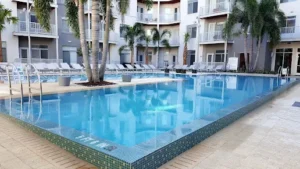

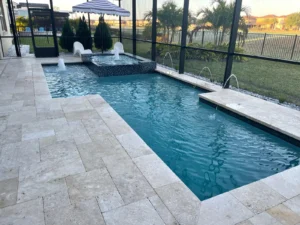
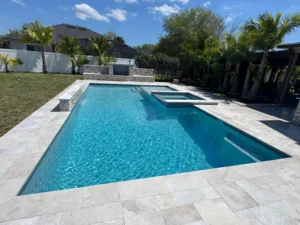
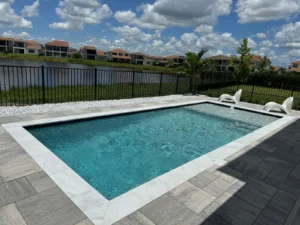





These pool builders are not based in Polk County and don't emphasize their services here, but they've shown they work here, too — so check them out, too!
Tell us what your dream pool is all about, and where do you want it. We'll do our best to find a professional pool builder for your project.
Polk spans a wide stretch of central Florida between Tampa and Orlando, and the county building division is not the only office issuing pool permits inside its lines. Four cities run their own, each with its own portal and its own queue.
| Where the lot sits | Who reviews the pool plans |
|---|---|
| Unincorporated Polk | The Polk County Building Division |
| Lakeland | Building Inspection Division, in Community and Economic Development |
| Winter Haven | Building Division, through its own eSuite portal |
| Bartow, Haines City | Each city's own building department and application |
Polk County spans a wide stretch of central Florida, and the Polk County Building Division isn’t the only office issuing pool permits inside county lines. Four incorporated cities run their own separate building departments, each with its own application process, review staff, and inspection schedule:
If a property sits inside any of those four cities’ limits, that city’s department reviews the pool permit and schedules the inspections — not the county. Everywhere else in Polk County that hasn’t been annexed into one of those cities falls to the Polk County Building Division, whose main office sits on W.
Church Street in downtown Bartow — a few blocks from, and entirely separate from, the City of Bartow’s own building department. That overlap in geography but not in authority is exactly the kind of thing that trips homeowners up: a Bartow-area mailing address doesn’t automatically mean the city handles the permit, and the same goes for a Lakeland, Winter Haven, or Haines City address that turns out to still be unincorporated county territory. Confirming jurisdiction — through the property’s parcel record or a call to either office — before applying saves a redone application later.
Once jurisdiction is settled, the substance of what gets reviewed is the same everywhere in the state. The Residential Swimming Pool Safety Act (Chapter 515, Florida Statutes) requires every new residential pool to include at least one approved safety feature before it can pass final inspection:
Most homeowners meet this with a code-compliant fence, though the statute allows any of the listed options. Building a pool without one is a second-degree misdemeanor, though the law gives a homeowner a 45-day window to add a safety feature and complete a drowning-prevention course rather than face that penalty outright.
Pool construction is a licensed trade statewide under Chapter 489, Florida Statutes, regulated by the Department of Business and Professional Regulation. A Certified Pool/Spa Contractor (CPC) license is the credential built specifically for this work; a Certified Building Contractor (CBC) license, which covers a wider scope of construction, also qualifies.
Both are state licenses, so a contractor holding either one can legally build a pool anywhere in Polk County — inside any of the four cities or out in unincorporated territory — without needing a separate local license on top of it. DBPR’s public lookup tool is the place to confirm a license is active and check for any disciplinary history before signing a contract, rather than relying on what a company says about itself.
Whether the county or one of its cities is handling the review, the sequence is broadly similar: plans go in for review, a permit issues once they clear, and then a series of inspections happens as construction moves forward — typically steel and pre-deck, electrical bonding and grounding, and a pressure test on the pool’s piping, followed by a final inspection once the safety feature required under Chapter 515 is in place. How long each stage takes depends on how busy that particular office is at the time, which is one more reason knowing which office actually has jurisdiction — and checking in directly rather than assuming a timeline — matters more in a county with five separate permitting offices than it would somewhere with just one.
A noticeable share of the pool-related search activity around Polk County isn’t really about pools at all — it’s about permits and enforcement in general. Questions about whether a shed needs a permit, what counts as a building violation, and whether construction can happen without one at all show up right alongside pool-specific searches, and that pattern says something about the county’s homeowner base: a lot of Polk County residents are dealing with unincorporated or recently-annexed land, older additions, or self-built projects, and carry a genuine uncertainty about which rules apply to their specific property.
That uncertainty carries straight over into pool projects. The same homeowner wondering whether a shed needs a permit is often the same homeowner about to learn that a pool absolutely does, no exceptions, anywhere in Florida — and that a pool, unlike a small shed, is rarely a project where skipping the paperwork goes unnoticed.
That enforcement-mindedness is worth taking seriously beyond the initial build.
A pool put in without a permit doesn’t just risk a stop-work order mid-project — it also misses the safety inspections tied to Florida’s pool-barrier law, and it tends to surface years later anyway, during a refinance or a home sale, when a buyer’s inspector or a title company checks permit history against what’s actually sitting in the yard. Retrofitting that paperwork after the fact, with a finished pool already in the ground, is a far more expensive and disruptive process than pulling the permit up front would have been.
Cost curiosity runs just as strong, and it tends to anchor on specific numbers rather than vague ranges — homeowners search directly for whether $20,000 or $30,000 gets them an inground pool, and how much a standard 12x24 shape runs.
Those are reasonable starting points, but Polk County pricing swings widely by pool type: a vinyl-liner or smaller fiberglass shell can land near the lower end of that range, while a gunite pool with real decking, screening, or added features moves well past it. The county’s size and the mix of markets inside it — Lakeland’s suburban lots, Winter Haven’s lake-adjacent properties, more rural unincorporated parcels toward the county’s edges — means site work alone, clearing, grading, equipment access, varies enough that a number that pencils out for one property doesn’t necessarily hold for the next one over.
Jurisdiction adds a second layer most homeowners don’t think about until they’re already trying to apply.
Whether a specific address is reviewed by the Polk County Building Division or by Lakeland, Winter Haven, Bartow, or Haines City’s own department changes which portal to use, which staff to call, and how long the queue typically runs — the same practical split covered in the Permits tab above. It’s worth settling before assuming a contractor’s timeline estimate applies to a given address, since that estimate is often based on whichever office that contractor deals with most often.
Contractor vetting rounds out the picture, and the useful habit is a simple one: confirm a CPC or CBC license is active on DBPR’s public lookup before signing anything, and ask which building department will actually be inspecting the work.
A contractor unfamiliar with a specific city’s process is a mild red flag in a county with this many separate permitting offices to keep straight. Getting a written contract with clear payment milestones, rather than a large deposit tied to vague progress, protects against the same complaint pattern regulators have flagged across the pool-construction industry generally — in Polk County and everywhere else in Florida alike.
Yes. Every in-ground pool (and most above-ground pools) in Florida requires a building permit before construction begins, statewide, with no county opting out. In Polk County specifically, whether that permit comes from the Polk County Building Division or one of the county's separate city building departments — Lakeland, Winter Haven, Bartow, or Haines City — depends entirely on whether the property sits in unincorporated county land or inside one of those cities' limits.
No, not for anything covered under the Florida Building Code, and new pools are squarely covered. Both the Polk County Building Division and each incorporated city's building department can issue stop-work orders and require retroactive permitting, or removal, for work done without one. An unpermitted pool also skips the safety inspections Florida law requires before a pool can legally hold water.
Across Polk County's building departments, violations tend to fall into a few recurring categories: construction done without an issued permit, permits that were pulled but never closed out with a final inspection, and work that doesn't match the approved plans. A pool falls into the first category whenever someone builds before permitting rather than after — also the single most common reason an unpermitted pool gets flagged later, often during a home sale.
There isn't one statewide figure, or even one Polk County figure, that holds up in practice. Cost depends heavily on pool type (vinyl, fiberglass, or gunite), size, and site conditions, so the only number worth trusting is a quote for the specific property in question rather than a figure seen online.
We would not put a figure on it. Shell type moves the number more than anything else you will be shown, then size, site preparation, decking, screening and heating — and screening and decking are exactly the items a lean budget tends to leave out. Get itemised quotes from a couple of licensed contractors and compare the lines.
A 12x24 shape is one of the more common standard sizes, but its price still swings on pool type and site work more than on square footage alone — a straightforward vinyl or fiberglass install at that size costs meaningfully less than a custom gunite pool of the same dimensions with added features.
In most cases, yes, once a shed passes a certain size, under the same general permitting principle that applies to pools: structures built on a property generally need a permit from whichever department, county or city, has jurisdiction over that address. The exact size threshold is worth confirming directly with that department rather than assuming.
If you didn't find a pool builder for your Polk County passion project here, check out the neighbours: professional pool builders usually don't mind travelling a few miles to help new customers with the most exciting projects.