
Pool builders by city
Pool builders serving St. Augustine. In the oldest continuously occupied city in the country, a pool excavation can trigger historic review and archaeological review before the building permit is even reached. Start with the shortlist, then check which reviews your lot brings with it.
7 listings here 7 based here
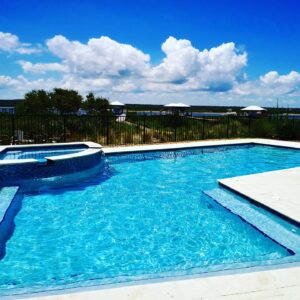
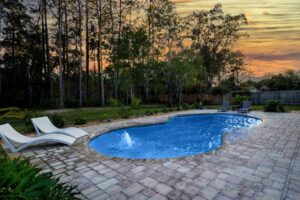





These pool builders are not based in St. Augustine and don't emphasize their services here, but they've shown they work here, too — so check them out, too!
Tell us what your dream pool is all about, and where do you want it. We'll do our best to find a professional pool builder for your project.
Under a dozen builders serve the city, most of them covering it alongside Jacksonville and the beaches rather than working here exclusively. That is normal for a city this size, but it puts a premium on one thing: how many jobs a company has actually taken through this city's review process, which is unlike anywhere else in Florida.
Search “pool builders near me” from a St Augustine address and you will mostly get companies based up the coast. They can build here. The question worth asking is whether they have sat in front of the review boards before.
Most Florida cities ask for a pool permit and inspections. This one can ask for considerably more, and the extra steps come first rather than last.
Inside the five Historic Preservation zoning districts, most work needs a Certificate of Appropriateness, which means the Historic Architectural Review Board and the Planning and Zoning Board both look at the project before the building department does. HARB has existed since 1974 and its brief is the architectural character of the districts, which reaches further than a paint colour.
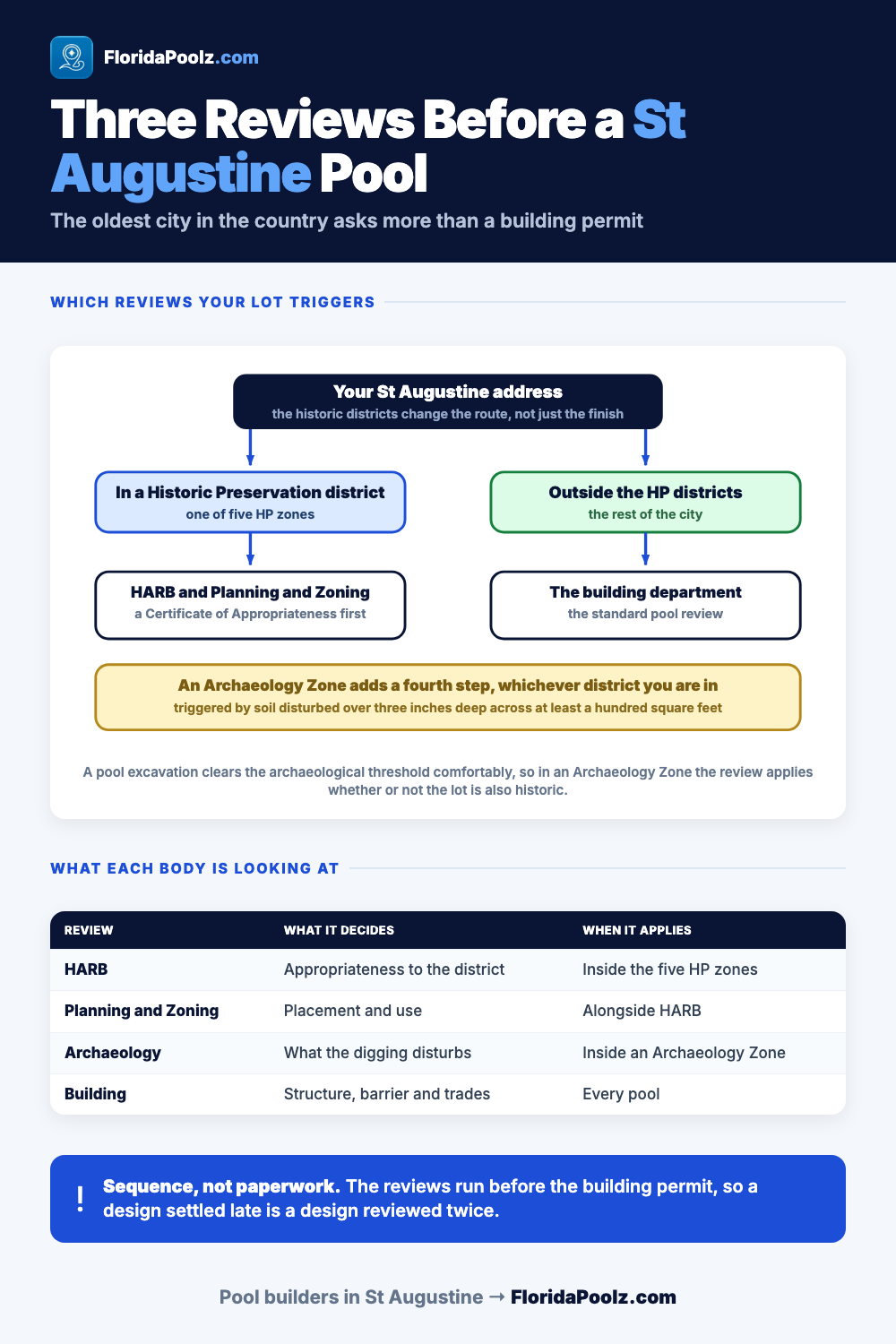
The step that surprises people has nothing to do with how the pool looks. St Augustine runs Archaeology Zones across parts of the city, and archaeological review applies where a project is tied to a building permit, sits inside a zone, disturbs soil more than three inches deep, and affects at least a hundred square feet.
A pool excavation clears all four of those comfortably. It is the deepest, widest ground disturbance a homeowner is ever likely to commission, which means that in an Archaeology Zone the review is not a technicality to be waived — it is the point of the ordinance.
Inside an HP district the review looks past the water itself to everything around it:
None of this makes a pool impossible. It makes the calendar different, and it makes an early conversation with the planning and building department worth considerably more here than a fast quote.
The other thing that separates this city from a coastal subdivision is physical. Lots in and around the old town are small, frequently walled, and reached through a gate rather than a side yard wide enough for a machine.
That changes the build before it changes the price. Where an excavator cannot get in, spoil leaves by barrow or over the wall by crane, and a job measured in days on an open lot becomes a job measured in weeks. It is worth asking any builder to walk the access route with you before quoting rather than after.
Running that backwards is the expensive mistake in this city. A design finalised after review has to go back through it.
The reviews add calendar rather than a line item. What moves the money is mostly the ground and the access:
| Driver | What it does |
|---|---|
| Which reviews apply | Weeks, and design work that has to survive them |
| Access to the rear | Old lots are tight, walled and often unreachable by machine |
| What the excavation finds | In a zone, the dig can pause for recording |
| Shell type and finish | The biggest single lever, as everywhere |
| Deck material | Appropriateness is a real constraint inside an HP district |
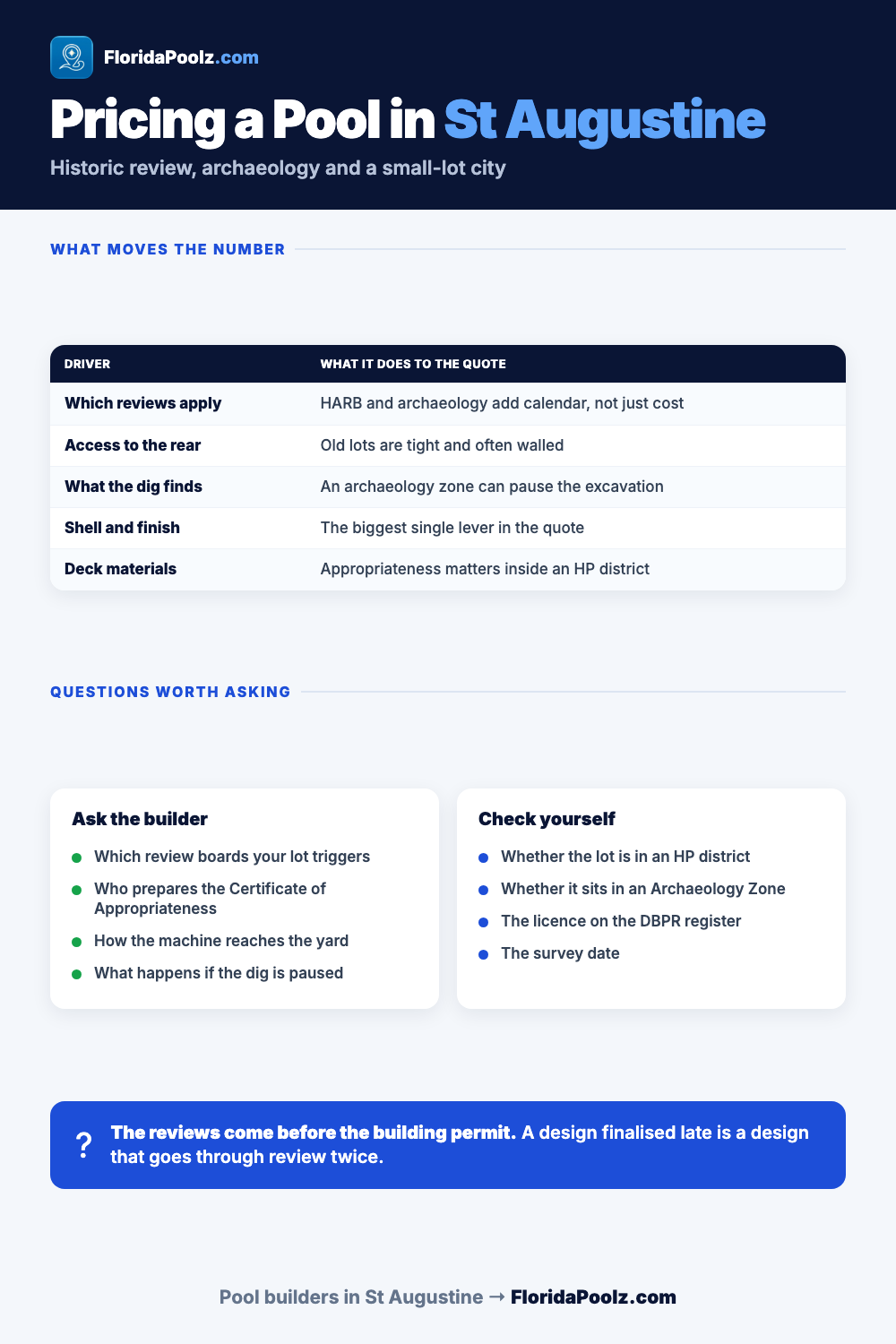
Ask the builder to name the reviews your specific address triggers, and to say who prepares the Certificate of Appropriateness application. Not whether they have heard of HARB — who does the work and when.
Then ask what happens to the schedule and the contract if the excavation is paused for archaeological recording. A company that works this city regularly has an answer ready, because it has happened to them. A company that does not will tell you it will be fine, which is not an answer.
Lots in the old city are small, walled and shaded, and that does most of the deciding.
A spa earns its place where the shell cannot be long, and a sun shelf gives back usable water on a compact pool. Heating matters this far north, where the season without it is noticeably shorter than in South Florida, and shaded courtyard lots lose more of the afternoon than an open yard does. Lighting does more work in a walled yard than almost anywhere.
On shell type, access decides more than taste: fiberglass deserves a serious look where a machine can barely reach the yard, against gunite where there is room to work. What we would not plan on a small historic lot is a large deck expansion, since deck material and extent are exactly what appropriateness review looks at.
Ponte Vedra Beach and Jacksonville Beach are north on newer coastal stock with none of the historic review layer. Jacksonville runs one consolidated department for nearly all of Duval County. Palm Coast is south and entirely different again: a platted grid from 1969 where the constraint is a drainage swale across the front of every lot.
If the lot sits inside one of the city's five Historic Preservation zoning districts, most work needs a Certificate of Appropriateness, which means the Historic Architectural Review Board and the Planning and Zoning Board review the project before the building department does. Outside those districts the standard pool review applies.
The city runs Archaeology Zones across parts of St Augustine. Archaeological review applies where the work is tied to a building permit, sits inside a zone, disturbs soil more than three inches deep and affects at least a hundred square feet. A pool excavation clears every one of those thresholds, so in a zone the review applies.
That depends on which reviews your address triggers and on the boards' meeting calendar, so no honest single figure exists. What you can control is the sequence: settle the design before review rather than after, because a design changed later goes back through the process from the start.
Inside an Archaeology Zone, digging can pause for recording if something is found. It is worth asking a builder directly what that does to your schedule and your contract, and getting the answer in writing, because a company that works this city regularly will have dealt with it before.
Which reviews apply, how a machine reaches a tight walled lot, what the excavation runs into, shell type and finish, and deck material where appropriateness review has a view on it. The reviews mostly cost calendar rather than money, but design work that has to survive them is real effort.
Search the company on the DBPR public license lookup and confirm an active Certified Pool/Spa Contractor license, or a Certified Building Contractor license whose scope covers pools. The lookup shows disciplinary history and insurance on file too. Do it before any deposit changes hands.
Proximity is doing most of the work in a “near me” result, so companies based up the coast in Jacksonville and the beaches appear alongside local ones. That is fine as a starting point. It just means the ordering reflects where an office happens to sit rather than what the company's license standing and review record look like, which is what this page ranks on.
If you didn't find a pool builder for your St. Augustine passion project here, check out the neighbours: professional pool builders usually don't mind travelling a few miles to help new customers with the most exciting projects.