
Pool builders by county
Pool builders serving Brevard County. The county office is the default, but four of its cities run their own permitting, so the first job is working out which desk actually has your address. Start with the shortlist, then read what changes at the city line.
17 listings here 17 based here

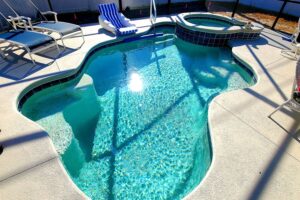
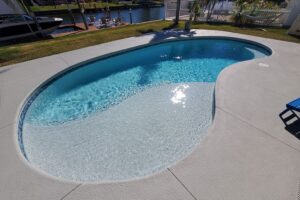
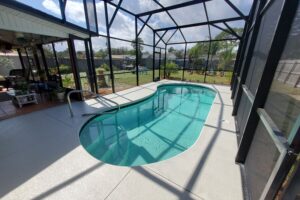
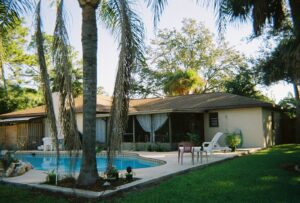
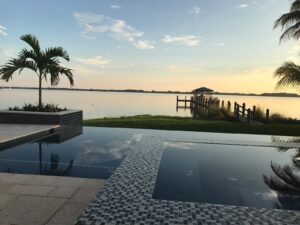
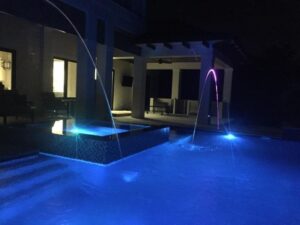
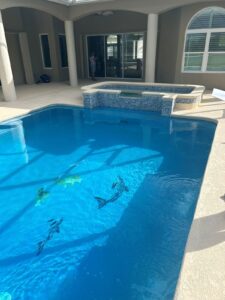
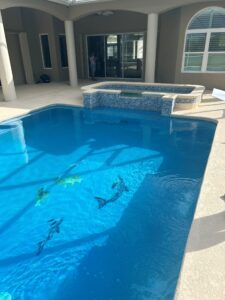
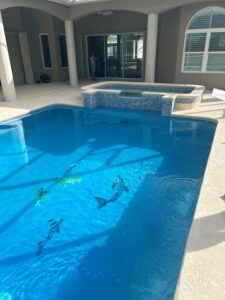
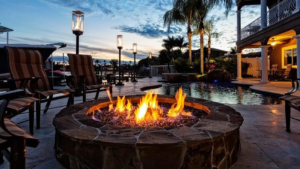
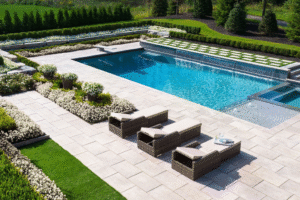
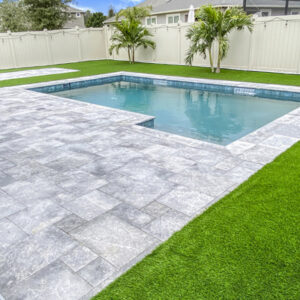










These pool builders are not based in Brevard County and don't emphasize their services here, but they've shown they work here, too — so check them out, too!
Tell us what your dream pool is all about, and where do you want it. We'll do our best to find a professional pool builder for your project.
Brevard runs the length of the Space Coast, and the first thing worth knowing is that the county office is the default rather than the only one. Four of its cities never route through it at all, so the answer to “who reviews my pool plans” depends entirely on which side of a city line the lot sits.
| Where the lot sits | Who reviews the pool plans |
|---|---|
| Unincorporated Brevard | The county's Building Permits division, in Planning and Development |
| Melbourne | The city's own Building Section, under Code Compliance |
| Palm Bay, Titusville, Cocoa Beach | Each city's own building department |
Brevard County’s Building Permits division, part of the Planning and Development Department, reviews and issues permits — pool permits included — for unincorporated county land. That’s the default office for any address that doesn’t sit inside a city’s limits. What sets Brevard apart from a lot of Florida counties is how many of its incorporated cities never route through that county office at all:
Each of those four keeps its own review queue, inspection staff, and fee schedule, separate from the county. A homeowner in Palm Bay applies through Palm Bay; a homeowner in an unincorporated pocket a few miles away applies through the county instead — same Florida Building Code underneath, different office reviewing the plans.
With this many independent city building departments layered over one countywide office, guessing wrong carries more risk here than in a county with just one incorporated city.
A “Melbourne, FL” or “Cocoa, FL” mailing address doesn’t necessarily mean the property sits inside that city’s limits — plenty of unincorporated Brevard parcels use a nearby city’s name for mail purposes only. Either the county’s building division or the relevant city department can confirm jurisdiction for a specific parcel before anything gets filed, and getting that answer first is cheaper than finding out after a contractor has already quoted a timeline based on the wrong office’s review queue.
Whichever office reviews the permit, the pool itself answers to the same state law:
Most homeowners satisfy it with a compliant barrier at least 4 feet high, free of gaps or footholds a small child could use to climb over or squeeze through, though the statute also accepts an approved safety pool cover, exit alarms rated at 85 decibels or louder at 10 feet on doors and windows with pool access, self-closing and self-latching hardware mounted at least 54 inches above the floor, or a submersion alarm in the water itself. Building a pool without any of these is a second-degree misdemeanor, though a homeowner who gets cited can generally clear it by adding the missing feature and completing a drowning-prevention course within 45 days.
Licensing is a state matter, not a county or city one.
Chapter 489 of the Florida Statutes puts pool construction under the Department of Business and Professional Regulation, and the credential to check for is a Certified Pool/Spa Contractor (CPC) license, or a Certified Building Contractor (CBC) license covering the wider trade. Either one, confirmed active on DBPR’s public lookup, satisfies the legal requirement anywhere in the state — a CPC based in Orlando can legally build a pool in Melbourne, Titusville, or unincorporated Brevard without picking up any additional local credential.
The review-and-inspection sequence looks broadly similar no matter which of Brevard’s building departments handles it: plans go in, a permit issues once they clear, and a series of staged inspections — steel, electrical bonding and grounding, and a pressure test on the pool piping are the usual checkpoints — happen before a final inspection closes the permit out. Parcels closer to the barrier island and the immediate coastline can also fall under the Florida Building Code’s stricter wind-load provisions for that part of the county, which sometimes changes the engineering behind a screen enclosure or even a barrier fence, so it’s worth asking a contractor directly whether your lot falls inside that zone.
Fiberglass carries more weight in Brevard County than in most of the state. The Space Coast has long been home to several fiberglass pool manufacturers and installers, and that regional supply shows up directly in what homeowners here end up comparing — fiberglass against fiberglass, contractor by contractor, more often than the three-way gunite-vs-fiberglass-vs-vinyl decision that dominates elsewhere.
That matters for budgeting: fiberglass shells install faster and often land closer to the lower end of the cost range than a poured gunite pool with the same footprint, which is why shell type deserves settling before a budget does, and why screening, heating or a larger footprint move the number more than most people expect. As always, the only way to know what a specific project actually costs is a written quote from a licensed contractor.
Figuring out which office actually has jurisdiction matters more here than in most counties, given how Brevard is set up: Melbourne, Palm Bay, Titusville, and Cocoa each run independent building departments, while everyone else routes through the county. Before comparing quotes or timelines from different contractors, it’s worth confirming which of those offices actually has authority over your address, since a contractor quoting a Palm Bay review timeline for a project that’s actually in unincorporated county territory (or the reverse) is quoting the wrong queue entirely.
Brevard’s economy shapes the kind of pool projects that get built here as much as its geography does.
Between the Kennedy Space Center workforce, Patrick Space Force Base, and a large base of working and middle-class households, cost-consciousness tends to run higher here than in a market driven by second-home buyers, and it’s common for homeowners to weigh a pool against other home improvements rather than treat it as a given. At the same time, the county’s tourism draw along the coast means a meaningful share of pools serve vacation rentals or seasonal properties, not just full-time residences — which brings its own questions about HOA rules, rental-property insurance requirements, and how a pool affects a property that sits empty part of the year.
Being a barrier-island and coastal county also puts a different set of concerns on the table than it would inland. Homeowners closer to the coast are right to ask about wind-load requirements for screen enclosures and fencing, and about how a pool and its equipment pad hold up through hurricane season — equipment placement and tie-down details that a contractor experienced with coastal Brevard construction should be able to speak to specifically, rather than in general terms.
Underneath all of that, the same vetting questions that come up everywhere in Florida apply here too: whether a contractor’s license is genuinely active, whether their permit history with the relevant local office backs up their sales pitch, and whether their online reviews hold up once you look past the top few. None of that changes county to county — it’s just worth doing before signing anything, regardless of which of Brevard’s several permitting offices ends up reviewing the plans.
Yes, everywhere in the county. Which office reviews it depends on the address: unincorporated Brevard routes through the county's Building Permits division, while Melbourne, Palm Bay, Titusville, and Cocoa each review pool permits through their own separate city building departments.
Check with the Brevard County building division and the building department of whichever city your address is closest to, since a mailing address alone doesn't confirm city limits in Brevard — plenty of unincorporated parcels carry a nearby city's name for mail purposes without actually falling inside that city's permitting jurisdiction.
There is no single figure that holds across Brevard. Shell type moves the number more than any other choice — a fiberglass shell installs faster than a poured gunite pool with custom shaping — and after that it is size, site access, screening and how many extras land in the contract. Get itemised quotes from a couple of licensed local contractors for your own lot and compare the lines rather than the totals.
Both are valid statewide credentials issued by DBPR. A Certified Pool/Spa Contractor (CPC) license is specific to pool and spa construction, while a Certified Building Contractor (CBC) license covers a broader scope of construction that also includes pools. A contractor holding either one, verified active on DBPR's public lookup, can legally build a pool anywhere in Brevard County.
In most cases, yes, once the pool holds enough water depth to pose a real drowning risk — Melbourne's building department, for example, requires a permit for above-ground pools deeper than 24 inches, with shallow inflatable pools generally exempt. Thresholds can vary by office, so it's worth checking directly with whichever department has jurisdiction over your address.
Florida's Attorney General's office has specifically flagged pool-contractor fraud as a recurring seasonal scam pattern. Treat any contractor who resists the standard process as a red flag: a large deposit demanded before a permit is filed, refusal to provide a license number, no written contract, or vagueness about which building department will actually inspect the work. Verifying a license directly with DBPR before signing anything remains the strongest protection.
If you didn't find a pool builder for your Brevard County passion project here, check out the neighbours: professional pool builders usually don't mind travelling a few miles to help new customers with the most exciting projects.