
Volusia County
Bob Herrold’s All Seasons Swimming Pools & Spas, Inc
8.1
FloridaPoolz Score
DBPR verified
Since 1995
Pool builders by county
Pool builders serving Volusia County. Nearly every incorporated city here issues its own pool permits, which reverses the assumption most homeowners arrive with. Start with the shortlist, then confirm the city department rather than the county.
23 listings here 20 based here
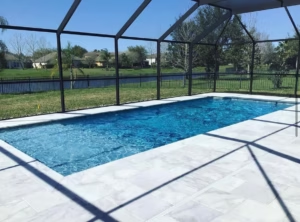
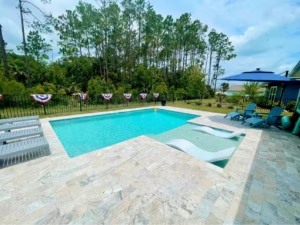
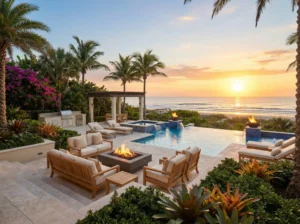
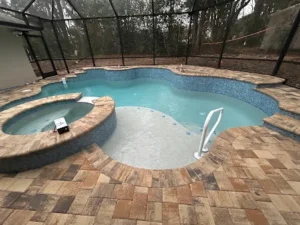
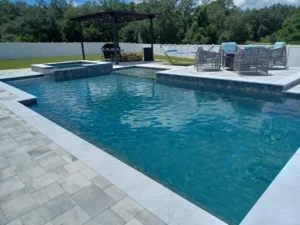
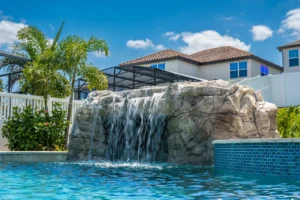
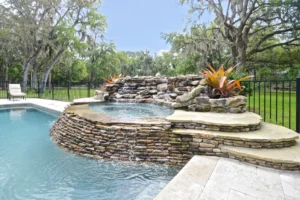
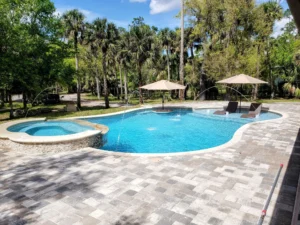
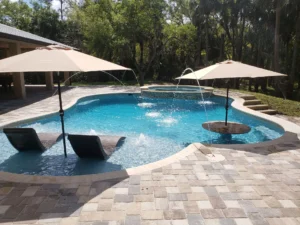
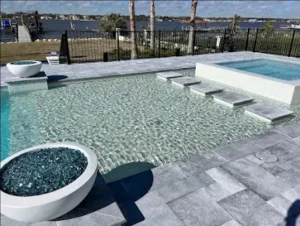
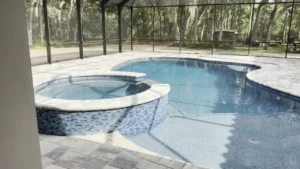
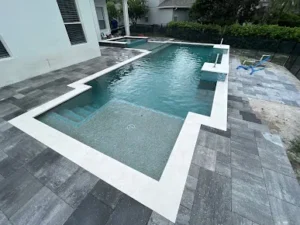
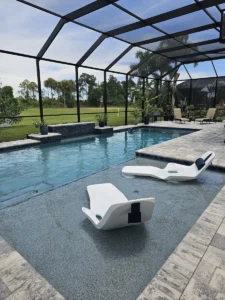
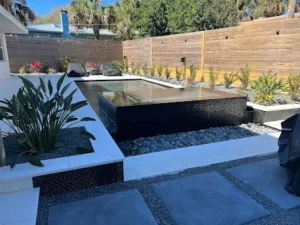

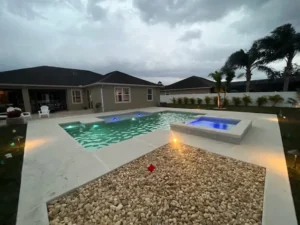
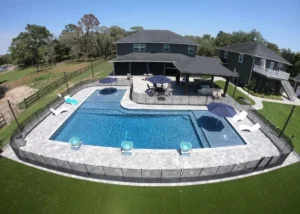
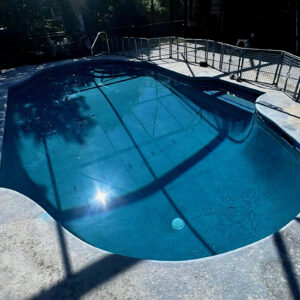
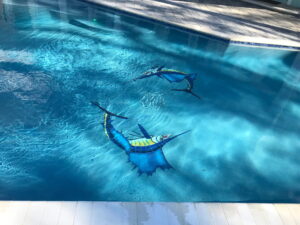
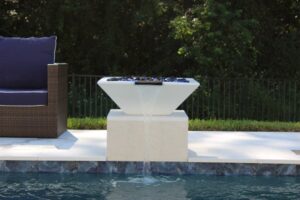
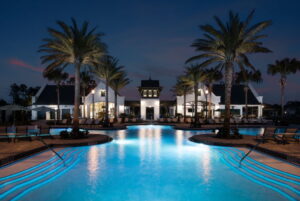
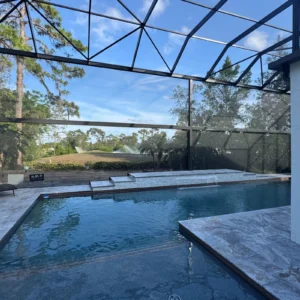
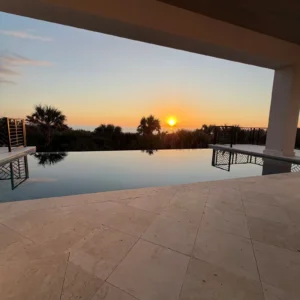
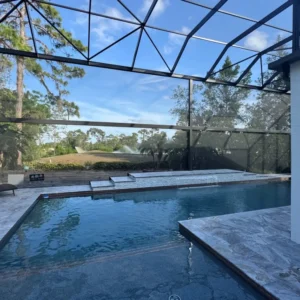

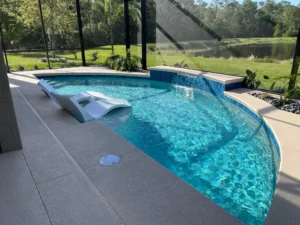

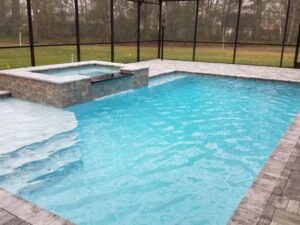


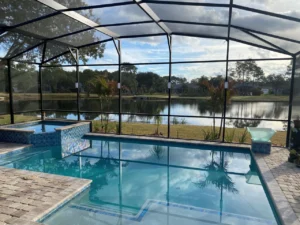
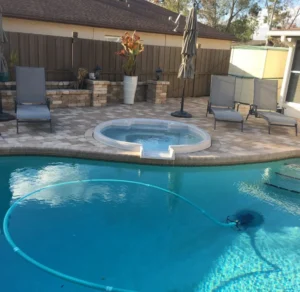
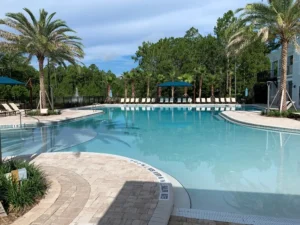

These pool builders are not based in Volusia County and don't emphasize their services here, but they've shown they work here, too — so check them out, too!
Tell us what your dream pool is all about, and where do you want it. We'll do our best to find a professional pool builder for your project.
Volusia inverts the usual assumption. In most Florida counties the county department is the default and cities are the exception; here almost every incorporated city issues its own pool permits, and the county covers what is left.
| Where the lot sits | Who reviews the pool plans |
|---|---|
| Daytona Beach, Deltona, Port Orange, DeLand, Ormond Beach, New Smyrna Beach and most others | That city's own building department |
| Unincorporated Volusia | The county's Building and Zoning division |
Volusia County flips the usual assumption homeowners bring to permitting. In most Florida counties, the county building department is the default and incorporated cities are the exception.
Here, it runs the other way: nearly every incorporated city in Volusia — Daytona Beach, Deltona, Port Orange, DeLand, Ormond Beach, New Smyrna Beach, Edgewater, Holly Hill, South Daytona, Daytona Beach Shores, Orange City, DeBary, Lake Helen, and Pierson among them — runs its own building department and issues its own pool permits. Volusia County’s Building and Code Administration division steps in directly only for property in unincorporated territory: land that carries a Volusia mailing address but sits outside every city’s limits. If your address is inside any of the cities above, your permit almost certainly comes from that city’s own building or community development office, not the county.
A few of these arrangements are worth knowing about specifically. Deltona — Volusia’s largest city, incorporated in 1995 out of what had been an unincorporated subdivision since the 1960s — has run its own Building Services Division ever since, with separate permit categories for in-ground and above-ground pools. DeLand and Ormond Beach each maintain their own building divisions with online applicant portals.
DeBary, by contrast, has a building department in name but contracts the actual plan review and inspection work out to a private engineering firm rather than staffing it entirely in-house — a detail that matters mainly in knowing who to call with questions. Lake Helen issues its own permits out of city hall but applies the county’s own fee schedule rather than setting independent fees. And homeowners near New Smyrna Beach should double-check their exact parcel: a 2022 boundary agreement moved permitting authority for certain unincorporated land near the city back to Volusia County directly, even though the area reads as part of New Smyrna Beach on a map.
For the unincorporated pockets that fall outside every city’s limits, Volusia County’s Building and Code Administration division — reached through its Permit Center — is the authority of record, handling plan review, permitting, and inspections directly.
The county’s process for a residential in-ground pool typically runs through a pre-application review (zoning, land development, environmental) before the building permit itself is issued, and an issued pool permit generally has to show active work and a first inspection within a defined window or it lapses. The practical step for any homeowner, city or county, is the same: confirm which specific office has jurisdiction over your parcel before assuming anything about timeline or process, since “Volusia County” on an envelope doesn’t necessarily mean Volusia County government is who reviews your plans.
Whichever office issues the permit, Florida’s Residential Swimming Pool Safety Act (Chapter 515, Florida Statutes) governs every new residential pool in the state, Volusia included. Before final inspection, a new pool has to include at least one approved safety feature:
A code-compliant fence satisfies most homeowners’ needs, though the statute allows any one of the listed options. Building a pool without one of these features is a second-degree misdemeanor under the law, though a homeowner can avoid that penalty by adding a qualifying safety feature and completing a drowning-prevention course within 45 days of being cited.
Pool construction in Florida is a licensed trade under Chapter 489 of the Florida Statutes, regulated statewide by the Department of Business and Professional Regulation (DBPR) rather than by any city or county. The credential to look for is a Certified Pool/Spa Contractor (CPC) license, or in some cases a Certified Building Contractor (CBC) license, which covers a wider scope of construction that includes pools.
Both are state-issued, so a properly licensed contractor can legally build in Deltona, DeLand, or unincorporated Volusia County alike — the license doesn’t change by city line. DBPR’s public license lookup is the place to confirm active status and check for disciplinary history before signing anything, rather than relying on a contractor’s own claims.
City or county, the broad shape of the process holds steady across Volusia:
Review speed depends heavily on how busy the specific office handling your application is at the time, which is one more reason confirming the right office — city or county — matters before you set expectations on timing.
Pool searches in Volusia County skew more budget-first than in Florida’s pricier coastal markets, and above-ground pools show up in that search demand almost as often as full custom in-ground builds — especially the further inland you go, toward Deltona and DeLand. That’s a real reflection of the county’s range: barrier-island communities like Daytona Beach Shores and New Smyrna Beach sit alongside larger, more inland residential cities where an above-ground pool is a genuinely common, practical choice rather than a fallback.
Cost questions dominate, and they cut in a specific direction here: homeowners aren’t just asking what an in-ground pool costs, they’re asking whether an above-ground pool gets them most of the benefit for meaningfully less money, and whether a number like $20,000 is realistic for either option. There’s no single answer, because both pool categories swing hard on size, site prep, and material — a small above-ground pool and a screened, decked-out in-ground pool aren’t really the same purchase decision, and the only way to know what either one costs on a specific property is to get quotes rather than anchor to a number seen online.
Permitting shows up constantly in local search, and a good share of it is homeowners specifically trying to figure out if above-ground pools are exempt from permitting the way a shed or a small deck sometimes can be. They generally aren’t.
Nearly everywhere in Florida, above-ground pools of any real size still require a permit and still trigger the same barrier and alarm requirements as an in-ground pool once water depth crosses the threshold the state cares about — the safety law doesn’t distinguish between pool types. Given how many different building departments operate across Volusia’s cities, confirming the requirement with the specific office covering your address, rather than assuming a smaller pool means a lighter process, is worth the extra step.
Contractor vetting takes on a slightly different shape in a market with this much above-ground and lower-budget activity.
A lower price point tends to attract a wider range of installers, some licensed and insured, some not, and the gap between them matters more here precisely because the amounts at stake can look small enough to make people skip the verification step they would never skip on a full custom build. Confirming a CPC or CBC license is active with DBPR, and confirming a permit is actually being pulled in your name, protects a modest above-ground installation exactly as much as it protects a custom pool — the safety law and licensing requirements don’t scale down with the price tag.
Timing questions follow a familiar Central Florida pattern: drier months in the cooler part of the year tend to move faster for excavation and site work, while summer’s afternoon thunderstorm pattern can stretch out in-ground timelines more than above-ground ones, since above-ground installs involve far less excavation to begin with. That difference in build complexity is itself part of why above-ground pools draw so much of the practical, cost-driven search interest in this county specifically.
Yes. A building permit is required for essentially every residential pool in Florida, in-ground or above-ground, and that requirement doesn’t vary by county or city — it’s set at the state level. In Volusia County specifically, where that permit comes from depends on your address: nearly every incorporated city here (Daytona Beach, Deltona, Port Orange, DeLand, Ormond Beach, and more) issues its own permits through its own building department, while Volusia County’s Building and Code Administration division only handles unincorporated land outside all of those city limits.
Yes. The City of Deltona’s Building Services Division treats above-ground pools as their own permit category, separate from in-ground pools, but still requires a permit and inspection before the pool goes into use. The common assumption that a smaller, above-ground pool skips the permit process is generally wrong — Florida’s pool safety requirements apply regardless of pool type once it holds enough water to matter.
You take on real risk. A building department that discovers unpermitted pool work can issue a stop-work order and require retroactive inspection, correction, or in some cases removal of what’s already built, and unpermitted pools are a common snag at resale once a buyer’s inspector or title company checks permit records. Just as important, skipping the permit means skipping the safety inspection that confirms your pool actually meets Florida’s Residential Swimming Pool Safety Act requirements — the paperwork isn’t the point, the inspection behind it is.
It depends heavily on pool type, site conditions, and finish level far more than on that one dimension. A 12x24 in fiberglass, vinyl, or gunite can land at meaningfully different price points even before screening, heating, or decking are added, and site-specific factors — soil, access, existing landscaping — move the number further. Treating any single figure as a Volusia County average is a mistake; a handful of quotes from licensed local contractors is the only reliable way to price a specific project.
Buying a home with an existing, well-maintained pool is often the cheaper path up front, since you avoid construction costs and permitting timelines entirely — but that only holds if the pool itself is in good condition. An older pool with a tired pump, cracked deck, or an outdated barrier that no longer meets current safety code can turn a discount into a hidden expense, so a pool-specific inspection before closing is worth treating as its own line item, separate from the general home inspection.
Above-ground pools are consistently the lower-cost path into pool ownership, and that’s a real part of why they show up so often in Volusia County search activity compared to pricier coastal markets. That said, cost still swings with size, pump and filter quality, and any decking or fencing added around it — and every one of those add-ons, plus the base installation, still needs the same permit and safety-barrier compliance as an in-ground pool once it’s deep enough to require one.
Confirm the contractor’s CPC or CBC license is active through DBPR’s public lookup, ask which specific building department will be issuing your permit (it varies by city here more than in most Florida counties), and get that in writing before work starts. Because Volusia’s market includes a wide range of project sizes, from above-ground installs to full custom builds, comparing a few quotes and confirming permit history with the relevant city or county office matters just as much on a smaller project as a larger one.
If you didn't find a pool builder for your Volusia County passion project here, check out the neighbours: professional pool builders usually don't mind travelling a few miles to help new customers with the most exciting projects.