
Pool builders by service
Pool heater installation is the difference between a Florida pool you swim in nine months a year and one you swim in twelve. The real choice is between three machines: a heat pump, a gas heater, or solar collectors on the roof. They differ far more in what they cost to run than in what they cost to fit.
119 listings here
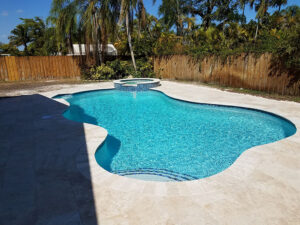
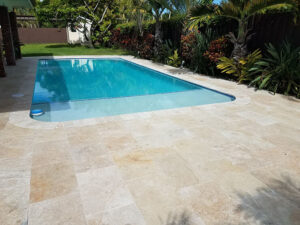
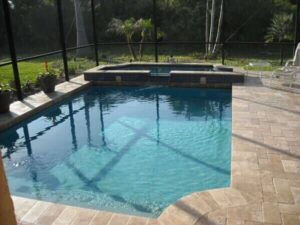
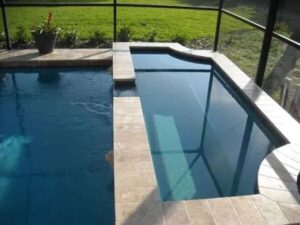
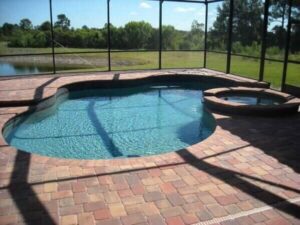
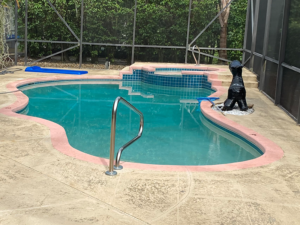
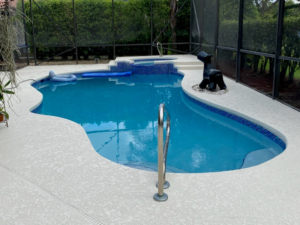
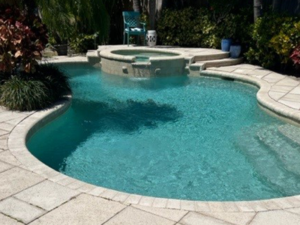
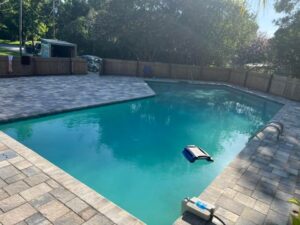
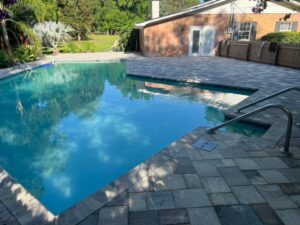
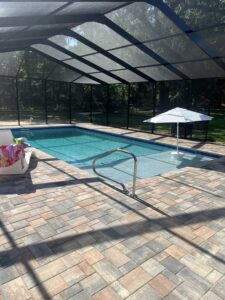
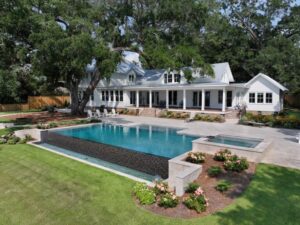
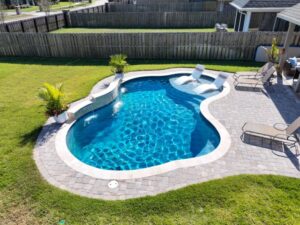
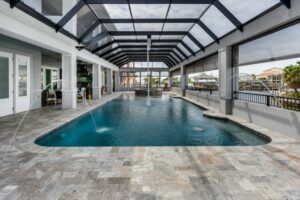

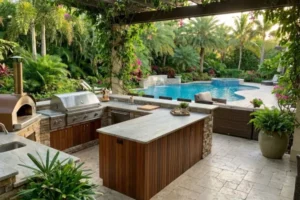
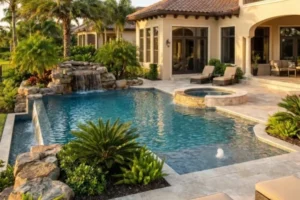
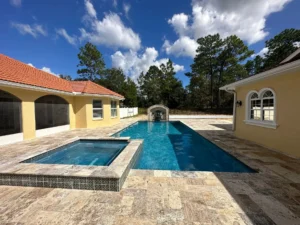
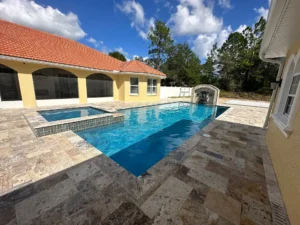
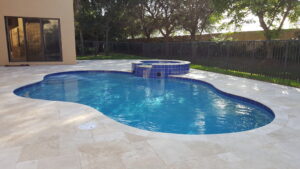
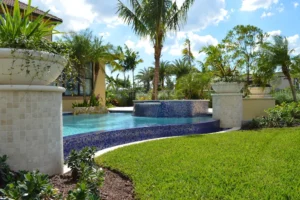
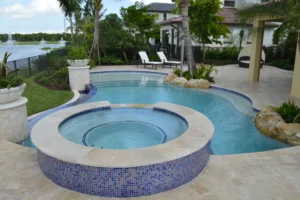
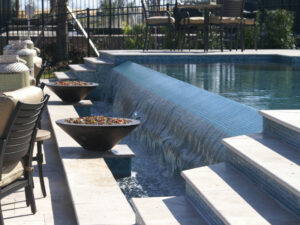
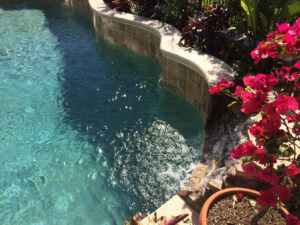
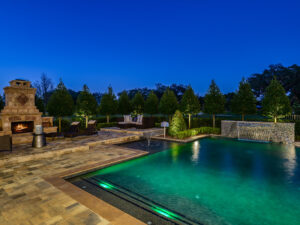
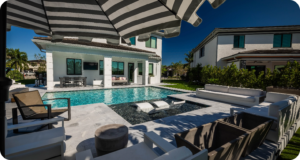
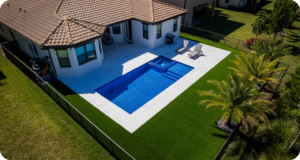

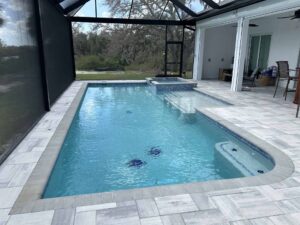
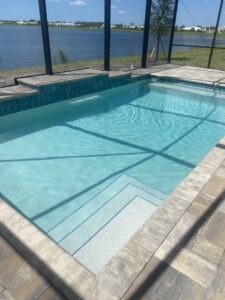
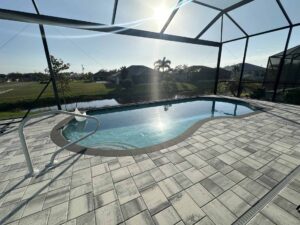
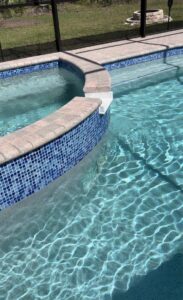
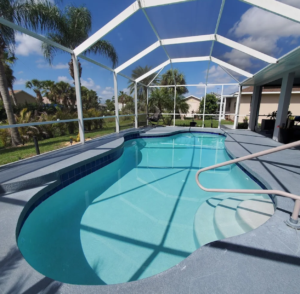
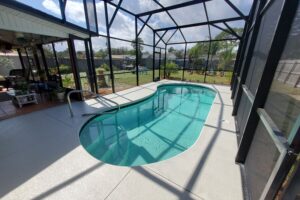
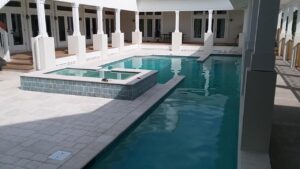
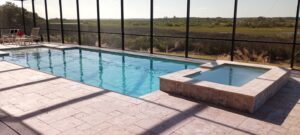
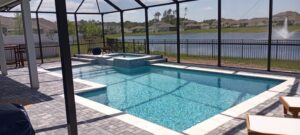


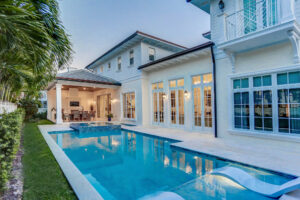
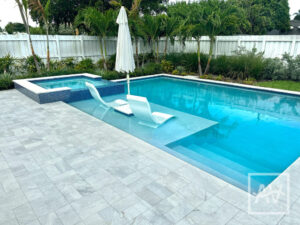


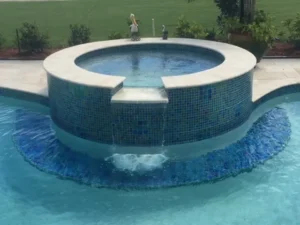
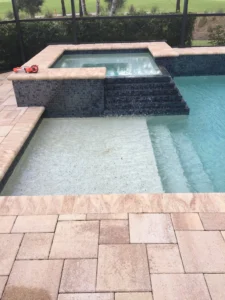
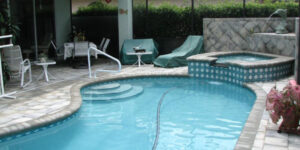
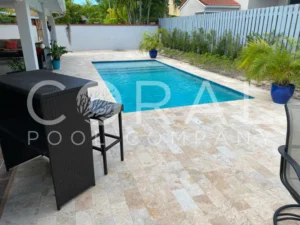
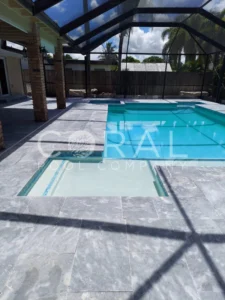

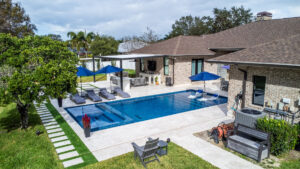
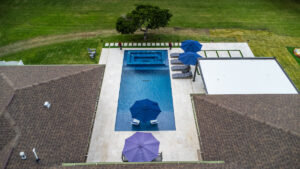
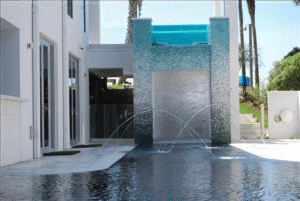

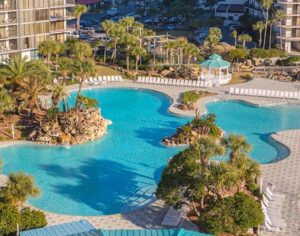
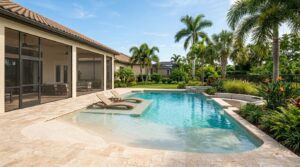

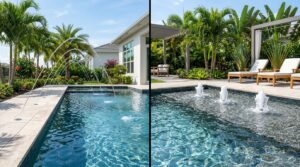
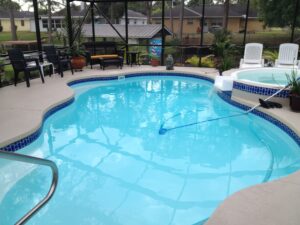
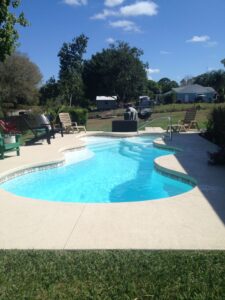

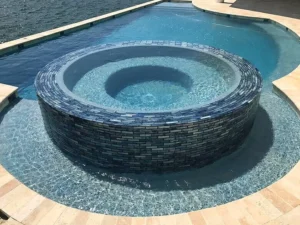
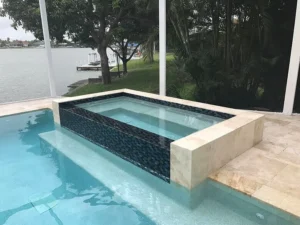
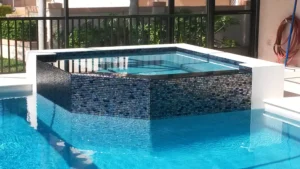
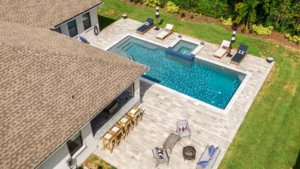
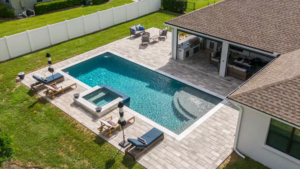
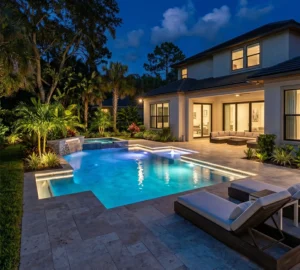
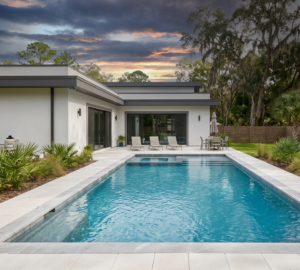
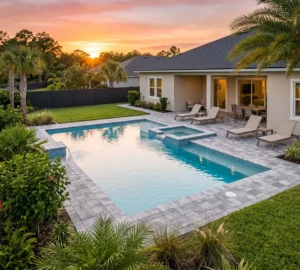



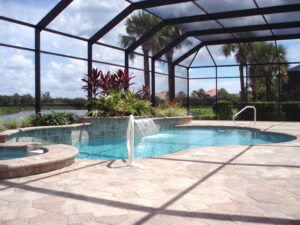
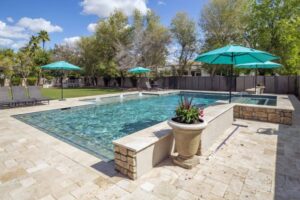
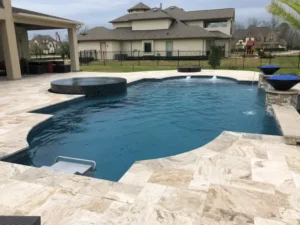
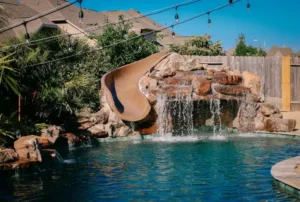
A pool heater does not make a pool hot. It holds a temperature against everything pulling it back down, and in Florida nearly all of that loss happens at the surface overnight, through evaporation. Two consequences follow, and they run this whole page: a cover moves the bill further than any choice of machine, and a heater sized off the surface area holds temperature where an undersized one spends all night chasing it.
What you are buying is months. A Florida pool with no heater is pleasant from about April to October and ornamental for the rest. With one it has no season at all.
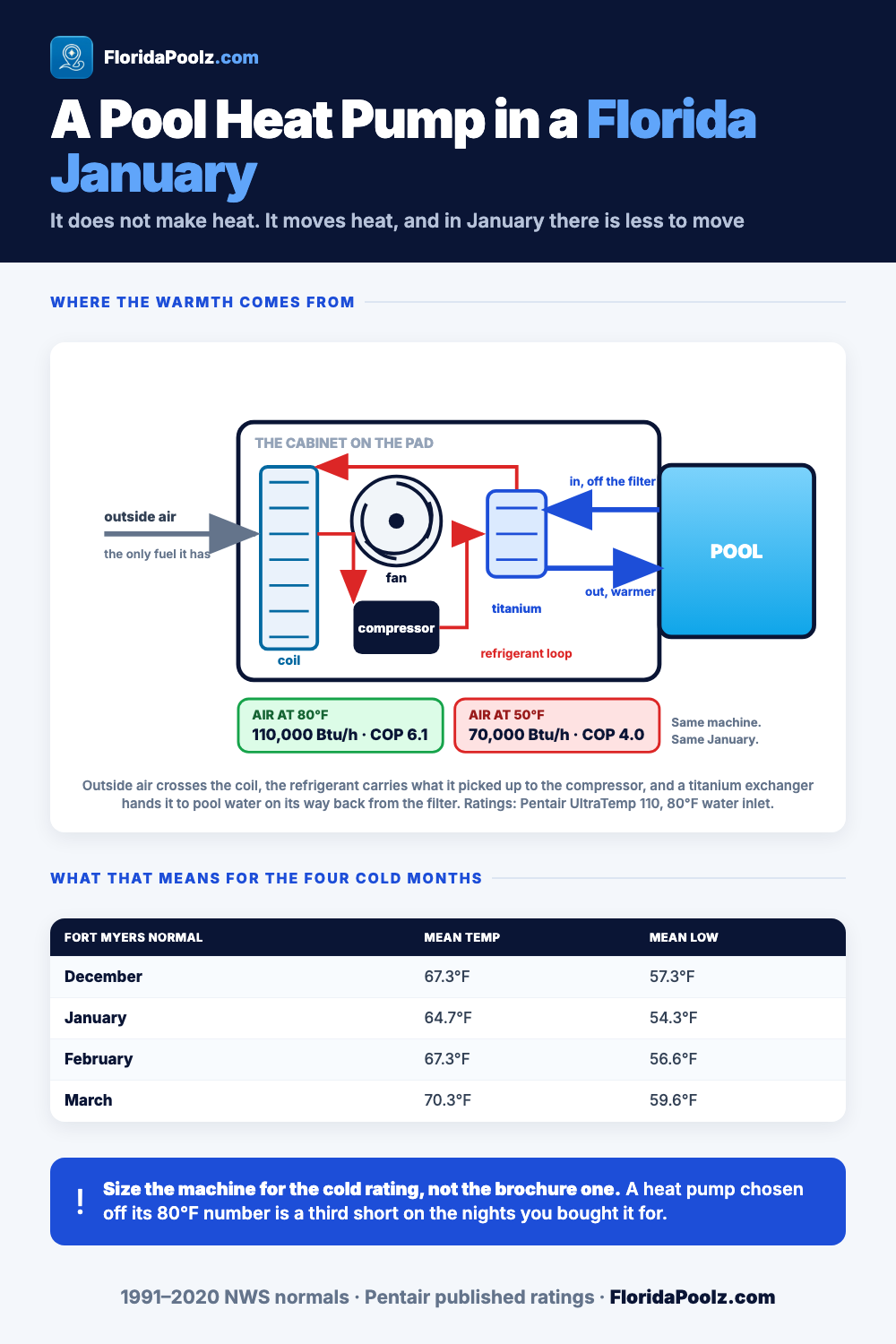
Fort Myers sits at a fair middle of the state to measure from. Across the 1991–2020 normals the National Weather Service puts January's mean temperature at 64.7°F and January's average low at 54.3°F. December and February both average 67.3°F. Call it four months where the air will not hold a pool at swimming temperature on its own, and where the nights do most of the damage.
That arithmetic hurts a heat pump more than anything else on the pad, since a heat pump's output is a function of the air it stands in. Pentair rates the UltraTemp 110 at 110,000 Btu/h and a COP of 6.1 in 80°F air. The same machine at 50°F air is rated 70,000 Btu/h at a COP of 4.0. A third less heat at two thirds the efficiency, on exactly the nights you wanted it.
The second Florida detail sits at the slab. Pentair's installation guide treats its anchor clamps as a recommendation everywhere and a requirement here, bolting the machine down so a storm cannot walk it off the pad. Salt does the slower damage. The same guide flags coastal salt air as a problem for the evaporator coil, alongside a stranger one worth knowing: a lawn sprinkler on well water will scale the coil and the electronics if it can reach them.
These are not three brands of one product. They are three machines with three different bills, and the choice is usually settled by what the house already has rather than by what the pool wants: the spare capacity in the electrical panel, gas at the meter or no gas at all, and how much unshaded roof faces south.
It runs a refrigerant loop, pulls warmth out of the outside air and hands it to the water through a titanium exchanger. Nothing burns. The Department of Energy puts the coefficient of performance of pool heat pumps between 3.0 and 7.0, which is three to seven units of heat for every unit of electricity in. That is the cheapest warmth available at the pad. It's slow. Figure on a day or two to bring a cold pool up, not an afternoon.
A gas heater makes its own heat and is indifferent to the weather. Outputs run from 75,000 to 450,000 Btu, and current units sit between 89% and 95% efficient against the 55% baseline the Department of Energy uses for comparison. Warm-up is measured in hours, which is the entire argument for it. Gas suits a spa, a rental, a pool used in bursts. Left running through a Florida winter it is the most expensive way to do this.
Pool water is pumped through unglazed collectors on the roof and comes back warmer. No fuel, almost no running cost. The Department of Energy prices a system at $2,500 to $4,000 bought and installed, with a payback of one to seven years, and says solar collectors typically outlast both gas heaters and heat pumps. What you give up is control, since the pool is as warm as the week has been sunny. Circulate through the same collectors at night in August and they cool the pool instead, which in this state is a feature.
| Heat pump | Gas | Solar | |
|---|---|---|---|
| Where the heat comes from | The outside air | Natural gas or propane | The roof |
| Time to bring a pool up | A day or two | Hours | Days, and weather-dependent |
| Cold-snap behaviour | Output falls with the air | Unaffected | Follows the sun |
| What it needs at the house | Panel capacity and a circuit | A sized gas line or a tank | Unshaded south-facing roof |
| Extra trade on site | Electrician | Gas fitter and electrician | Roofer, on some installs |
The machine is the easy bit. What takes the day is everything around it, and most of that is licensed work that your pool builder does not perform personally. Order of operations on a typical retrofit:
Clearances are the part homeowners get wrong when they pick the spot themselves. Pentair asks for 24 inches of access at the front, 12 inches on the other sides, six inches off the house wall, and five feet from the inside wall of the pool, which drops to nothing where a five-foot barrier already stands between the two. Under a soffit or a cover it wants five feet of clear air above the fan.
The bond is not optional and it is not the same thing as the ground. The National Electrical Code has every metallic part of a pool structure tied together with solid copper no smaller than 8 AWG, and the heater joins that grid at a lug on its own cabinet. Under Florida law the pool license itself is split three ways: a commercial pool/spa contractor works on any pool at all, a residential pool/spa contractor is limited to residential ones, and a servicing contractor repairs and services but does not build. The categories are set out in section 489.105(3) of the Florida Statutes.
Sizing starts from surface area, never from gallons, and the Department of Energy publishes the arithmetic gas installers use: pool area multiplied by the temperature rise you want, multiplied by twelve, gives the Btu per hour the heater has to make. Everything else on the quote is site work.
One published figure is worth carrying into a quote conversation: the Department of Energy prices a complete solar pool heating system at $2,500 to $4,000 installed. Heat pump and gas installs vary too widely with the electrical and gas work to have an honest single range, and any quote that arrives without a line for that work has left it out rather than solved it.
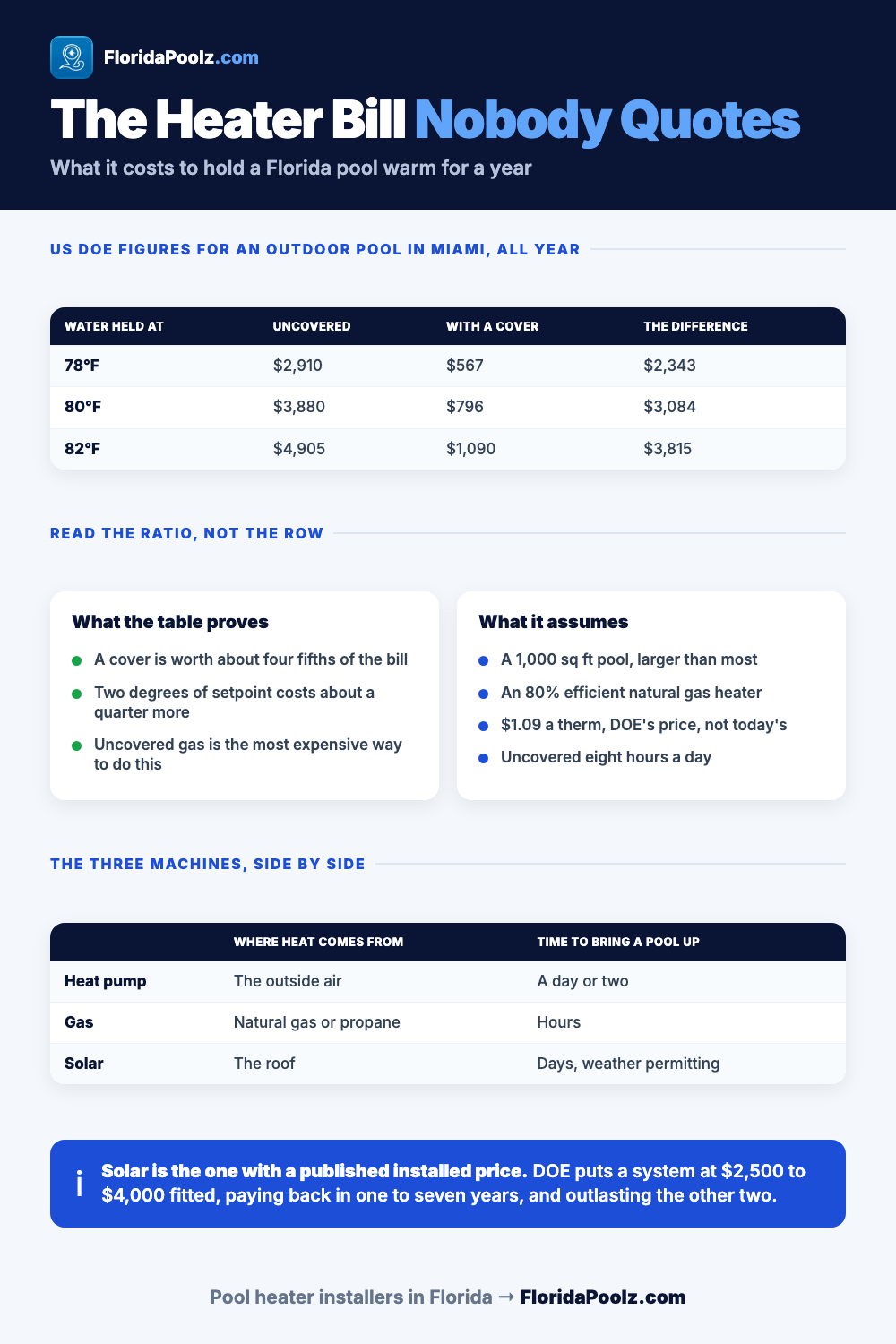
Install price is a one-off. This is the number that decides whether the heater gets used or quietly switched off in year two, and the Department of Energy publishes the only Florida-specific version of it worth quoting. Annual cost of gas-heating an outdoor pool in Miami, all year round:
| Water held at | Uncovered | With a cover |
|---|---|---|
| 78°F | $2,910 | $567 |
| 80°F | $3,880 | $796 |
| 82°F | $4,905 | $1,090 |
Read the ratio, not the row. Those are DOE's figures for a 1,000 square-foot pool with an 80%-efficient natural gas heater at $1.09 a therm, left uncovered eight hours a day, and a normal backyard pool is well under half that surface. The shape of it holds at any size: a cover takes roughly four fifths off the running cost, and two degrees of setpoint costs about a quarter more. Nothing else you decide on this page moves the number that far.
Then there is what wears. A heat pump's compressor is the expensive component and a coastal coil is the one that goes first, which makes the coating on it a fair question to ask. Gas heat exchangers are consumable on a longer clock, and they fail faster on water that runs out of balance. Solar collectors have almost nothing in them to break, and the Department of Energy's own comparison has them outlasting the other two. One thing that looks like a fault and is not: a running heat pump drips three to five gallons an hour of condensate onto the pad, which is the machine working, not the pool leaking.
Heating is the friendliest retrofit in the backyard. The shell is untouched, the deck stays down, and nobody cuts concrete. Everything that makes it hard sits at the house instead of at the pool, so the survey worth doing before you call anyone is a survey of the panel and the meter.
An older service with no spare breaker space turns a heat pump into an electrical job with a heater attached. A house on propane rather than natural gas turns a gas heater into a tank, a slab and a delivery contract. A roof at the wrong pitch or under an oak turns solar into nothing at all. None of those kill the project, and all three belong in the conversation before a machine is chosen rather than after.
The roster above is every builder profile tracked here that names pool heating among the services it sells, filtered live. It's not something a gallery can settle for you, since the machine lives on the equipment pad and stays out of every photograph anybody takes of a finished pool.
Ask a shortlisted builder which of the three they fit most weeks. Almost every pool company in the state will quote a heat pump. Gas and solar are narrower trades, and the honest answer to "do you do solar?" is sometimes a subcontractor's name, which is useful to know in advance rather than on the day.
A heater is usually the second decision, not the first. If the pool is still on paper, the shell decides how much water there is to hold warm, and that is a choice between gunite, concrete and fiberglass pool installation. If a spa is going in, it will be the thing the heater actually earns its keep on, and pool and spa builders quote the two together. On a saltwater pool the metallurgy of the heat exchanger stops being a detail, which is why titanium turns up in the specification sheets.
Supply is thickest where the pools are. Naples, Cape Coral and Sarasota each carry more than twenty builders on the roster, and Lee County and Collier County are the densest two in the state for this work.
It runs a refrigerant loop, the same way a fridge does in reverse. A fan pulls outside air across an evaporator coil, the refrigerant picks up that warmth, a compressor concentrates it, and a titanium heat exchanger hands it to the pool water on its way back from the filter. Nothing is burned, which is why the Department of Energy rates pool heat pumps at a coefficient of performance of 3.0 to 7.0: three to seven units of heat delivered for every unit of electricity drawn. The trade-off is that the heat comes out of the air, so the colder the night, the less there is to collect.
The Department of Energy publishes a Miami figure, which is as close to a Florida answer as a national source gets. Holding a 1,000-square-foot outdoor pool at 80°F all year with an 80%-efficient natural gas heater at $1.09 a therm costs $3,880 uncovered and $796 with a cover. A normal backyard pool is well under half that surface area, so treat the ratio as the useful part: the cover is worth roughly four fifths of the bill, and every two degrees on the thermostat costs about a quarter more.
The heater is not the licensed part. The circuit that feeds it and the gas line that fires it both are, and in Florida that means an electrical contractor and a gas fitter respectively, working to the National Electrical Code and the manufacturer's manual. The bonding alone is a good reason not to improvise: every metallic part of a pool has to be tied together with solid copper no smaller than 8 AWG, and the heater joins that grid at a lug on its cabinet. Manufacturers are direct about it too. Pentair's guide states that only a qualified service person should install the unit, and a self-installed heater is a warranty argument waiting to happen.
It's calculated, not looked up. The gas fitter sizes the pipe from the heater's Btu input, the length of the run, the number of fittings, and everything else already drawing off the same meter. Pool heaters are large loads by domestic standards, running from 75,000 up to 450,000 Btu, so a 400,000 Btu unit on the end of a line originally sized for a range and a water heater is the common failure. On propane the same calculation decides the tank, not only the pipe.
It's the one place in the argument where the state does the work for you. The Department of Energy prices a solar pool heating system at $2,500 to $4,000 installed with a payback of one to seven years, and says the collectors typically outlast both gas heaters and heat pumps. Two site facts decide it: how much unshaded roof faces roughly south, and whether the roof is due for replacement, since taking collectors off and putting them back is a cost nobody quotes at the start. The limitation is control, as a solar-heated pool tracks the weather rather than a thermostat.
It will not heat it, and it will keep more heat than a heater adds. Almost all the loss from a Florida pool is evaporation off the surface overnight, and a cover stops it. In the Department of Energy's Miami figures a cover cuts the annual cost of holding 80°F from $3,880 to $796. The reason it does not replace a heater is that a cover only slows the fall. It cannot lift a pool that started the week at 68°F, and somebody has to pull it on and off, short of paying for an automatic one.
It depends on which of the three you fitted, and the Department of Energy ranks them the same way every time: solar collectors typically outlast both, and heat pumps typically outlast gas heaters when they are maintained. What shortens any of them in Florida is where they stand. A coastal equipment pad works on the coil and the fasteners, and Pentair's own manual names salt air near the coast as a problem, along with lawn sprinklers spraying well water into the machine.
Start from the roster on this page, which filters the builders tracked across the state down to the ones that list pool heating, then narrow by city. Supply is heaviest around Naples, Cape Coral and Sarasota. Two questions sort a specialist from a generalist quickly: which of the three systems they fit most weeks, and whether the electrical work is done in-house or subcontracted. Neither answer is wrong, and knowing it in advance keeps the schedule honest.
Still weighing it up? These are the choices most people compare with Pool Heater Installation in Florida.