
Pool builders by county
Pool builders serving Lee County. Six cities permit their own work and the county covers everywhere else through eConnect, which is the first thing to establish before a designer draws anything. Start with the shortlist, then read what the rebuild has done to the queue.
39 listings here 36 based here
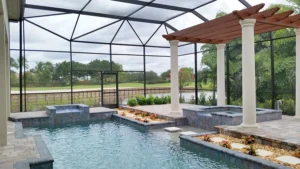
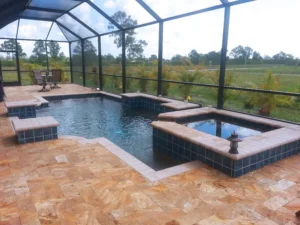
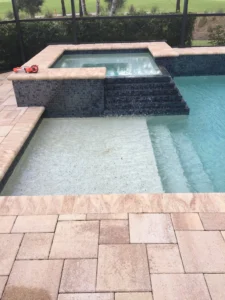
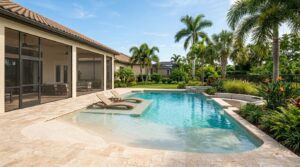
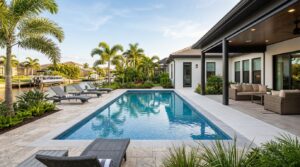
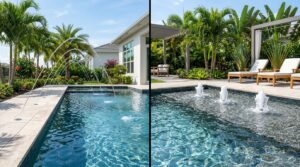
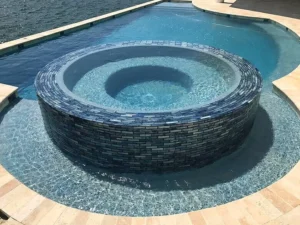
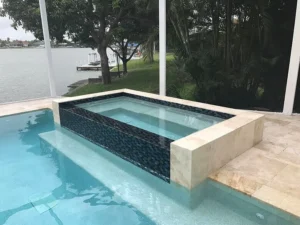
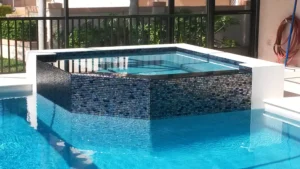
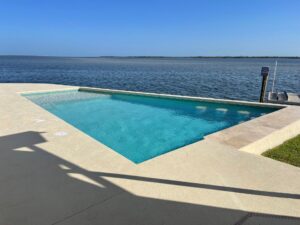
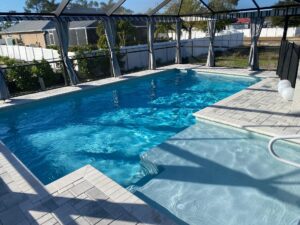
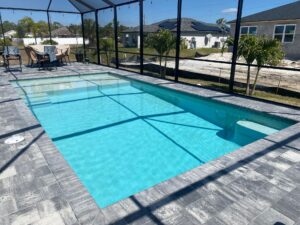
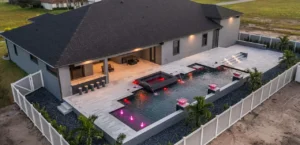
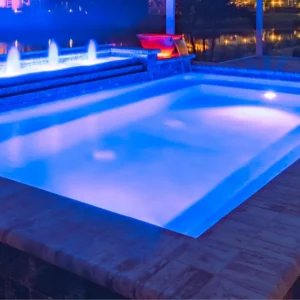
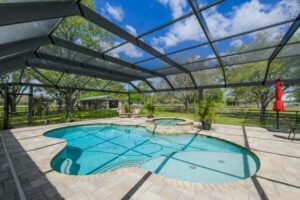
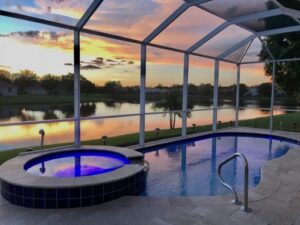
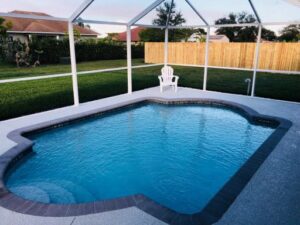
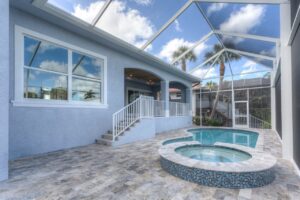
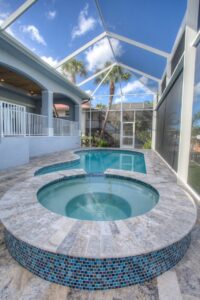
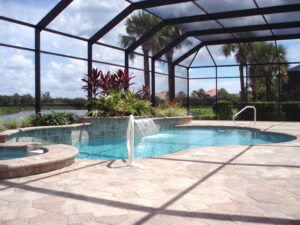
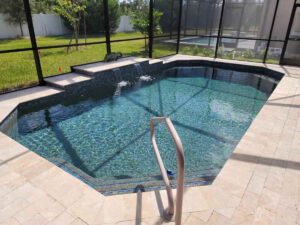
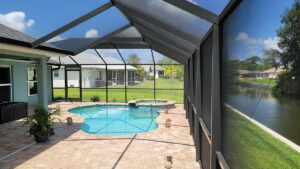
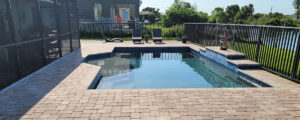
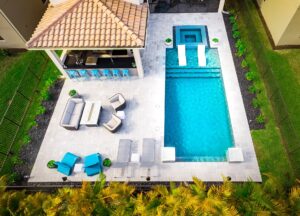
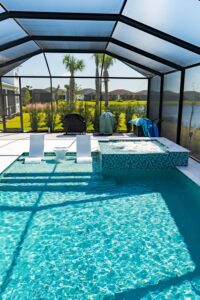
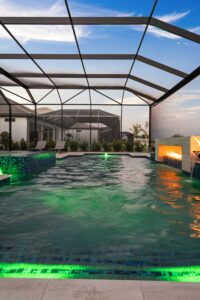
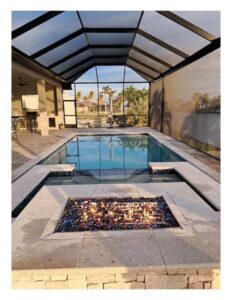
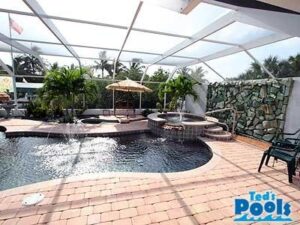


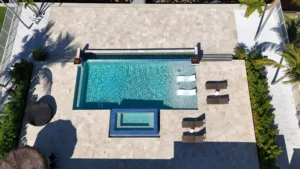
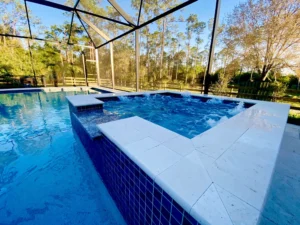
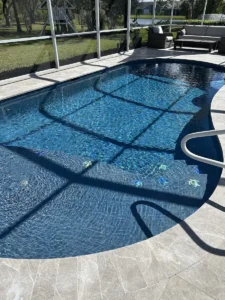
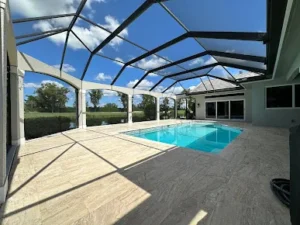

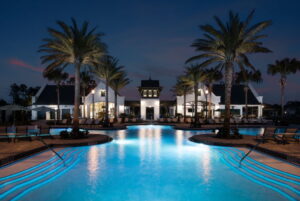
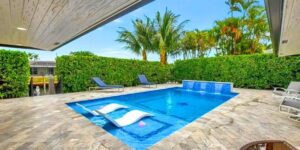
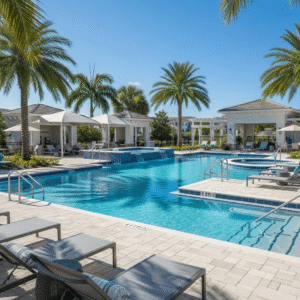
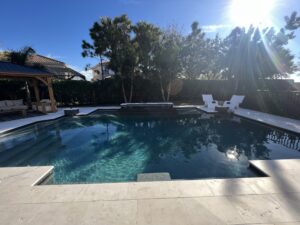

















These pool builders are not based in Lee County and don't emphasize their services here, but they've shown they work here, too — so check them out, too!
Tell us what your dream pool is all about, and where do you want it. We'll do our best to find a professional pool builder for your project.
Lee County covers Fort Myers, Cape Coral and the barrier islands, and it is still working through what Hurricane Ian did to its housing stock. That shapes both the permitting queue and the kind of pool work being done here.
| Where the lot sits | Who reviews the pool plans |
|---|---|
| Bonita Springs, Cape Coral, Estero, Fort Myers, Fort Myers Beach, Sanibel | That city's own building department |
| Lehigh Acres, San Carlos Park, Iona, North Fort Myers and the rest | Lee County Community Development, through its eConnect portal |
Lee County itself says it plainly on its own permit center page: property inside Bonita Springs, Cape Coral, Estero, Fort Myers, Fort Myers Beach, or Sanibel is generally permitted through that city’s own building department, not the county.
Everywhere else in Lee County — Lehigh Acres, San Carlos Park, Iona, North Fort Myers, and the other large unincorporated areas that make up a substantial share of the county’s population — falls to the Lee County Department of Community Development, working through its eConnect permitting portal. That makes Lee something of a mixed case compared to counties where the county is either almost entirely the default or almost entirely carved up into cities: a genuinely large unincorporated population sits alongside six separate, fully independent city building departments, and knowing which one applies to a specific address is the first real step in the process.
Each city runs its own system. Cape Coral’s Building Division, part of its Development Services department, processes permits through an EnerGov-based online portal, and recently tightened its own pool-specific rules — as of March 2026, the city stopped accepting prepaid safety pool barrier permits as a standalone part of a pool permit application, a change worth knowing about if you’re used to how that used to work. Fort Myers runs its permitting through a department it calls Building, Permitting & Inspections, also on an EnerGov portal.
Bonita Springs and Estero, both relatively recent incorporations, each maintain their own Community Development departments handling building permits in-house. Sanibel’s Building Division typically requires both a development permit and a building permit for pool projects, reflecting the island’s additional land-use review layer. Fort Myers Beach handles permitting through its own Building Services division on a separate portal. Six different offices, six different systems — confirming which one has authority over your address, before assuming anything about timeline or requirements, is worth the extra call.
Lee County’s coastal geography means Hurricane Ian’s 2022 landfall still shapes permitting in ways some other Florida counties simply don’t deal with. In the storm’s immediate aftermath, Lee County’s Department of Community Development stood up emergency permitting operations, including a temporary remote permit office on Pine Island that let residents acting as their own contractor get plans submitted and reviewed on-site.
On the barrier islands, that history is still directly relevant today: Sanibel’s building department maintains an active, regularly updated emergency repair permitting policy covering Ian and the storms that followed, and Fort Myers Beach continues to enforce FEMA’s substantial-improvement rule — the threshold that determines whether storm-damaged construction has to be rebuilt to current flood-elevation standards rather than simply repaired. None of that is specific to pools on its own, but anyone rebuilding a pool, deck, or cage alongside storm-related home repairs in coastal Lee County should expect that history to be part of the conversation with whichever building department has jurisdiction.
Regardless of which of Lee County’s seven permitting authorities issues the permit, Florida’s Residential Swimming Pool Safety Act (Chapter 515, Florida Statutes) applies the same way everywhere in the state. Before a new pool passes final inspection, it needs at least one approved safety feature:
Most homeowners meet this with a compliant fence, though the statute allows any one of the listed options. Building a pool without one is a second-degree misdemeanor, though the law lets a homeowner avoid that penalty by adding a qualifying safety feature and completing a drowning-prevention course within 45 days of being cited.
Under Chapter 489 of the Florida Statutes, pool construction is a licensed trade regulated statewide by the Department of Business and Professional Regulation (DBPR), not by any city or county. The relevant credential is a Certified Pool/Spa Contractor (CPC) license, or in some cases a Certified Building Contractor (CBC) license, which covers a broader scope of construction that includes pools.
Both are state-level licenses, so a properly credentialed contractor can legally build in Cape Coral, unincorporated Lehigh Acres, or anywhere else in Lee County without holding a separate local license. DBPR’s public lookup tool is the place to verify active status and disciplinary history directly, rather than relying on what a contractor tells you.
Across all seven Lee County jurisdictions, the underlying shape of the process is similar even though the offices and portals differ:
How long that takes depends heavily on how busy the specific office handling your application is when you apply, which is one more reason to confirm the right jurisdiction early rather than assume a uniform timeline across the county.
Search activity around pool contractors in Lee County carries a heavier post-storm undertone than in most other parts of Florida, and it shows up in specific, practical ways rather than as a vague worry.
A recurring theme is homeowners researching pool cages and screen enclosures directly — how long they typically last, what it costs to replace one, how long a new enclosure takes to build — questions that track closely with how many lanais and pool cages across Cape Coral and Fort Myers came down or were damaged in Hurricane Ian and haven’t all been rebuilt since. That’s a genuinely different pattern than markets that haven’t been through a major storm: the pool itself is often only part of the project, with the cage, decking, and surrounding hardscape needing their own scope, their own contractor, and in some cases their own permit.
Cost questions follow the same shape you’d expect anywhere in Florida — whether a modest budget can realistically cover an inground pool, what the cheapest viable pool type looks like, whether buying an existing house with a pool beats building one — but the honest answer in Lee County leans even more heavily on getting real quotes than usual, because rebuild-related demand has kept a lot of local contractors busy, and busy contractors don’t always price or schedule the way a slower market would. A number that was realistic a couple of years ago isn’t a safe thing to assume still holds.
Contractor vetting shows up as a bigger, more specific concern here than the generic “how do I pick a good contractor” question. Search patterns around some Fort Myers-area pool builders point toward homeowners actively researching companies’ track records — not just star ratings, but whether a specific company has a history of disputes, unfinished jobs, or legal action against it.
That instinct is a sound one anywhere, but it matters more in a post-hurricane market where rebuild demand can pull in contractors who are newer to an area or stretched thin across more jobs than they can properly staff. Checking a contractor’s license status and disciplinary history directly with DBPR, rather than trusting a company’s own reviews page, is a genuinely higher-value step here than in a market without that rebuild pressure.
Permitting-specific questions cluster heavily around Cape Coral in particular — what needs a permit, what happens if an inspector finds work that was done without one, how to search or track a permit once it’s filed. That tracks with Cape Coral being both one of Lee County’s largest cities and a city that has been actively updating its own pool permitting rules, which makes it worth double-checking current requirements directly with the city rather than assuming last year’s process still applies exactly as it did.
Timing questions are present but less dominant here than the rebuild and vetting concerns. The general Florida pattern holds — drier months are typically more predictable for excavation and concrete work than the wetter stretch of the year — but in Lee County specifically, contractor and inspector availability tends to matter at least as much as weather, given how much rebuild-related work several of the county’s building departments have been processing since 2022.
In Cape Coral, a building permit covers essentially all new pool construction, plus most structural work tied to it — screen enclosures, decking over a certain size, and electrical or plumbing work included in the build. The city's Building Division, part of Development Services, handles these through its own online permitting system, separate from Lee County's. Cape Coral has also been actively revising its own pool-specific rules, including a change effective March 2026 that stopped prepaid safety pool barrier permits from being processed as a standalone part of a pool permit application — a detail worth confirming directly with the city rather than assuming an older process still applies.
It exposes the homeowner to real consequences: a stop-work order, a requirement to open up or remove the unpermitted work for retroactive inspection, and potential fines, on top of the safety risk of a pool barrier or electrical bonding that was never actually checked against code. Unpermitted pool work is also a common problem at resale, since a buyer's inspector or the title company routinely checks permit records against what's actually built on the property.
Permit fees are set locally, not at the state level, so the amount varies by which of Lee County's building departments is issuing it — the county itself for unincorporated areas, or Cape Coral, Fort Myers, Bonita Springs, Estero, Sanibel, or Fort Myers Beach for property inside those city limits. Rather than relying on a fee figure that may be out of date, the reliable way to get a current number is to check directly with whichever office has jurisdiction over your address, since fee schedules are revised periodically.
Nobody can answer that from a postcode. Shell type carries most of the difference, then size, access, screening and what the site needs before anyone digs. Demand from the Ian rebuild also means schedules and pricing move around more here than in a settled market, so get current itemised quotes from a few licensed contractors rather than relying on a figure from a year ago.
Aluminum-framed screen enclosures commonly last well over a decade with normal wear, but salt air, storm exposure, and UV degrade the screening itself faster than the frame, and any enclosure that took direct hurricane damage needs a structural check regardless of its age. In Lee County specifically, a meaningful number of enclosures were damaged or destroyed by Hurricane Ian, so age alone isn't a reliable way to judge whether a specific cage needs replacement — a contractor inspection of the actual frame and fasteners is the safer basis for that decision.
Confirm the contractor's CPC or CBC license is active through DBPR's public lookup rather than taking their word for it, and ask directly about their permit history with whichever building department covers your address. It's also worth asking specifically about a contractor's track record on completed jobs and any past disputes, not just their star rating — a more relevant check here than in markets without the volume of rebuild-related work Lee County has seen since 2022, since that demand has drawn in a wider range of contractors than usual.
The drier months, roughly November through April, are generally more predictable for excavation and concrete work, with less risk of rain delays than the summer wet season. That said, contractor and inspector availability in Lee County often matters as much as the weather, given how much rebuild-related permitting several of the county's building departments have processed since Hurricane Ian — applying early and confirming a realistic schedule with your specific contractor tends to matter more than chasing the ideal month.
If you didn't find a pool builder for your Lee County passion project here, check out the neighbours: professional pool builders usually don't mind travelling a few miles to help new customers with the most exciting projects.