
Pool builders by service
Commercial pool contractors hold a different license from residential ones, and in Florida the line between the two is drawn in statute rather than by size. A pool serving five or more living units is a public pool, and public pools are permitted by the health department before the building department sees them. Below, what changes, and who does this work.
155 listings here

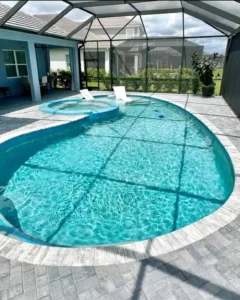
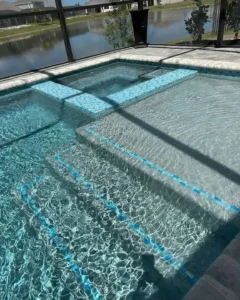
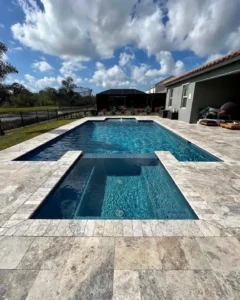
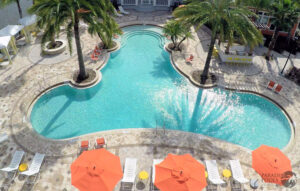
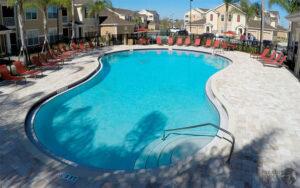
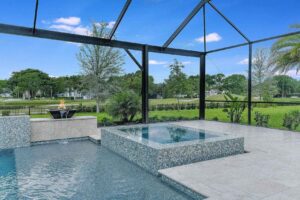
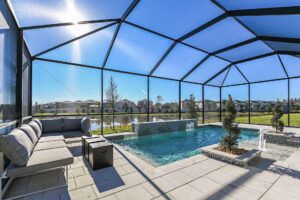
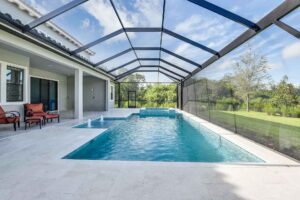
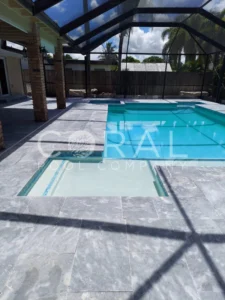
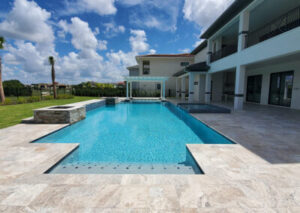
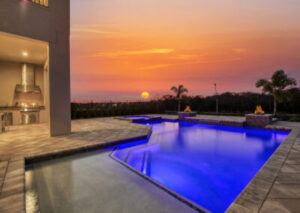
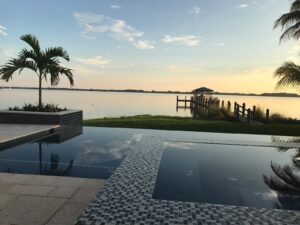


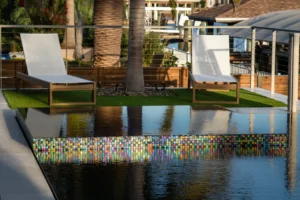
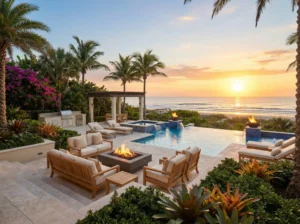
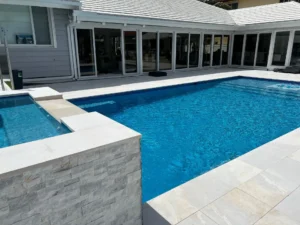
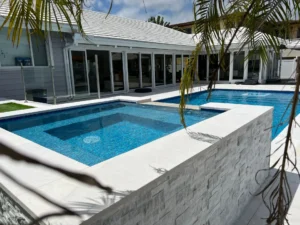
The license is the cleanest place to start, since Florida draws the line in statute rather than in marketing.
Section 489.105(3) of the Florida Statutes defines three pool categories. A commercial pool/spa contractor may construct, repair and service any swimming pool, hot tub or spa, "whether public, private, or otherwise, regardless of use". A residential pool/spa contractor is limited to residential pools. A swimming pool/spa servicing contractor repairs and services but does not build.
| Fla. Stat. 489.105(3) | What the scope covers |
|---|---|
| (j) Commercial pool/spa contractor | Any pool, hot tub or spa, whether public, private or otherwise, regardless of use |
| (k) Residential pool/spa contractor | Residential pools, hot tubs and spas only |
| (l) Swimming pool/spa servicing contractor | Repair and servicing. Does not build |
So the hierarchy runs one way. A commercial license covers a residential pool. A residential license does not cover a public one, and no amount of experience substitutes for the category on the register. That single fact is the reason this page exists as a filtered list rather than as a subset of the main directory.
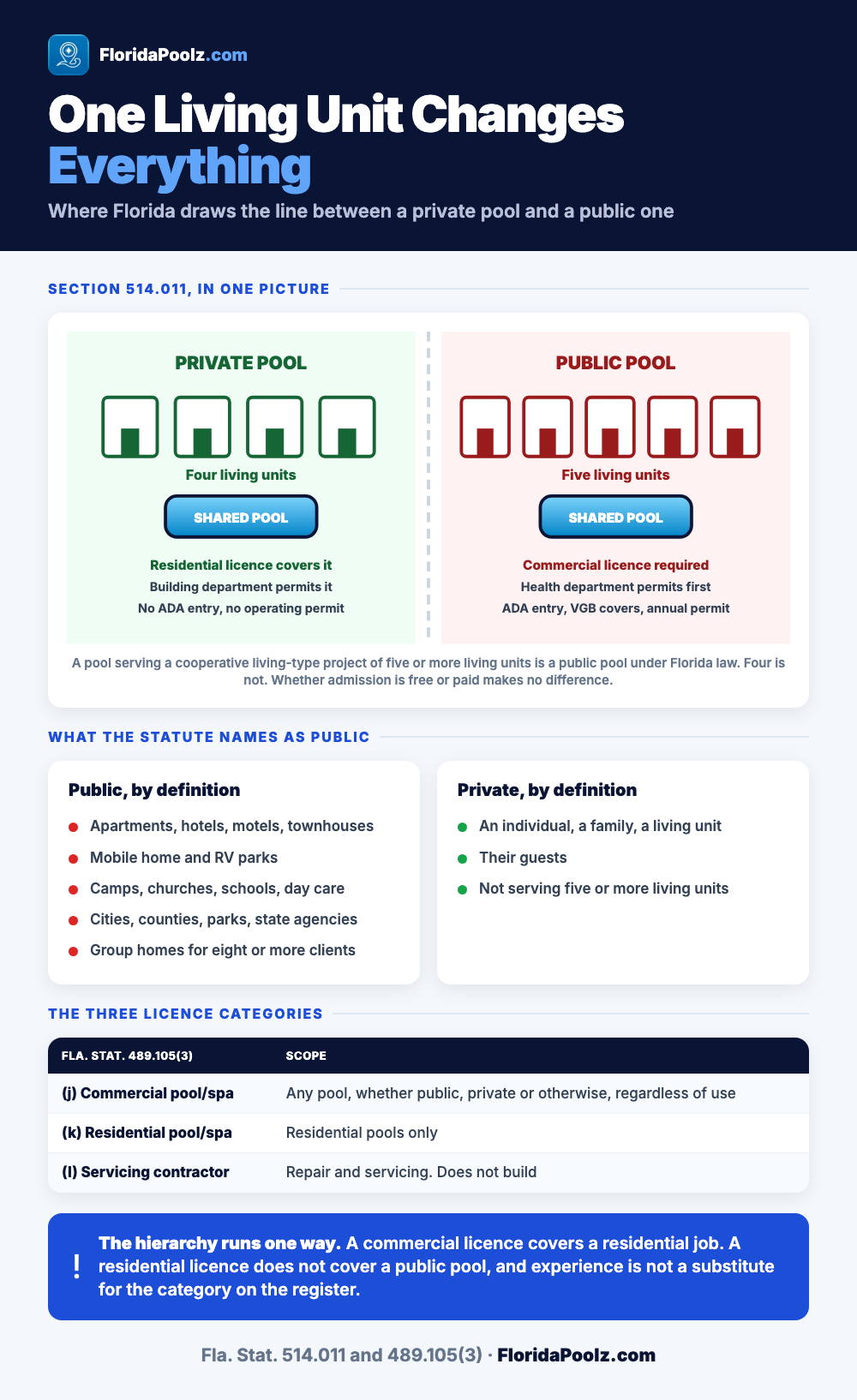
Most owners who need a commercial contractor do not think of themselves as running a public facility, and the statute does not care what they think. Section 514.011 defines a public swimming pool broadly, and one number in it does most of the work.
A public pool includes any pool serving a cooperative living-type project of five or more living units, naming apartments, boardinghouses, hotels, mobile home parks, motels, recreational vehicle parks and townhouses. The same definition covers pools operated by or serving camps, churches, cities, counties, day care centres, group homes for eight or more clients, health spas, institutions, parks, state agencies, schools and subdivisions. Admission may be free or paid. It makes no difference.
The mirror definition is just as useful. A private pool, under the same section, is one used only by an individual, a family or the members of a living unit and their guests, which does not serve cooperative housing or joint tenancy of five or more living units.
Crossing that line changes the license you need, the permitting route, the equipment specification and the operating obligations. Worth establishing before a designer is engaged rather than after.
This is the single most useful thing on this page for anyone about to build one, and it catches people who have built residential pools before.
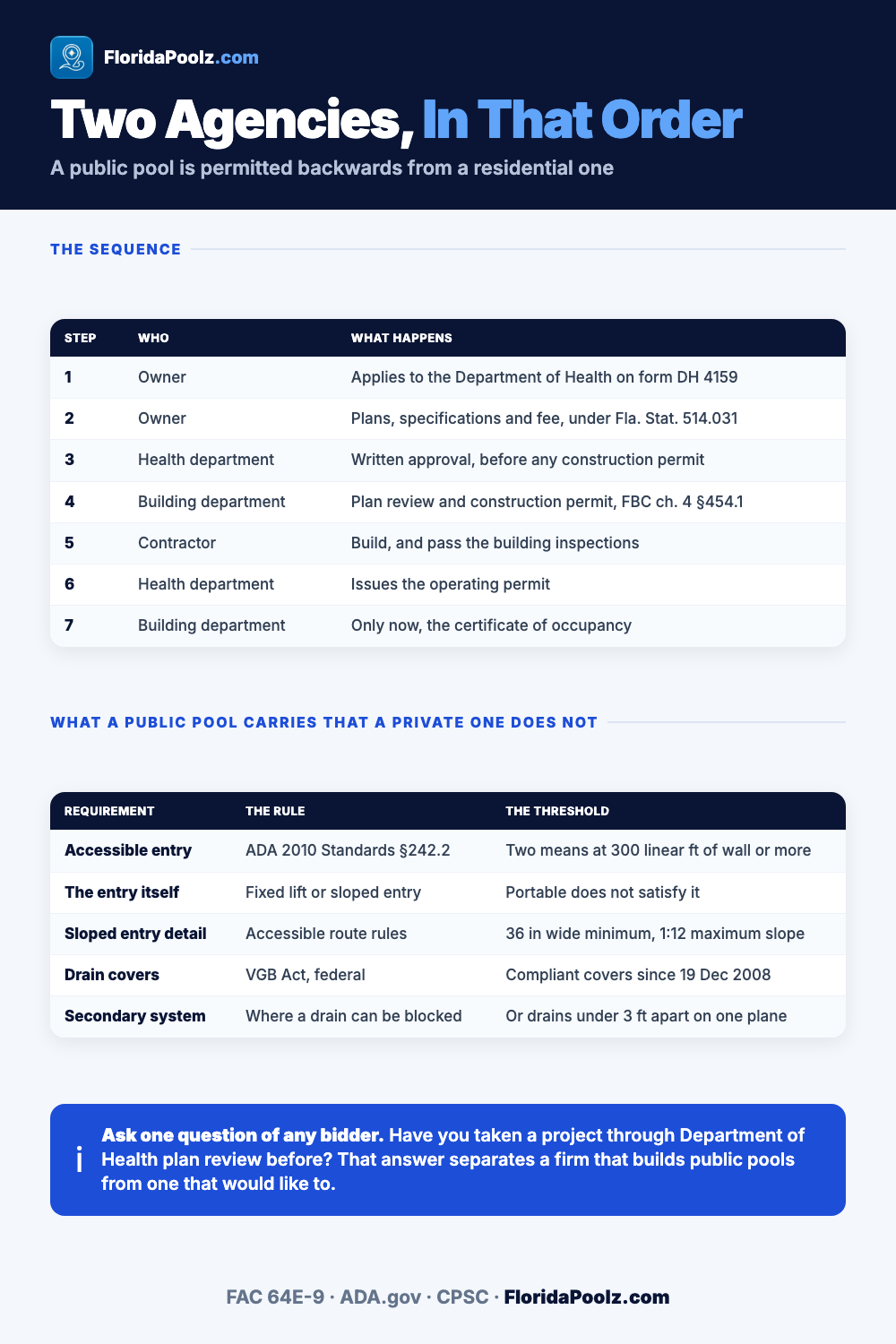
On a residential pool the building department is the first stop. On a public pool it is not. Under Chapter 64E-9 of the Florida Administrative Code, the owner applies first to the Department of Health for an operating permit, on form DH 4159, with the construction plans, specifications and fee required by section 514.031. Only then are the plans reviewed and a construction permit issued by the jurisdictional building department, under Chapter 4, section 454.1 of the Florida Building Code.
The sequence closes the same way. The building department cannot issue a certificate of completion or occupancy until the Department of Health has issued the operating permit, and the pool cannot open to the public before that permit exists.
Two agencies, in that order, on every public pool. A contractor who has only built residential pools will find this out at step one, and finding it out costs weeks.
A public pool is not a bigger residential pool. Several requirements attach that simply do not exist on a private one.
The 2010 ADA Standards set the rule at section 242.2, and the threshold is 300 linear feet of pool wall. At or above it, a pool needs two accessible means of entry and exit, one of which must be a fixed pool lift or a sloped entry. Below it, one is required, and it must be a fixed lift or a sloped entry. Section 1009 governs the detail: seat size, lifting capacity, clear floor space, and for sloped entries the accessible route rules, which set a 36-inch minimum width and a maximum slope of one in twelve.
The word doing the work there is fixed. A portable lift wheeled out on request is not what the standard describes.
The federal Virginia Graeme Baker Pool and Spa Safety Act has required compliant anti-entrapment drain covers on public pools and spas since 19 December 2008. Where a public pool or spa has a single blockable drain, or multiple drains on the same plane less than three feet apart, a secondary device or system is required as well. Florida's residential code points at the same family of standards for suction outlets, at R4501.6.6, referencing ANSI/PHTA/ICC 7.
The operating permit is annual and the pool is inspected. That turns water chemistry, turnover, signage and record keeping into an owner's legal duty rather than a maintenance preference, and it is why commercial equipment gets specified for continuous duty rather than for a family's weekend.
The build sequence resembles a residential pool and the cast is larger.
The commercial pool contractor holds the pool scope. An engineer or architect is usually involved on anything structural, since a public pool sits inside a building permit rather than beside one. An electrician handles bonding and equipment power. Where there is a mechanical room, the filtration, chemical feed and controllers are a specification exercise rather than a catalogue pick, and the equipment is sized on bather load rather than volume.
The other party on the job from day one is the county health department. Their plan reviewer sees the drawings before the building department does, and their inspector signs the pool into service.
Very little of the difference between a public pool and a private one of the same size sits in the shell.
Turnover is the item that separates a commercial quote from an inflated residential one. A public pool is designed to circulate its whole volume within a required period, and that pushes pump and filter sizing well beyond anything a domestic pool of the same volume would carry. A quote that prices a hotel pool with residential equipment is not cheaper. It's wrong, and it will fail plan review.
A commercial pool has an operating cost profile that looks nothing like a home pool's.
Equipment runs continuously rather than on a schedule, which changes both the energy bill and the replacement clock on every wearing part. Chemical consumption scales with bather load rather than with volume, so a small pool at a busy hotel consumes more than a large pool at a quiet one. The permit is annual, and the inspection is not optional.
The costs owners underestimate are the ones attached to being open. Records have to exist. Signage has to be present and legible. A drain cover that has aged out of compliance has to be replaced whether or not anything is wrong with it. None of these are large individually and all of them are non-negotiable.
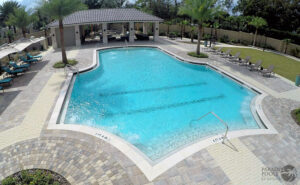
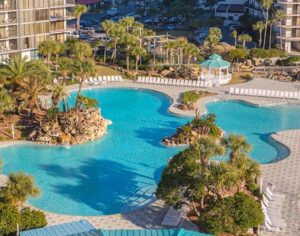
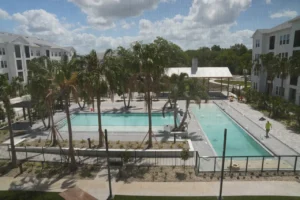
The roster above is every builder profile tracked here that names commercial, community, HOA, hotel, resort, municipal or amenity pool work among its services, counted live. Around fifty have a resort, commercial or community pool in the photographs reviewed for this directory.
That gap is the most useful in the whole directory, since this is a term where the claim is easy and the evidence is not. Two further checks are worth doing yourself. Confirm the license category on the state register, which is a matter of public record and takes a minute. And ask directly whether the contractor has taken a project through Department of Health plan review before, since that answer separates a firm that builds public pools from a firm that would like to.
The construction method under a public pool is the same set of choices as under a private one: gunite or concrete for anything drawn, and occasionally a fiberglass shell on a small amenity pool. Wet-mix shotcrete is more common on larger commercial work than on residential.
The surround carries its own commercial requirements. Pool deck work has to meet accessible route rules where it is part of an accessible entry, and a screen enclosure over a commercial pool is the same engineered structure with a larger span. Pool heating and pool lighting are both specified for continuous duty rather than for a household, and a spa attached to a public pool carries the entrapment rules in their strictest form.
Supply is concentrated where the resorts and the associations are. Orlando, Miami and Tampa carry the deepest rosters, along with Orange and Miami-Dade counties.
Section 514.011 of the Florida Statutes sets it, and one threshold does most of the work: a pool serving a cooperative living-type project of five or more living units is a public pool. The statute names apartments, boardinghouses, hotels, mobile home parks, motels, recreational vehicle parks and townhouses, and separately covers pools operated by or serving camps, churches, cities, counties, day care centres, group homes for eight or more clients, health spas, institutions, parks, state agencies, schools and subdivisions. Whether admission is free or paid makes no difference. A private pool, by contrast, serves an individual, a family or the members of a living unit and their guests.
It depends on the pool, and the answer is in the license rather than in the résumé. Section 489.105(3) of the Florida Statutes defines a commercial pool/spa contractor as covering any pool, hot tub or spa, whether public, private or otherwise, regardless of use. A residential pool/spa contractor is limited to residential pools. The hierarchy runs one way: a commercial license covers a residential job, and a residential license does not cover a public one. License category is a matter of public record on the state register, and checking it takes a minute.
Backwards from a residential one, which is what catches people. Under Chapter 64E-9 of the Florida Administrative Code the owner applies first to the Department of Health for an operating permit, on form DH 4159, with the construction plans, specifications and fee required by section 514.031. Only after that does the jurisdictional building department review the plans and issue a construction permit, under Chapter 4 section 454.1 of the Florida Building Code. And the building department cannot issue a certificate of completion or occupancy until the Department of Health has issued the operating permit.
The 2010 ADA Standards set it at section 242.2, on a threshold of 300 linear feet of pool wall. At or above that, a pool needs two accessible means of entry and exit, at least one of which must be a fixed pool lift or a sloped entry; the second may be a transfer wall, a transfer system or pool stairs. Below 300 linear feet, one is required, and it must be a fixed lift or a sloped entry. Section 1009 covers the specifics, including seat size, lifting capacity and clear floor space, and sloped entries follow the accessible route rules at a 36-inch minimum width and a maximum slope of one in twelve.
The federal Virginia Graeme Baker Pool and Spa Safety Act has required compliant anti-entrapment drain covers on public pools and spas since 19 December 2008. Where a pool or spa has a single drain that a body could block, or multiple drains on the same plane less than three feet apart, a secondary device or system is required in addition to the covers. Covers age out of compliance and have to be replaced on that basis rather than on condition. Florida's residential code points at the same family of standards at R4501.6.6, referencing ANSI/PHTA/ICC 7.
Sized on bather load and turnover rather than on volume. A public pool has to circulate its whole contents within a required period, which pushes pump and filter capacity well past anything a domestic pool of the same size would carry, and the equipment runs continuously rather than on a timer. Automated chemical feed and controllers follow from the same logic. A quote that prices a hotel pool with residential-grade equipment is not a cheaper quote. It's one that will not pass plan review.
Start from the roster on this page, then do two checks yourself. Confirm the license category on the state register, since a commercial pool/spa contractor license is what the work requires and it is public record. Then ask whether the contractor has taken a project through Department of Health plan review before, which is the question that separates a firm building public pools from one that would like to. Photographs help here more than usual: a resort or community pool in a portfolio is evidence a service listing cannot give you.
Still weighing it up? These are the choices most people compare with Commercial Pool Contractors in Florida.