
Pool builders by city
Pool builders serving West Palm Beach. One pool here is three separate permit applications rather than one, and the county sets the barrier standard even though the city reviews the plans. Start with the shortlist, then read what the paperwork actually involves.
14 listings here 9 based here








Tell us what your dream pool is all about, and where do you want it. We'll do our best to find a professional pool builder for your project.
Around a dozen builders are based in the city itself, which is a deep field even by South Florida standards. Nearly all of them are city-based rather than covering it from elsewhere, and that counts for something here: the paperwork rewards a company that files with this building division every week.
Search “pool builders near me” from a West Palm Beach address and the results spread across the whole county, which matters more than it sounds. Palm Beach County is mostly incorporated, so a builder two towns over files with a different city hall, on a different fee schedule, against a slightly different set of local amendments.
Most Florida counties default to the county building department, with incorporated cities as the exception. Palm Beach runs the other way. The county's own Planning, Zoning and Building division has direct permitting authority over unincorporated pockets only, and this city is not one of them.
Your permit is the city's, issued and inspected by Development Services. What travels across the whole county regardless is the pool barrier standard, published as a county policy covering residential pool and spa permitting. The reviewing desk changes at the city line; the barrier rules do not.
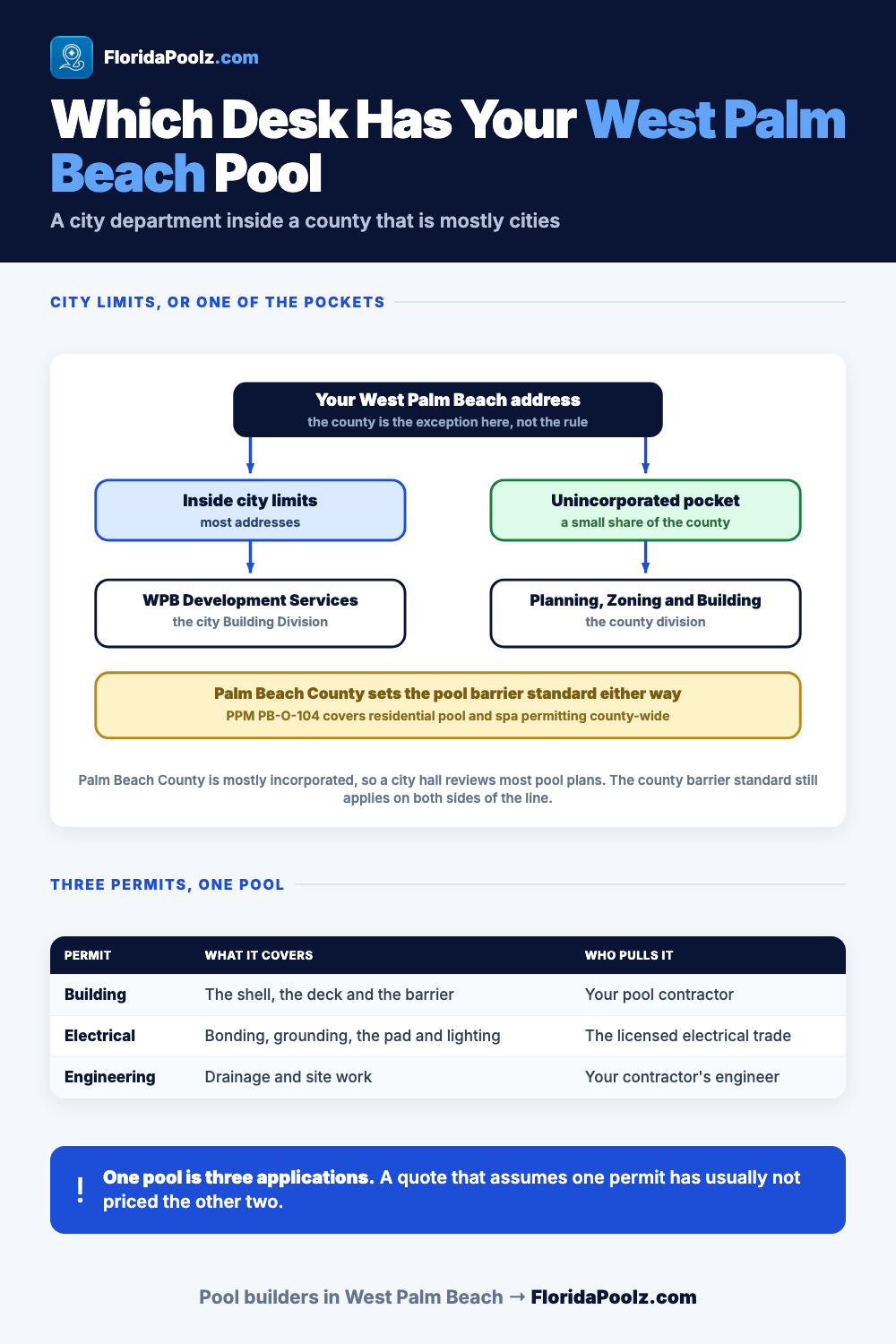
This is the part that catches people, and it is not one contractor's quirk. A residential pool here normally needs three separate permits, each pulled by the trade that owns it:
Alongside them the submittal wants a completed application, a site plan showing the pool against property lines and existing structures, and engineer-stamped drawings carrying dimensions, materials and the equipment layout. A quote built on the assumption of a single permit has usually not priced the other two, and that gap arrives later as a change order.
Barrier design belongs near the front of that list rather than the end. It is the item most often treated as a detail during design and then left holding up a final inspection, because it is the one part of the job a county-wide standard governs directly.
Quotes separate on a short list, and none of it is mysterious:
| Driver | Why it moves the number |
|---|---|
| Access to the rear of the lot | Older in-town lots are narrow, and plant is charged by the day |
| Shell type and finish | The single biggest lever in any Florida quote |
| The barrier and the cage | Engineered for wind load, specified against a county standard |
| Three permits rather than one | Fees and coordination across three separate trades |
| Waterfront work | A seawall or dock in the picture changes which trades are involved |
Access is the one people underestimate on the older streets closer to the water, where houses sit near both side lines and material sometimes travels over the roof rather than down the side.
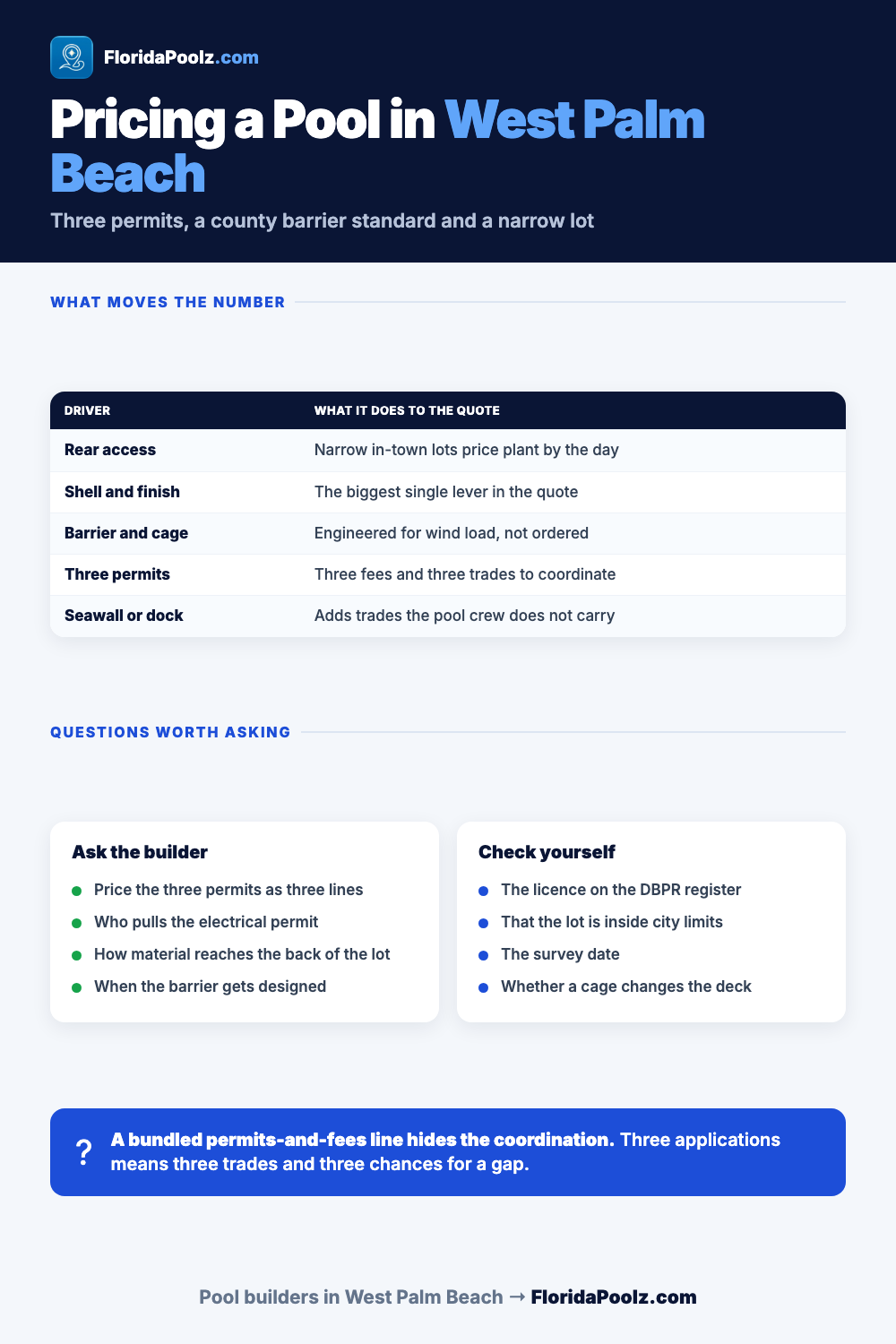
Ask for the three permits to be priced as three lines. Not a bundled “permits and fees” figure — the building, electrical and engineering applications listed separately, with who pulls each one.
It sounds pedantic. It is the fastest way to tell whether the company in front of you actually files in this city regularly, and it surfaces the coordination problem while it is still theirs rather than yours. A builder who cannot break that out on request has told you something useful.
Lot size does most of the deciding, and lots in this city vary more than one postcode suggests.
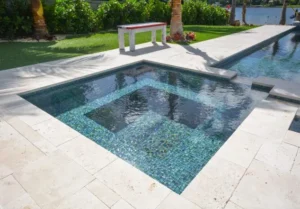
On the tighter in-town lots a spa buys back usable water where the shell cannot be long, and lighting does more for the result than another few feet of pool would. The deck is where the money shows on a small lot, because it is most of what you look at. A screen enclosure is engineered for wind load in this county rather than ordered from a catalogue, so settle it during design.
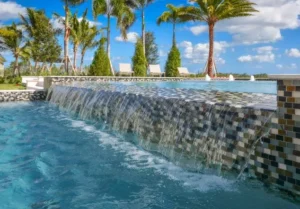
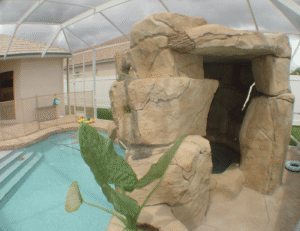
On shell type, gunite is the default and fiberglass is worth pricing where access is genuinely bad, since a drop-in shell saves days of machine time in a yard you can barely reach. What we would skip on a small lot is a waterfall feature: it eats deck you do not have and adds a maintenance item to a pool already sitting close to the house.
Palm Beach Gardens and Jupiter sit north on newer, larger lots where HOA architectural review bites harder than permitting does. Lake Worth is immediately south on an older grid with tighter yards. Wellington is inland and equestrian, with acreage parcels and a different access problem entirely. Each files with its own city hall, and the county covers only the pockets in between.
Normally three: a building permit for the shell, deck and barrier, an electrical permit for bonding, grounding and the equipment pad, and an engineering permit covering drainage and site work. Each is pulled by the trade that owns it. Ask for them as three priced lines rather than one bundled figure.
The city, if the lot sits inside West Palm Beach limits, and most addresses in this county are inside some municipality. The county's Planning, Zoning and Building division permits unincorporated pockets only. The county pool barrier standard applies either way, so those rules do not change with the reviewing desk.
A completed permit application, a site plan showing the pool against property lines and existing structures, and engineer-stamped construction drawings carrying dimensions, materials and the equipment layout. Barrier details belong in that set rather than being resolved later, because the barrier is the item most likely to hold up a final inspection.
Access to the rear of the lot first, which on the older in-town streets can mean material going over the roof rather than down the side. Then shell type and finish, the barrier and cage specification, the three permit fees, and any waterfront work such as a seawall. Compare line items rather than totals.
A cage is a structural item engineered for wind load in this county, so it is drawn, sealed and reviewed rather than simply installed. Decide during design whether you want one: it changes the deck size, how much sun the water gets, and whether a heater earns its keep, and adding it afterwards means going back through review.
Pool contracting is a state license, so nothing is issued specifically for West Palm Beach. Confirm an active CPC, or a CBC whose scope covers pools, on the DBPR public lookup. The same record carries any discipline and the insurance on file, which is worth reading before a deposit rather than after.
Overlapping, not the same. A local pack result is weighted by proximity and Google Business Profile activity, which in a county this heavily incorporated pulls in companies that file with a different city hall entirely. This page is built from license standing, review history and the work each builder can show instead, so a builder with a thin online profile and a long record of finished pools ranks here.
If you didn't find a pool builder for your West Palm Beach passion project here, check out the neighbours: professional pool builders usually don't mind travelling a few miles to help new customers with the most exciting projects.