
Pool builders by service
To install a pool waterfall well you need two published numbers and one warning: about fifteen gallons a minute per foot of length, a three-foot ceiling on a sheet effect, and a feature that cannot be cleaned once debris gets into it. Below, the three kinds, what each one needs from the pump, and the builders across Florida who fit them.
253 listings here
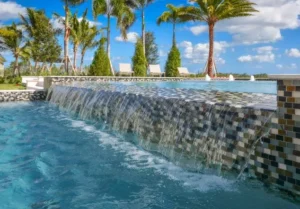
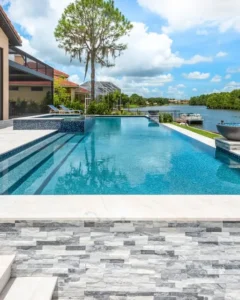
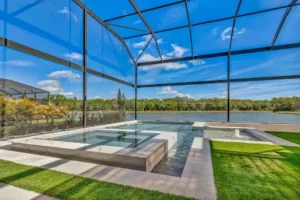
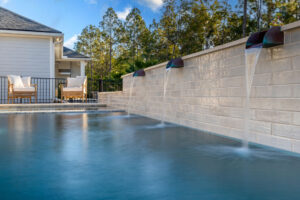
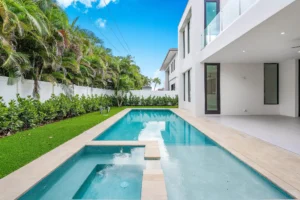
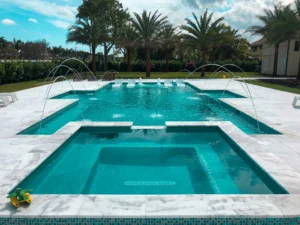
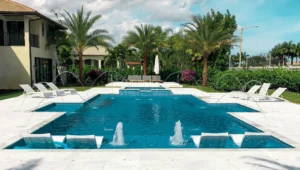
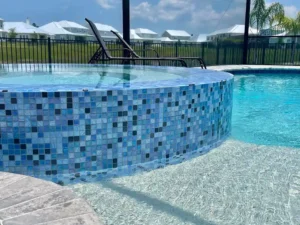
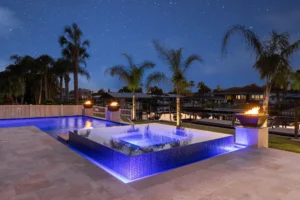
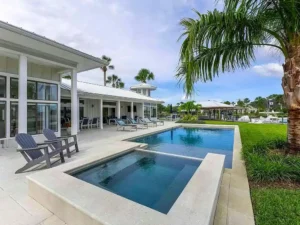
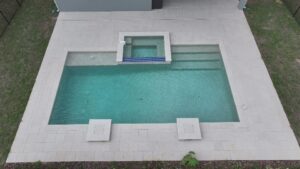
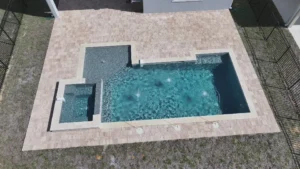
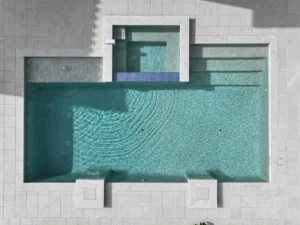
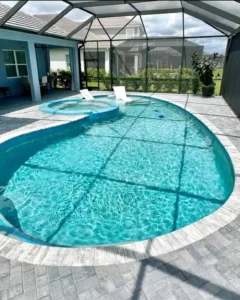
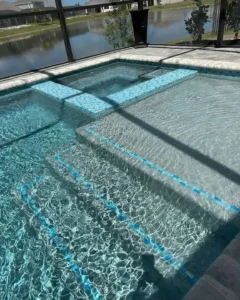
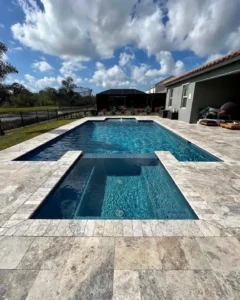
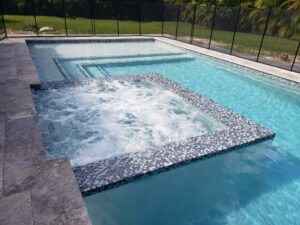
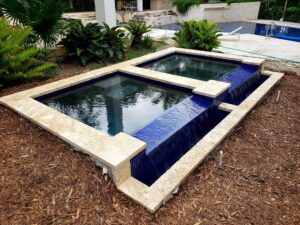
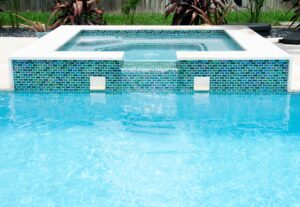
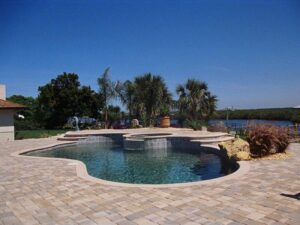
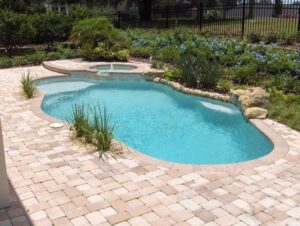
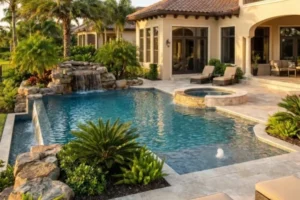
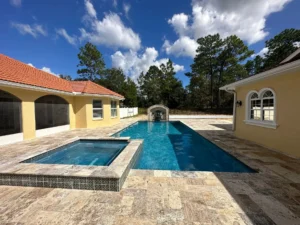
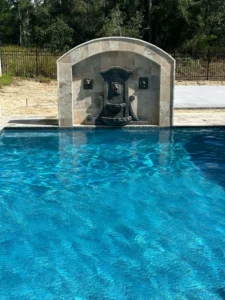
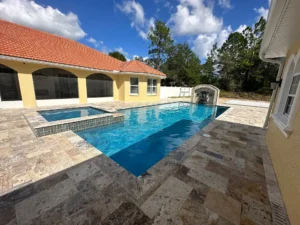
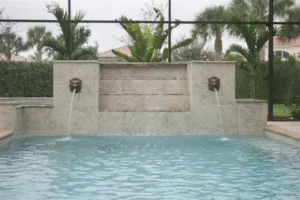
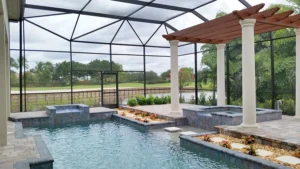
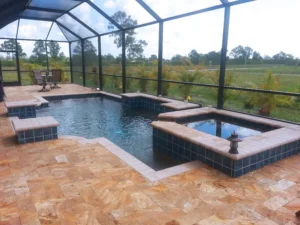
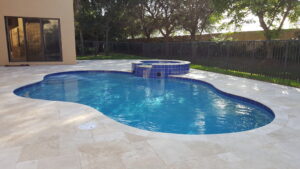
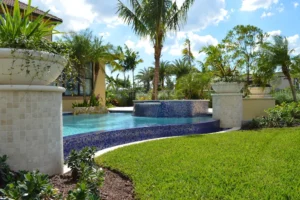
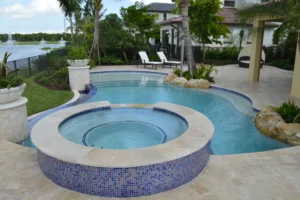
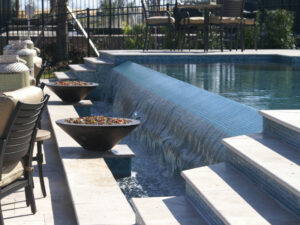
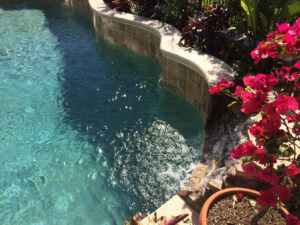
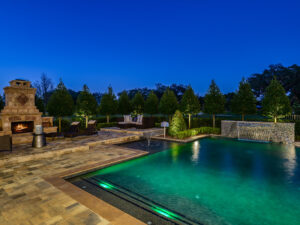
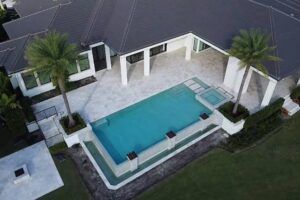
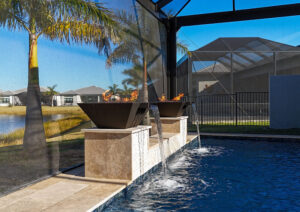
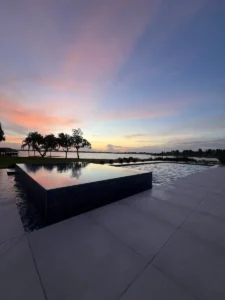

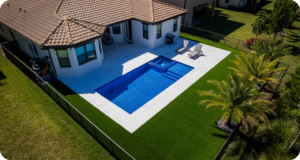
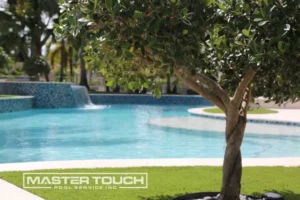
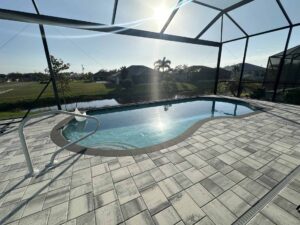
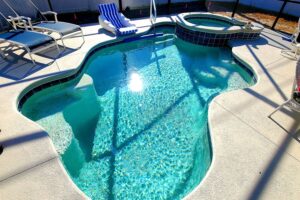
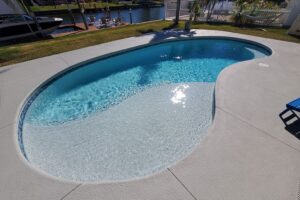
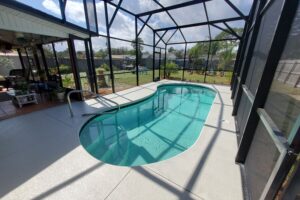
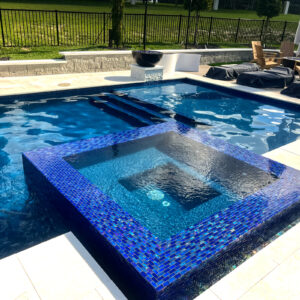
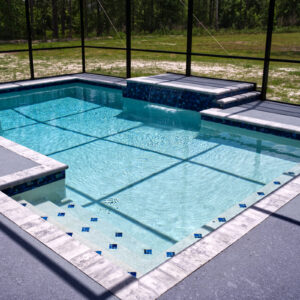
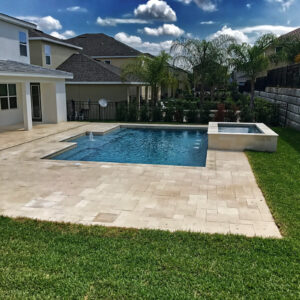
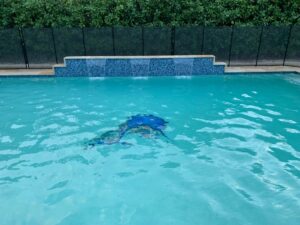
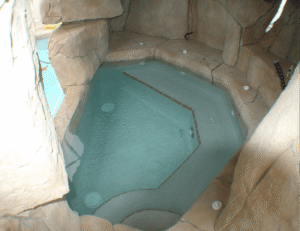
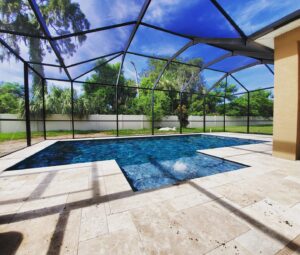
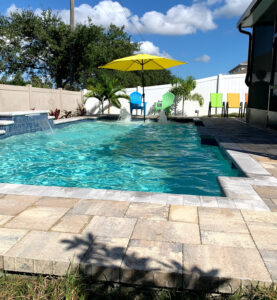
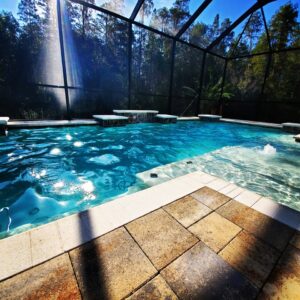
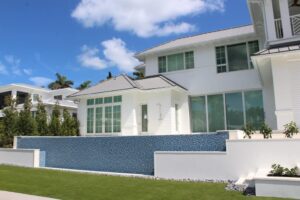
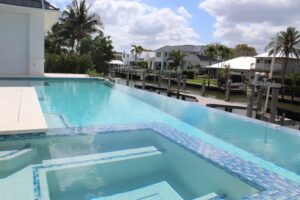
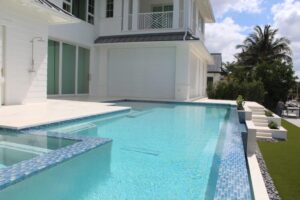
Three completely different things get sold under this word, and picking the wrong one is how people end up with a feature they switch off.
| Type | What it looks like | Where it sits | Sound |
|---|---|---|---|
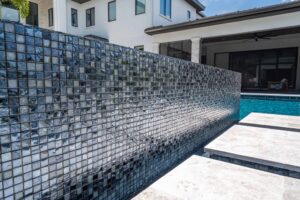
| Sheer descent | A clean sheet of water, glass-like | Bond beam or raised wall | A quiet rush, at the right height |
| Rain or curtain effect | A broken curtain of droplets | Higher walls, where sheet fails | Softer, and wind tolerant |
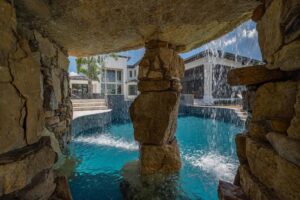
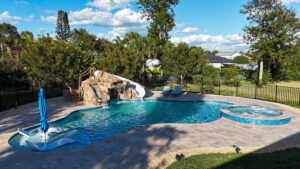
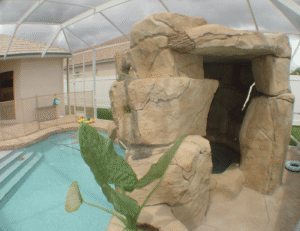
| Rock or grotto waterfall | Water over stone, irregular | A built structure beside the pool | Loud, and variable |
The manufactured effects, sheer and rain, are engineered products with published numbers, and everything on this page that reads like a rule comes from them. A rock waterfall is a mason's job with a pump attached, and the same hydraulics apply with none of the tolerances.
What all of them buy is sound. A waterfall is the only feature on a pool that reliably covers road noise and a neighbour's air conditioning, which is why it turns up more often in dense subdivisions than on isolated lots. It's the feature people most often build too large for the space it stands in.
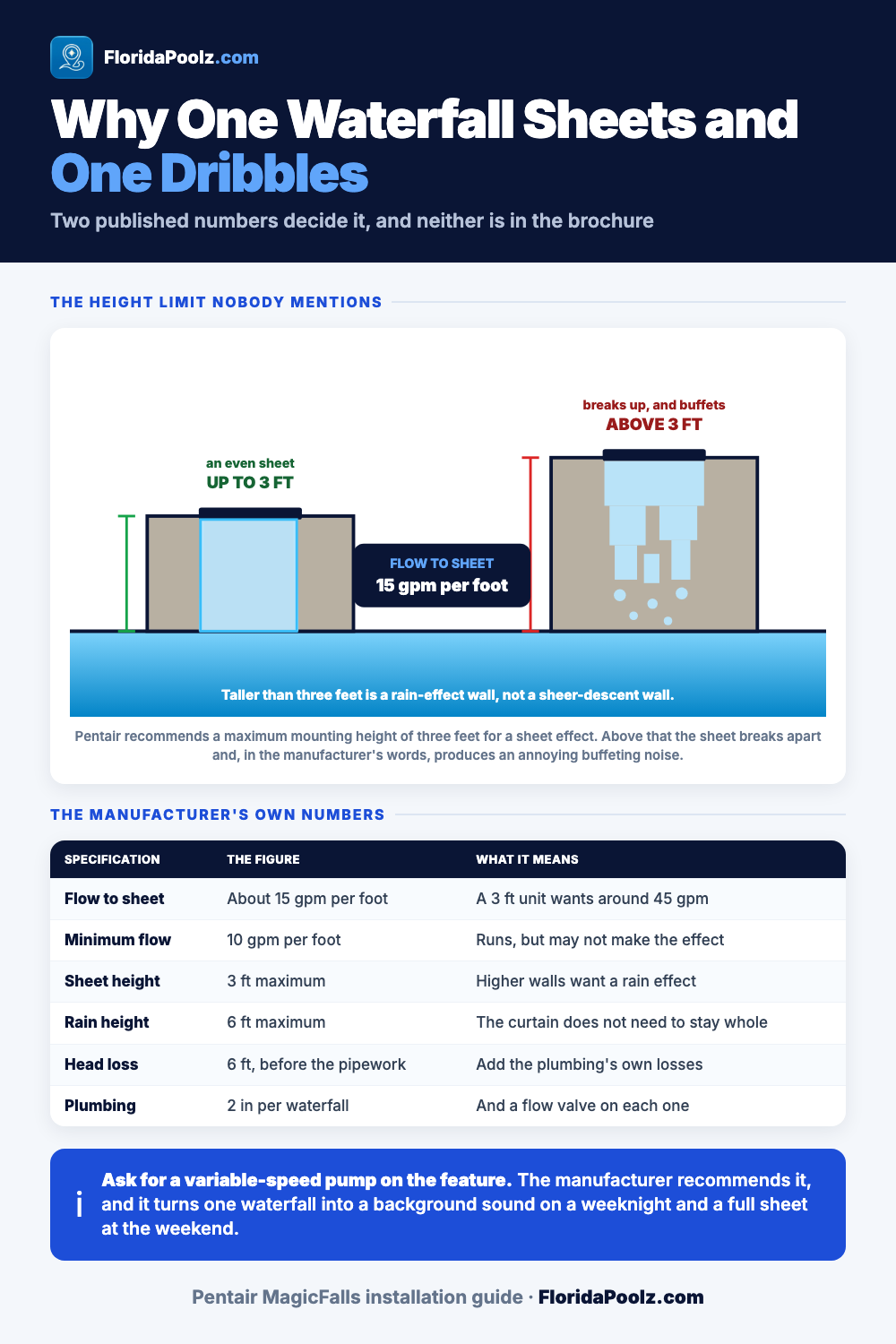
The difference between a waterfall that looks like the brochure and one that looks like a leak is flow, and the number is published. Pentair's guidance for its sheet-effect units is roughly 15 gallons a minute for every foot of waterfall length, giving 45 gallons a minute for a three-foot unit. The same guide says the unit will run down to 10 gallons a minute per foot and warns that it may not produce the effect at that rate.
So a sheer descent is a pump specification with a nozzle attached. Two consequences follow, and both change decisions:
Height is the other half, and this is the number almost nobody knows. Pentair recommends a maximum mounting height of three feet for a sheet effect, since above that the sheet begins to break apart and, in the manufacturer's own words, produces an annoying buffeting noise. The rain effect tolerates six feet, since it does not depend on the sheet staying whole. A wall taller than three feet is a rain-effect wall, and specifying a sheer descent for it is buying the noise complaint in advance.
The unit itself is straightforward. The masonry around it is where the care goes.
Step two decides whether the sheet is even. A waterfall is a weir, and water finds the low end of a weir every time, so the unit is set to a level board rather than to the top of the wall. Step six is where an installation goes wrong quietly. The covering stone has weight, and it must not sit on the lip or on the supply line. Pentair is explicit that an unsupported supply line or water channel causes joints to fail and voids the warranty.
The plumbing has a ceiling too. The guide gives a maximum head loss of six feet for any of its waterfalls, on top of which the losses of the pipework itself have to be added when the pump is chosen. A feature at the far end of a long run is not the same hydraulic problem as one beside the pad.
The characteristic failures here are unusually unforgiving, and one of them is permanent.
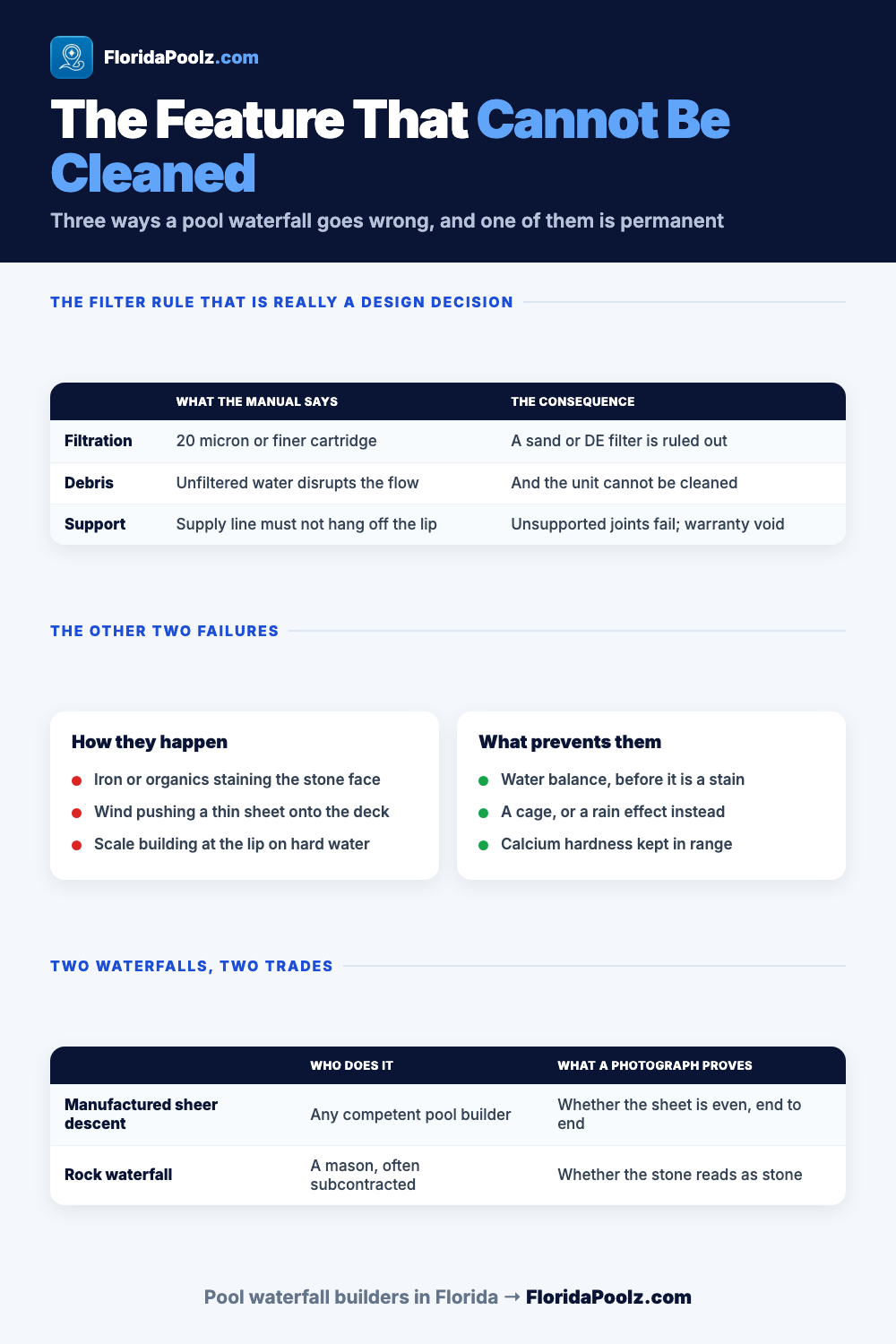
Pentair's manual states it plainly: the waterfall cannot be cleaned. Unfiltered water carries debris into the unit and disrupts the flow, so the guide requires the feature to be fed through a 20 micron or finer cartridge filter and says explicitly not to use a DE or sand filter for it. That turns filter choice from an equipment preference into a permanent design decision, and it is the single most consequential sentence in the manual.
Water running over stone leaves what it is carrying on the stone. Iron from well water shows as rust-coloured tracks, organics as darker ones, and both concentrate exactly where the water is thinnest. A rock waterfall that has run for five years on unbalanced water reads as an old feature rather than a dirty one, and it does not pressure wash off.
The manufacturer describes the sheet effect as thin and sensitive to wind, and notes that the sheet narrows the further it falls. On an open lot that means water on the deck. Inside a screen enclosure it is far more predictable, which is one of the underrated arguments for a cage.
This is the most retrofittable of the water features, and the reason is that the unit sits in the bond beam rather than in the shell. A sheer descent cuts into an existing beam, or into a raised wall built for the purpose, which is masonry rather than reconstruction.
What decides whether it is straightforward:
The filter question is the one that catches people. A pool on a sand filter that wants a manufactured waterfall is a pool that needs a filter change as part of the job, and finding that out at the quote stage is much better than finding it out from a blocked unit two seasons later.
The unit is rarely the biggest number on this line.
The single most useful thing to ask for is a variable-speed pump on the feature, which the manufacturer recommends outright. That makes the flow adjustable rather than fixed, so the same waterfall runs as a background sound on a weeknight and a full sheet when there are people to see it.
A waterfall has no equipment of its own beyond a valve, and its running cost is entirely the pump.
That cost is neither trivial nor linear. Moving 45 gallons a minute for a three-foot sheet is real work, and pump power rises steeply with flow, so a wide feature run continuously is a meaningful line on a Florida power bill. Run on a schedule, it is close to nothing. This is the whole argument for automation on a feature that most people otherwise operate with a hand valve, which is to say never.
The second cost is water. A waterfall aerates, so it evaporates, and everything dissolved in the water that left stays behind. On a saltwater pool that shows up in the salt reading. On hard water it shows up as scale at the lip, which on a feature that cannot be cleaned is worth preventing rather than treating.
The upside is the one people buy it for. A waterfall running at night, lit from the right side, is the single most effective thing a Florida backyard can do after dark, and it costs less to run than the lights around it.
The roster above is every builder profile tracked here that names waterfall work among its services, counted live. Eighty-five have a waterfall in the photographs reviewed for this directory.
The gap between the two matters more here than the numbers do. The two kinds of waterfall are two different trades. Fitting a manufactured sheer descent is a plumbing and setting job any pool builder can do properly. Building a rock waterfall that reads as rock rather than as shaped concrete is a mason's craft, and it shows in photographs immediately. Look for the stone work, look for the water running, and ask who builds the rockwork.
A waterfall is a wall before it is a water feature, so it belongs to the shell conversation: gunite and concrete builders shoot the raised wall with the pool. A grotto is the same idea with a structure you can sit behind, and a pool fountain is the same hydraulics at a smaller scale and a lower flow.
The two things that make or break it afterwards are light and containment. Pool lighting aimed across a moving sheet is what makes the feature exist after dark, and a pool cage keeps a thin sheet in the pool on a windy afternoon. If a spa is spilling into the same pool, the two effects compete for the same pump.
Supply is broad statewide, deepest around Orlando, Tampa and Naples, and across Orange and Lee counties.
More easily than most water features, and the reason is where it sits. A manufactured sheer descent goes into the bond beam or into a raised wall built for it, which is masonry rather than reconstruction of the shell. Five things decide whether it is straightforward: whether a raised wall already exists, whether the pump has flow to spare, whether the filter is the right type, whether a supply line has a route, and whether the deck has to be cut. The filter is the one that catches people, and it is covered below.
Pentair's published guidance for its sheet-effect units is about 15 gallons a minute for every foot of waterfall length, so a three-foot unit wants around 45 gallons a minute. The same guide says the unit will run down to 10 gallons a minute per foot but may not produce the effect at that rate. The guide caps head loss for any of its waterfalls at six feet, on top of which the plumbing's own losses have to be added. That makes the pump a decision taken before the wall is built rather than after.
The unit is rarely the largest part. What moves the number is the length of the effect, which sets the pump and the plumbing; the wall it sits in, if one is being built for it; the stone or tile facing over the lip; two-inch supply run back to the equipment pad; a flow valve for each effect; and lighting, without which the feature does not exist after dark. Ask for a variable-speed pump on the feature, which the manufacturer recommends outright, since it lets the same waterfall be a background sound on a weeknight and a full sheet when there are people to see it.
Usually height, sometimes flow, occasionally wind, and all three are in the manufacturer's guidance. Pentair recommends a maximum mounting height of three feet for a sheet effect, warning that above that the sheet begins to break apart and produces an annoying buffeting noise. The guide describes the sheet as thin, sensitive to wind, and narrowing the further it falls. If the wall is taller than three feet, the right product is a rain effect, which the same guide rates to six feet, since it does not rely on the sheet staying whole.
Manufactured ones do, and this is the most consequential sentence in the manual: the waterfall cannot be cleaned. Pentair requires the feature to be supplied through a 20 micron or finer cartridge filter and says explicitly not to use a DE or sand filter for it, since unfiltered water carries debris into the unit and disrupts the flow. That makes filter type a permanent design decision rather than an equipment preference, and it is worth settling before a retrofit is priced rather than after.
They differ enormously, which is why the type matters more than the size. A sheer descent at a sensible height is a quiet, even rush and it is the reason people put them in noisy subdivisions. The same unit mounted too high buffets, which the manufacturer names as a fault rather than a preference. A rock waterfall is the loudest of the three and the least predictable, since the sound comes from water hitting stone at whatever angle the mason built. Put every effect on a valve so the volume comes down rather than only off.
Use the roster on this page and narrow by city, then separate the two trades. Fitting a manufactured sheer descent is a plumbing and setting job that any competent pool builder does properly. Building a rock waterfall that reads as rock rather than as shaped concrete is a mason's craft, and it shows in photographs immediately. Ask who builds the rockwork, ask to see the water running rather than still, and ask what filter the feature will be fed from.
Still weighing it up? These are the choices most people compare with Pool Waterfall Builders in Florida.