
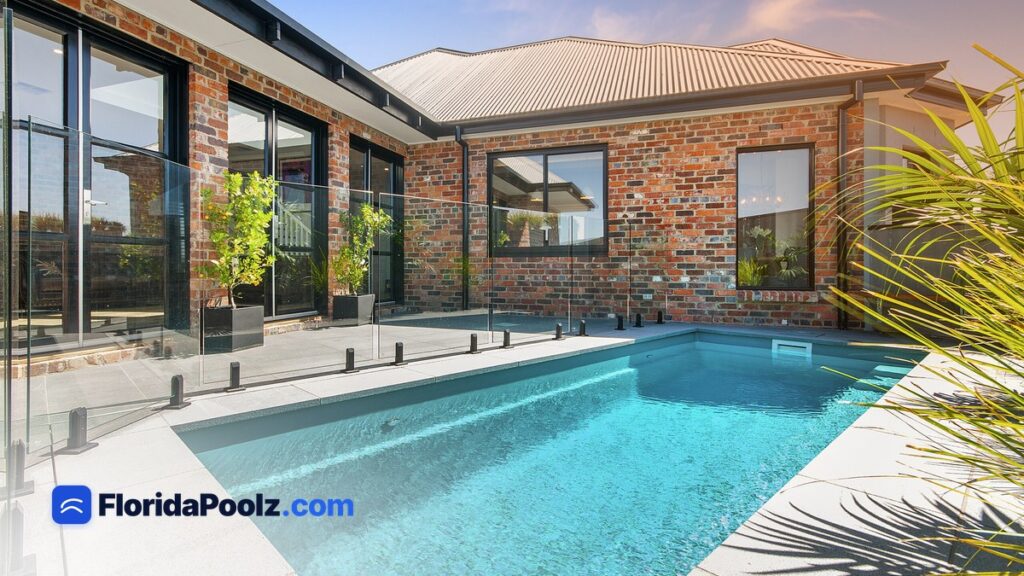
An inground pool cost in Florida runs a wide range because “a pool” isn’t one product — a basic fiberglass plunge and a custom gunite pool with a spa, sun shelf, and screen cage are different purchases entirely. As a working 2026 frame: most Florida inground pools land somewhere in the $55,000–$100,000+ range once you count everything the yard actually needs. This guide breaks down where that money goes, the Florida-specific costs national calculators miss, and how to read a bid so a “cheap” pool doesn’t cost you more later.
Every number here is a general range to budget around and confirm with real quotes — pricing shifts by region, access, and the month you sign.
Cost by pool type
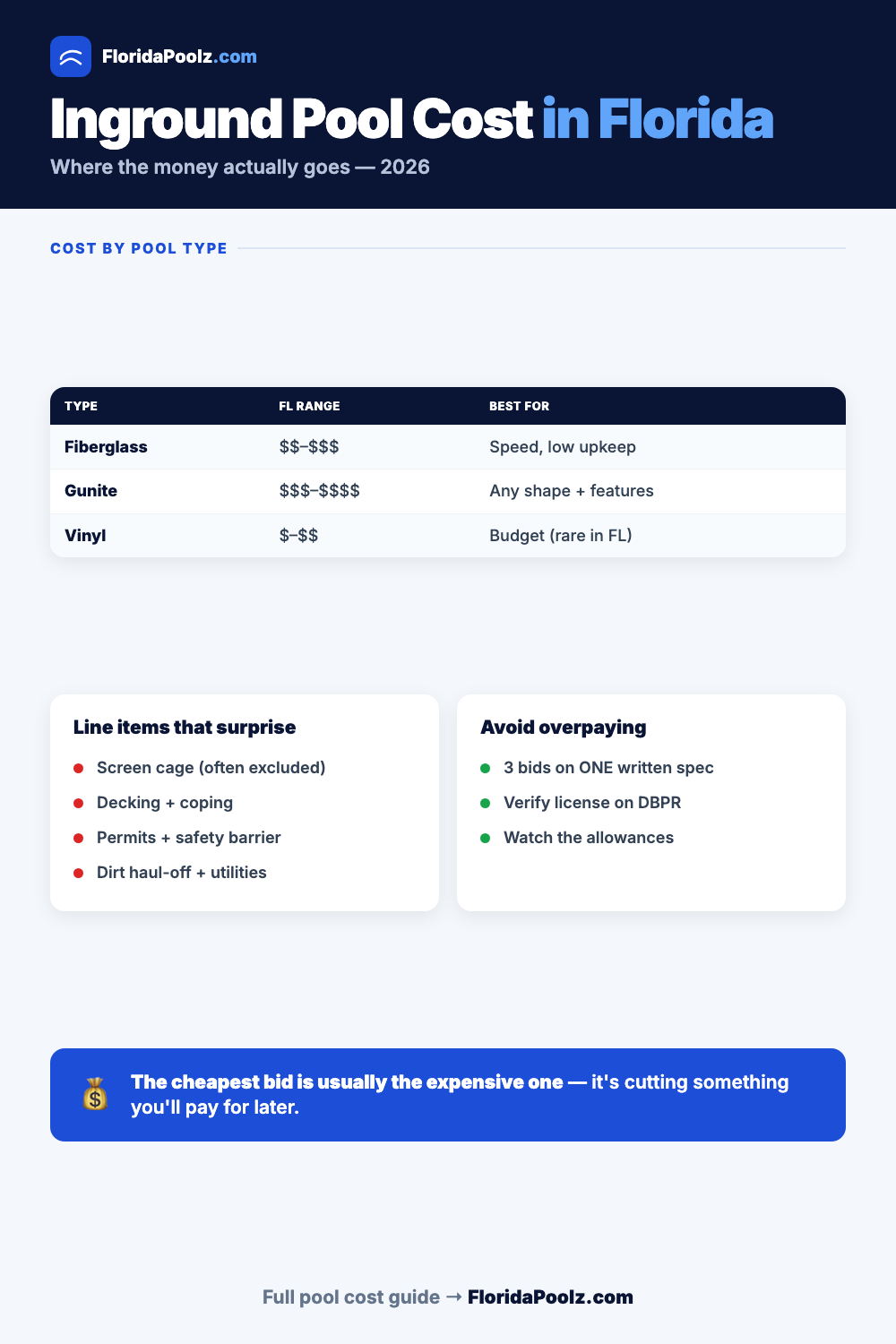
| Type | Typical FL range (installed) | Best for |
|---|---|---|
| Fiberglass | $$–$$$ (fast install, mid cost) | Speed, low maintenance, smaller yards |
| Gunite / concrete | $$$–$$$$ (fully custom, highest) | Any shape/size, features, resale |
| Vinyl liner | $–$$ (lowest upfront) | Budget builds — rare in FL |
In practice, Florida is a gunite and fiberglass state. Gunite dominates custom builds because it does any shape and integrates spas, shelves, and water features; fiberglass wins on speed (a shell drops in a couple of weeks versus a couple of months) and lower lifetime chemistry fuss. Vinyl is cheap upfront but uncommon here — the liners struggle against Florida sun and the resale perception is weak. The fuller breakdown is in our fiberglass vs gunite guide.
What actually drives the price
- Size and depth — the biggest lever; more water, shell, and decking scale everything;
- Type and finish — gunite with a pebble finish costs more than fiberglass or basic marcite;
- Features — a spa, sun shelf, water features, and lighting each add real money;
- Site conditions — Florida’s high water table, sandy or rocky soil, and tight-access lots all raise excavation and engineering costs;
- The screen enclosure — nearly universal in Florida and often left out of the “pool price.”
The line items that surprise Florida buyers
The sticker for “the pool” rarely includes these, and they’re where budgets blow up:
- Screen enclosure / cage — a significant add most Florida pools get for bugs, debris, and safety-code credit. Budget for it as a real second purchase; see pool cage costs;
- Decking — pavers or travertine around the pool, priced by square footage, easily a five-figure line on its own;
- Permits and engineering — required statewide; costs and timelines vary by county;
- Safety-barrier compliance — Florida law (the Residential Swimming Pool Safety Act) requires a barrier, fence, alarm, or cover; see the fence law;
- Dirt haul-off, tie-ins, and utilities — moving excavated soil and connecting power/water/gas add up;
- Ongoing costs — the pool isn’t done when it’s filled; factor monthly service, chemicals, and power.
A realistic line-item breakdown
Where the money goes on a typical Florida gunite build, roughly:
| Line item | Share of budget |
|---|---|
| Shell (excavation, steel, gunite, finish) | The largest single chunk |
| Decking + coping | Major secondary cost |
| Screen enclosure / cage | Significant add-on |
| Equipment (pump, filter, salt/chlorine, heater) | Moderate |
| Permits, engineering, safety barrier | Smaller but mandatory |
| Features (spa, shelf, lighting, water features) | Whatever you add |
Regional variation across Florida
Prices run higher in South Florida and the coastal metros (Miami–Dade, Broward, Palm Beach, Naples) than in Central and North Florida, driven by labor, permitting, and demand. Site access and soil matter as much as the metro, though — a tight lot in any county costs more to dig and build than an open one.
Financing the build
Most Florida buyers don’t pay cash. The routes — home equity, personal loans, or builder-arranged financing — each have trade-offs, and builder financing usually means a dealer lending program rather than the builder itself. Compare the rate against your own bank before signing. The full picture, plus a payment calculator, is coming to the pool costs section.
How to avoid a lowball bid
The cheapest bid is usually the expensive one. Florida sees more pool-contractor horror stories than most states — abandoned builds, unpermitted work, liens from unpaid subs. Protect yourself:
- Get three bids on the same written spec so you’re comparing like for like, not guessing what’s excluded;
- Watch the allowances — a low bid often hides thin allowances for decking, finish, or the cage that balloon later;
- Verify the license on the state’s DBPR portal before signing anything;
- Read the draw schedule and lien terms — never a giant deposit, and understand Florida’s Notice to Owner rules;
- Ask the right questions — our contractor questions guide is the checklist.
The single best cost-control move is hiring a licensed, verified builder who prices honestly. Every builder in the FloridaPoolz directory is license-verified from state records — start there, get your three bids, and build from a real spec.
FAQ
How much does an inground pool cost in Florida in 2026?
Most Florida inground pools land in the $55,000–$100,000+ range fully built, depending on type, size, features, and whether you count the screen enclosure and decking. Basic fiberglass sits lower; custom gunite with a spa and cage runs to the top and beyond. Get three bids on one spec for your real number.
What’s the cheapest type of inground pool in Florida?
Vinyl liner is cheapest upfront but rare in Florida — the liners fare poorly in the sun and resale perception is weak. Among common Florida choices, fiberglass is usually the more affordable and faster option; gunite costs more but goes fully custom.
Does the pool price include the screen enclosure?
Usually not. The cage is a significant separate cost most Florida pools get, and it’s a frequent budget surprise. Always confirm whether a bid includes the enclosure, decking, and safety-barrier compliance — those three are where “cheap” pools hide their real price.
Why are Florida pools more expensive than the national average?
The high water table and sandy/rocky soil raise excavation and engineering costs, nearly every pool adds a screen enclosure, safety-barrier law adds requirements, and year-round demand keeps builders busy. South Florida and coastal metros run highest.
How do I avoid overpaying or getting burned?
Get three bids on the same written spec, scrutinize the allowances, verify the license on Florida’s DBPR portal, and read the draw schedule and lien terms before signing. The lowest bid usually cuts corners you’ll pay for later.
References
More articles
Pool Resurfacing Cost in Florida (Marcite, Pebble & Tile)
Pool resurfacing cost in Florida by finish - marcite, quartz, pebble, tile - plus what a resurface includes, the water-table warning, and…
Pool Heater Cost in Florida (Install, Replace & Run)
Pool heater cost in Florida by type - heat pump, gas, solar - installed prices, running costs, replacement math, and which wins…
Pool Service Cost in Florida (What Monthly Really Buys)
Pool service cost in Florida by tier - chem-only vs full service - what each includes, why FL costs more than national,…