How Long Does It Take to Build a Pool in Florida?
How long does it take to build a pool in Florida - by type, stage by stage, and…
Read more →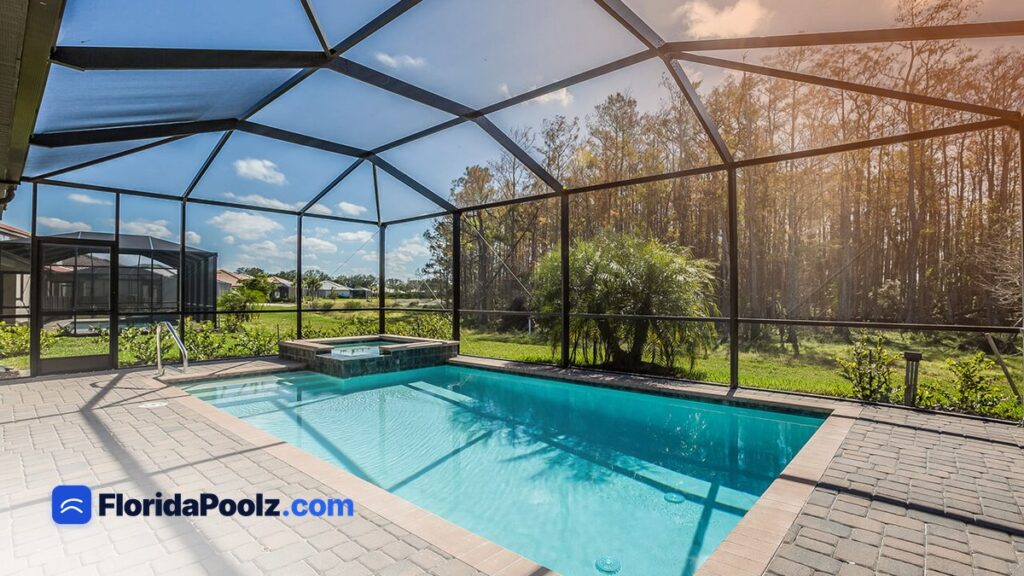
Pool cage cost in Florida is something almost no other state has to think about — and it’s a line item that surprises new pool owners constantly. A new screen enclosure typically runs into the low-to-mid five figures, a full rescreen is far cheaper, and a single torn panel is a modest repair. The spread is huge because “pool cage work” spans a $200 panel fix to a $20,000 custom two-story enclosure. This guide breaks down each, plus the two things that move Florida cage prices the most: hurricane wind-load code and storm-damage insurance.
All figures are general 2026 ranges to budget around; your cage size, height, screen type, and county wind-load spec set the real price, so get local quotes.
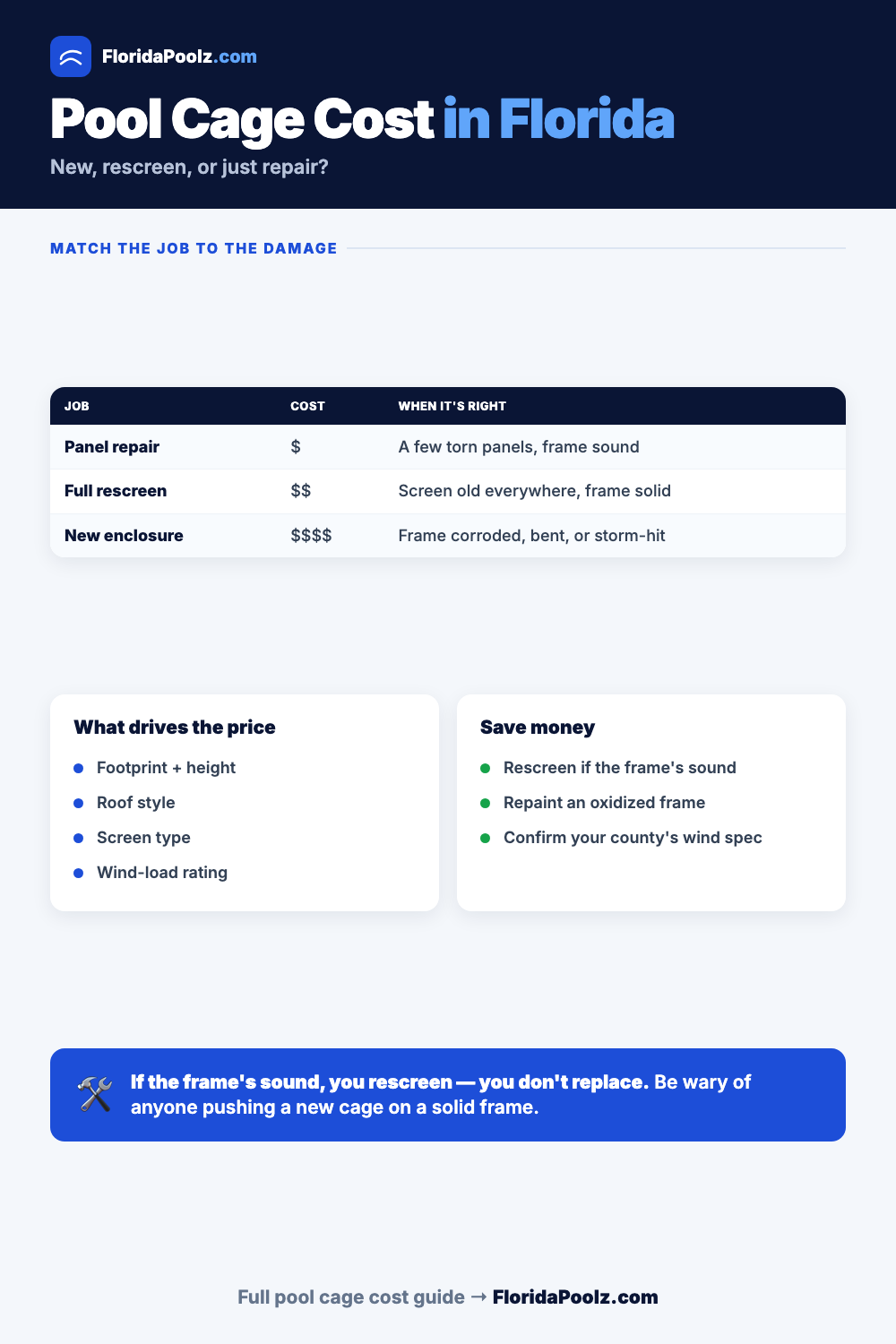
A new screen enclosure is priced mainly by size (footprint), height, and style — a low mansard over a small pool costs far less than a tall, dome-roofed cage over a large pool with a spa. The aluminum frame is the bulk of the cost; screen is cheap by comparison. What drives your number:
| Job | Relative cost | When it’s right |
|---|---|---|
| Single panel repair | $ (modest) | A few torn panels, frame is sound |
| Full rescreen | $$ (far below new) | Screen is old/saggy everywhere, frame is solid |
| New enclosure | $$$$ (low-mid five figures) | Frame is corroded, bent, or storm-destroyed |
The money-saving insight: if the aluminum frame is sound, you rescreen — you don’t replace. A full rescreen restores a tired cage for a fraction of a new one. You only pay for a new enclosure when the frame itself is corroded (salt and coastal air do this over years), bent, or destroyed by a storm. A good contractor tells you honestly which camp your cage is in.
This is what makes Florida cage pricing unlike anywhere else. Screen enclosures are engineered structures that must meet county wind-load requirements under the Florida Building Code, and those requirements are stricter in the High-Velocity Hurricane Zone — Miami-Dade and Broward — than in inland or northern counties. A cage rated for Miami-Dade’s spec uses heavier framing and more anchoring, which costs more. When you compare bids, confirm they’re all engineered to your county’s spec; a suspiciously cheap cage may be under-rated, which is both unsafe and a permit problem.
Screen enclosures are among the most storm-damaged structures in Florida, and how insurance treats them matters:
Cage work is a specialized trade — screen-enclosure contractors, not general pool builders. When quoting:
The cage is a real part of your total pool budget — factor it into the total pool cost rather than treating it as an afterthought. Find license-verified Florida enclosure contractors in the directory.
A new screen enclosure typically runs into the low-to-mid five figures, driven by footprint, height, roof style, screen type, and your county’s wind-load spec. A full rescreen costs far less, and a single panel repair is modest. Get quotes from enclosure specialists on your specific cage.
If the aluminum frame is sound, rescreen — it restores the cage for a fraction of a new one. You only need a new enclosure when the frame is corroded, bent, or storm-destroyed. Be wary of a contractor pushing full replacement on a structurally solid frame.
Size and height matter, but the big Florida variable is wind-load code — cages in the High-Velocity Hurricane Zone (Miami-Dade, Broward) need heavier framing and anchoring than inland counties, which costs more. Always confirm bids are engineered to your county’s spec.
It varies by policy — some cover screen enclosures fully, others cap, exclude, or cover the frame but not the screen. Check your coverage before hurricane season, not after, and document any damage. Post-storm, contractors book out for months and prices firm up.
Yes — screen enclosures are engineered structures that require a permit and must meet Florida Building Code wind-load requirements for your county. A legitimate enclosure contractor includes the permit; a cage built without one is both a safety and a resale/inspection problem.

We build Florida's pool contractor directory from county permit records, DBPR license data, and verified Google reviews — and write these guides from the same data, with input from the licensed builders and service pros listed on the site.
Straight-talking, Florida-specific help — written from permit data and local pros.
How long does it take to build a pool in Florida - by type, stage by stage, and…
Read more →
Pool resurfacing cost in Florida by finish - marcite, quartz, pebble, tile - plus what a resurface includes,…
Read more →
Pool heater cost in Florida by type - heat pump, gas, solar - installed prices, running costs, replacement…
Read more →