How to Prepare Your Pool for a Hurricane in Florida
How to prepare a pool for a hurricane in Florida: the before-storm checklist, the drain mistake that wrecks…
Read more →
A pool maintenance schedule built for Ohio will let your Florida pool turn green by August. Ours never closes, the water runs 88°F for months, the sun burns off chlorine by mid-afternoon, and a thunderstorm can undo a week of balance in one evening. So the routine here is more frequent and more year-round than the national templates assume. Here’s the schedule that actually keeps a Florida pool clear — broken into daily glances, weekly must-dos, monthly checks, and seasonal jobs — plus what to hand off if the rhythm keeps slipping.
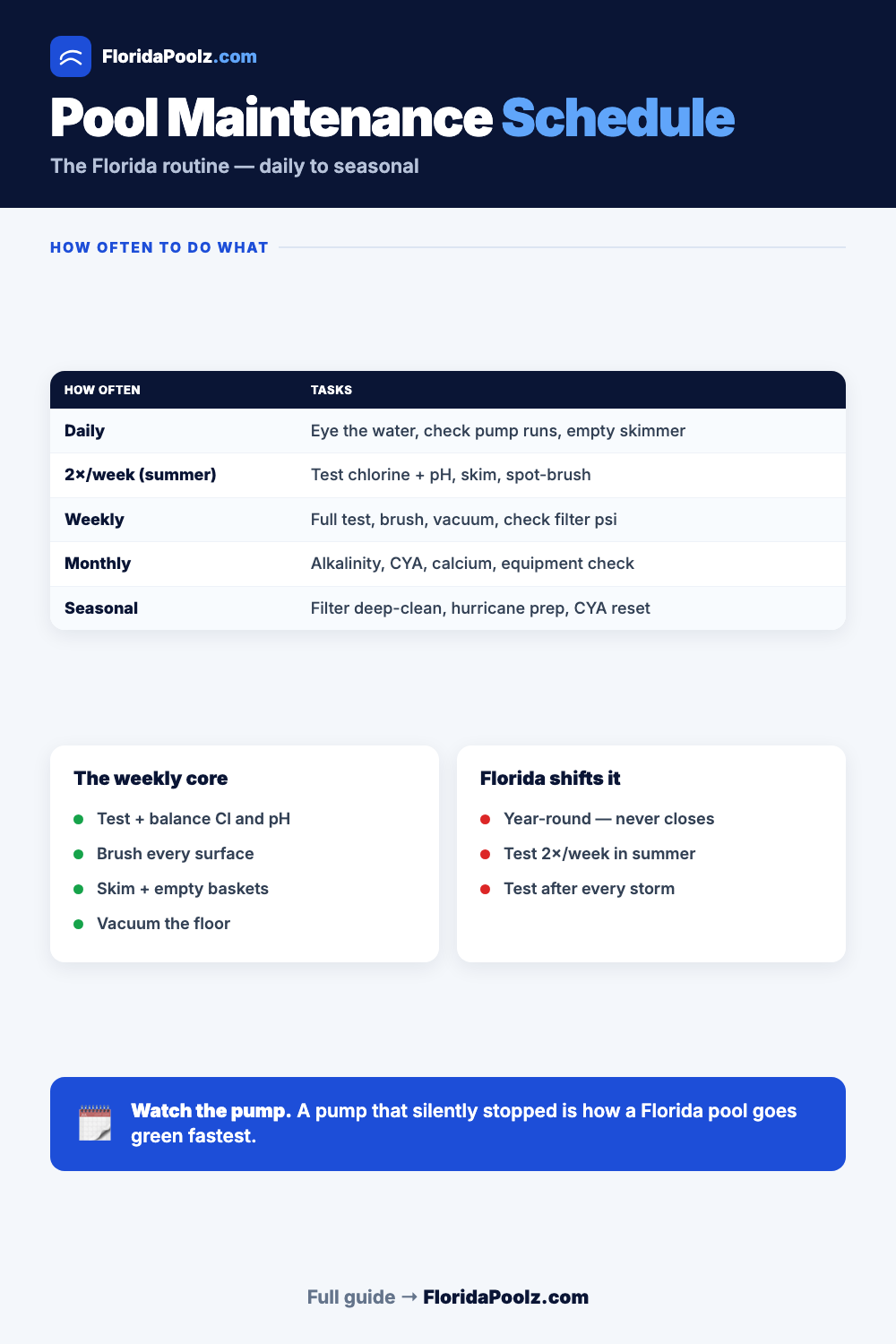
| How often | Tasks |
|---|---|
| Daily (30 sec) | Eye the water, empty skimmer if full, check the pump is running |
| 2×/week (summer) | Test chlorine + pH, skim, quick brush of trouble spots |
| Weekly | Full test, brush all surfaces, vacuum, empty baskets, check filter pressure |
| Monthly | Test alkalinity + CYA (+ salt/calcium), deep-check equipment, clean filter as needed |
| Seasonal | Filter deep-clean, equipment service, hurricane prep, CYA reset if high |
You don’t test daily, but a quick look every day catches problems while they’re cheap. Glance at the water clarity and color — a slight dullness or green tint is your earliest warning. Confirm the pump is running on schedule (a pump that silently stopped is how a pool goes green fastest). Empty the skimmer basket if it’s loaded, especially in pollen season or after wind. Thirty seconds, and it saves you the weekend recovery jobs.
This is the heart of pool care, and in a Florida summer the testing half of it happens twice a week. The full weekly pass:
Do this weekly and the pool almost never surprises you. Skip it for two weeks in July and you’ll meet the green-to-clean process.
Some chemistry moves slowly and only needs a monthly look — but in Florida these are the numbers that quietly cause the big problems:
Florida doesn’t have a “close the pool” season, but the calendar still has rhythms worth working with:
Pollen season hits — pine and oak dust coats everything and passes right through screen cages, clouding water and clogging filters. Expect to skim and clean the filter more often. It’s also a good, cooler window for a filter deep-clean (cartridge teardown, sand or DE service) and any equipment work before the heavy-use summer.
Peak everything: highest water temps, fastest chlorine burn, daily storms, most swimmers. This is when the twice-weekly testing matters most and the pump should run its longest daily hours. It’s also hurricane season — have your storm plan ready before the first named system, not as one approaches.
Water cools, chlorine demand drops, and you can ease testing back to weekly and shorten pump run time. A good time to reset a high CYA level with a partial drain-and-refill (done carefully around the water table) and to catch up on any deferred equipment fixes.
If you’ve moved from up north, the three shifts to internalize:
Done consistently, the routine is maybe 30–60 minutes a week plus the twice-weekly test. That’s genuinely manageable for an owner who enjoys it. But the schedule is unforgiving of gaps: the vacation week, the busy summer, the “I’ll do it tomorrow” that becomes three weeks — those are how pools turn green, and one green-to-clean recovery costs more in chemicals and stress than a month of service. If the rhythm keeps slipping, a weekly pool service takes the whole schedule off your plate and catches equipment problems early. Licensed Florida pool pros are in the directory if you’d rather enjoy the pool than manage it.
Free chlorine and pH twice a week in summer and weekly in winter, plus after every storm and pool party. Alkalinity, cyanuric acid, and calcium get a monthly check (CYA monthly if you use tablets). Florida’s year-round heat needs more frequent testing than national schedules assume.
Test and balance chlorine and pH, brush all surfaces, skim, empty the skimmer and pump baskets, vacuum the floor, and check the filter pressure gauge. That weekly pass is the core routine that keeps a Florida pool from ever surprising you.
About 30–60 minutes for the weekly pass, plus a couple minutes for the second summer water test. The daily glance is 30 seconds. The time cost is small; the risk is gaps — a couple missed weeks in summer is how a clear pool turns green.
Yes — test twice a week instead of weekly, hold chlorine at the high end of normal, run the pump its longest daily hours, and test after every storm. Summer heat and sun burn chlorine fast, so the routine intensifies June through September.
Testing cyanuric acid (stabilizer). It creeps up all season from trichlor tablets until it quietly throttles your chlorine, so a pool can read “3 ppm chlorine” and still grow algae. Monthly CYA testing on a tablet-fed pool catches it before it locks up your sanitizer.

We build Florida's pool contractor directory from county permit records, DBPR license data, and verified Google reviews — and write these guides from the same data, with input from the licensed builders and service pros listed on the site.
Straight-talking, Florida-specific help — written from permit data and local pros.
How to prepare a pool for a hurricane in Florida: the before-storm checklist, the drain mistake that wrecks…
Read more →
How to test pool water in Florida: strips vs kits, what to test and how often, how to…
Read more →
Salt water vs chlorine pool in Florida: the real 5-year costs, cage corrosion, maintenance, and what FL builders…
Read more →