
Fiberglass vs Gunite Pool: Which Is Right for Florida?
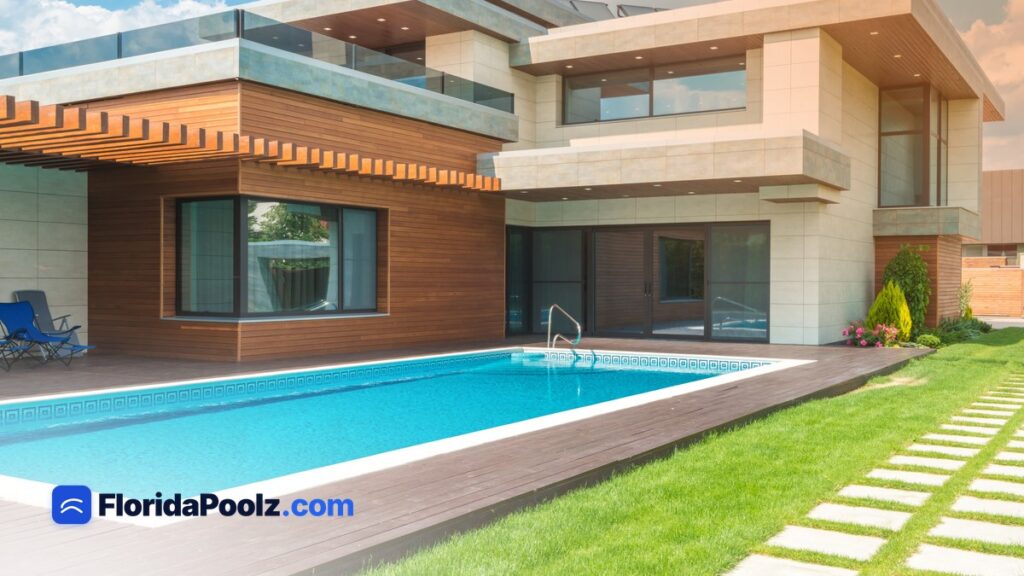
Fiberglass vs gunite pool is the first real fork in a Florida pool build, and the honest answer is that neither is “better” — they’re different tools. Fiberglass is a pre-made shell dropped in fast, lower-maintenance and mid-cost. Gunite is built in place from concrete, fully custom and higher-cost. Florida is overwhelmingly a fiberglass-and-gunite state (vinyl is rare here), so this is the decision most buyers actually make. Here’s how they compare on the things that matter — plus the Florida-specific factors of water table and soil.
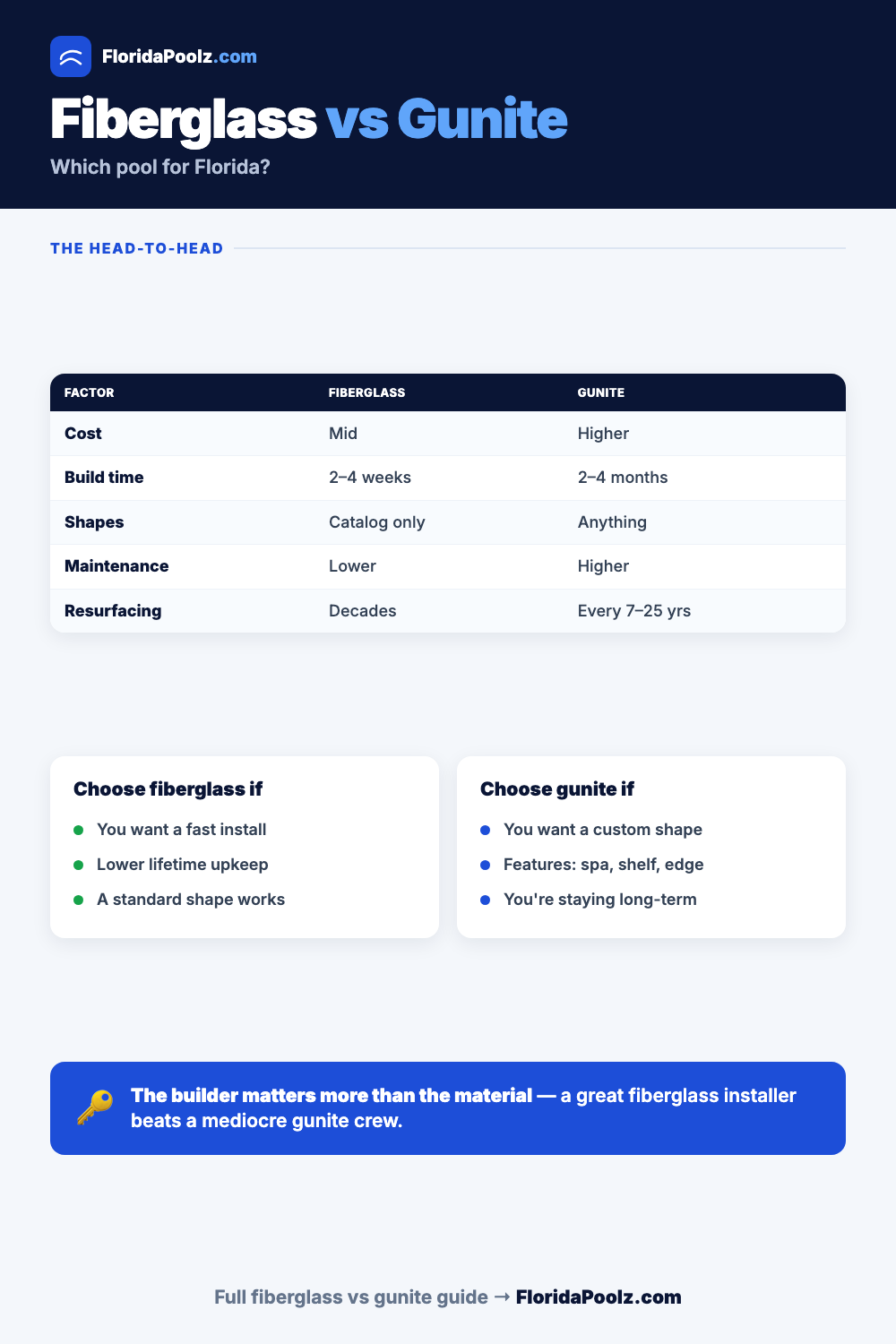
The comparison at a glance
| Factor | Fiberglass | Gunite / concrete |
|---|---|---|
| Cost | Mid, more predictable | Higher, wide range |
| Build time | ~2–4 weeks | ~2–4 months |
| Shapes / sizes | Manufacturer’s catalog only | Anything you can draw |
| Surface | Smooth gelcoat, gentle | Textured plaster/pebble, rougher |
| Maintenance | Lower — resists algae, less chemistry | Higher — porous, more chemistry |
| Resurfacing | None for decades (gelcoat lasts) | Every ~7–25 yrs by finish |
| Custom features | Limited | Spas, shelves, water features — anything |
Fiberglass: the fast, low-fuss option
A fiberglass pool arrives as a single molded shell and drops into the excavated hole — the install is measured in weeks, not months, which is its headline advantage. The smooth gelcoat surface resists algae (less for black algae to grip), needs less chemistry over time, and never needs resurfacing the way plaster does. The trade-offs: you choose from the manufacturer’s catalog of shapes and sizes rather than a custom design, and there’s a practical size ceiling because the shell ships by truck. For many Florida yards — especially smaller lots and buyers who want low maintenance — it’s the pragmatic pick.
Gunite: fully custom, higher commitment
A gunite pool is sprayed concrete over a steel frame, shaped and finished on-site — which means any shape, any size, any feature. Sun shelves, attached spas, vanishing edges, custom depths: gunite does it all, which is why every high-end Florida build is gunite. The costs of that freedom: a build measured in months, a porous plaster/pebble surface that needs more attentive chemistry, and periodic resurfacing down the road. If you want a specific look or serious features and you’re staying in the home, gunite earns its price.
The Florida factors
Water table and soil
Both types get built across Florida, but our high water table and sandy/rocky soil raise the engineering stakes for each. Fiberglass shells need careful backfill and a hydrostatic-relief plan so groundwater can’t shift or float the shell. Gunite pools need proper steel and engineering for the same soil. A competent Florida builder handles both routinely — but it’s a reason this isn’t a state for cutting corners on the crew.
Maintenance in a year-round season
Florida’s 12-month swim season magnifies the maintenance gap. A gunite pool’s porous surface and the state’s sun-and-storm chemistry load mean more attention year-round; fiberglass’s inert gelcoat shrugs off more of it. Over years, that maintenance difference is real money and real time — worth weighing if you’re the one caring for it (see service costs).
Resale perception
Both hold value well in Florida. Custom gunite pools can be a stronger resale story on higher-end homes; quality fiberglass reads as modern and low-maintenance. Neither hurts you — a well-built pool of either type is an asset in this market.
What about vinyl?
Vinyl liner pools are the cheapest upfront nationally but uncommon in Florida — the liners degrade faster under intense sun, need replacement every several years, and carry weaker resale perception here. Unless budget is the overriding constraint, most Florida buyers land on fiberglass or gunite.
So which should you choose?
- Choose fiberglass if: you want a fast install, lower lifetime maintenance, a smaller or standard-shaped pool, and predictable cost;
- Choose gunite if: you want a custom shape or size, features like a spa or sun shelf, and you’re staying long enough to enjoy the investment;
- Either way: the builder matters more than the material. A great fiberglass installer beats a mediocre gunite crew, and vice versa.
Whichever you lean toward, the move is the same: get bids from licensed Florida builders who build that type well, on one written spec. Find license-verified builders in the directory, price it with our cost guide, and vet them with our contractor questions.
FAQ
Is a fiberglass or gunite pool better for Florida?
Neither is universally better. Fiberglass installs in weeks, needs less maintenance, and costs less — ideal for standard shapes and low-fuss owners. Gunite goes fully custom with any shape and features, at a higher price and more upkeep. Florida’s year-round season makes fiberglass’s lower maintenance especially appealing.
How much longer does a gunite pool take to build?
A gunite pool typically takes 2–4 months versus 2–4 weeks for fiberglass, because it’s built and cured in place rather than dropped in as a finished shell. Florida permit timelines and rainy-season weather can stretch both. If speed matters, fiberglass wins clearly.
Does a fiberglass pool need resurfacing?
Not the way gunite does. The gelcoat surface lasts decades without the periodic replaster a gunite pool needs every 7–25 years by finish. That’s a real long-term saving, though a gelcoat can eventually need refinishing far down the line.
Are vinyl pools a good option in Florida?
Rarely. Vinyl is cheapest upfront but the liners degrade faster under Florida sun, need replacement every several years, and carry weaker resale perception here. Most Florida buyers choose fiberglass or gunite instead.
Which pool type is lower maintenance in Florida?
Fiberglass. Its smooth, inert gelcoat resists algae and needs less chemistry, which matters more in Florida’s 12-month season and heavier sun-and-storm load. A gunite pool’s porous surface asks for more attentive year-round care.
References
More articles
Pool Pump Repair: What You Can Fix, and What You Can’t
Pool pump repair guide for Florida: what the noises and symptoms mean, the DIY-safe fixes, the electrical line you don't cross, and…
Next Level Pools and Spas: Success Story
Back in the 1980s, Robbie didn’t expect his future to be in any way connected to pools. He wanted to be a…
What Size Pool Pump Do I Need?
What size pool pump do I need? Size by pool volume and turnover, why bigger isn't better, the variable-speed rule, and Florida's…