
Pool heater cost in Florida splits into two numbers people conflate: the installed price (a few thousand dollars, varying widely by type) and the running cost (where the real long-term money is). In our climate the answer is usually a heat pump — Florida’s warm air makes it dramatically cheaper to run than gas — but the right pick depends on how you’ll use the pool. This guide covers installed prices, running costs, and the replacement math by heater type.
Figures here are general 2026 Florida ranges to plan around; your pool size, gas access, and electrical situation move them, so get quotes.
Installed cost by type
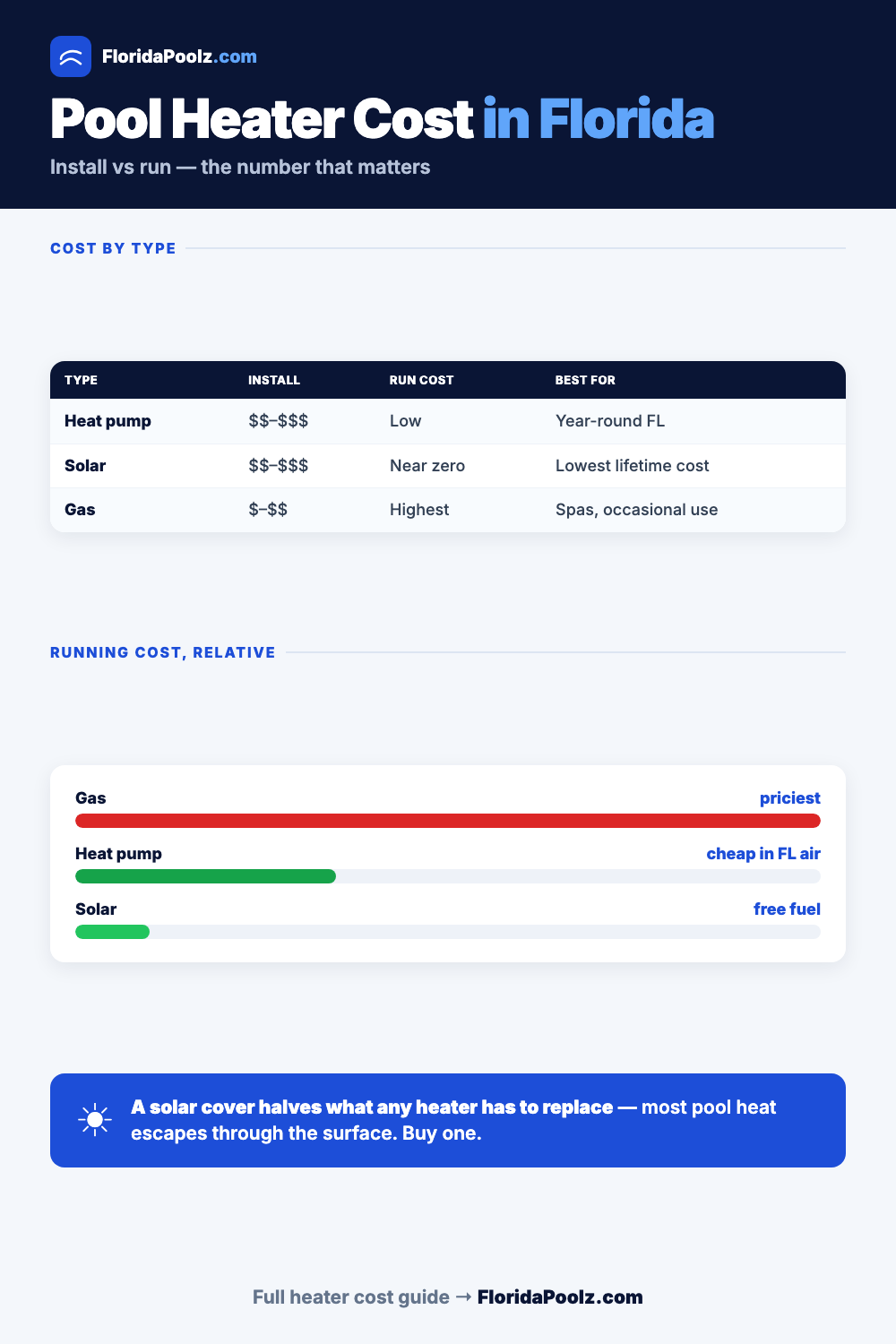
| Type | Installed cost | Running cost | Best for |
|---|---|---|---|
| Heat pump | $$–$$$ | Low (Florida’s winner) | Year-round FL swimming |
| Solar | $$–$$$ | Near zero (fuel is free) | Low running cost, roof space |
| Gas (natural / propane) | $–$$ | Highest | Fast heat, spas, occasional use |
Note the inversion: gas is often cheapest to install but most expensive to run, while heat pumps and solar cost more upfront and far less over time. In Florida’s long season, running cost dominates the decision — which is why heat pumps have become the default.
Why the heat pump wins in Florida
A heat pump doesn’t burn fuel — it moves heat from the surrounding air into the water, the same trick your AC runs in reverse. Because Florida air is warm most of the year, the heat pump works efficiently and sips electricity: it delivers several units of heat per unit of energy, versus gas burning fuel one-to-one. The catch is that heat pumps slow down when air drops below roughly 50°F — a real but brief limitation in most of Florida, and more of a factor in the Panhandle. For extending the season October through April, which is exactly what Florida owners want, the heat pump is hard to beat on total cost. The full mechanism and sizing is in our DIY vs real heater guide.
Solar: the near-zero running cost option
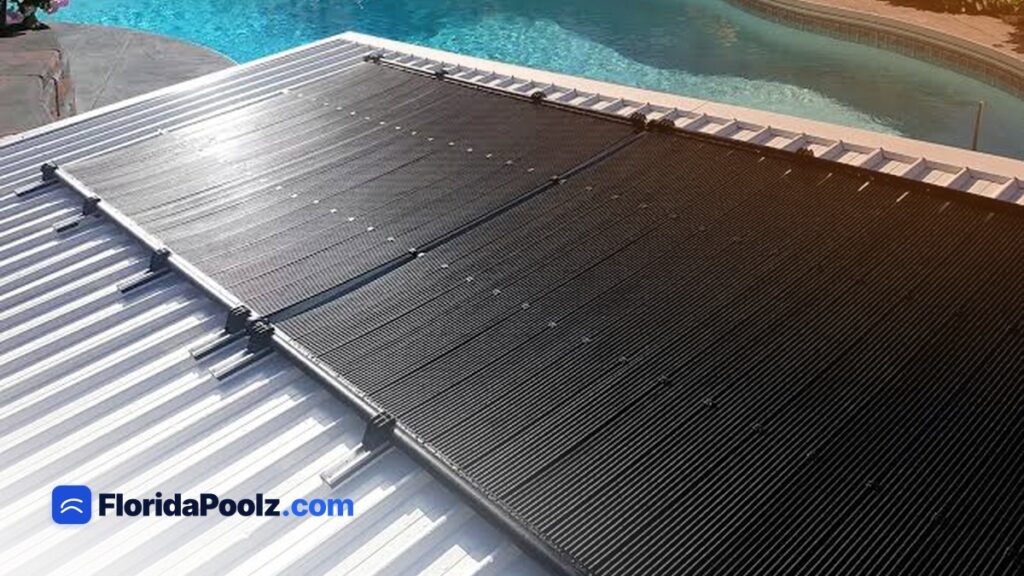
Rooftop solar pool heating has the highest appeal on running cost — the fuel is free sunshine. Installed cost is comparable to a heat pump, it needs adequate south-facing roof space, and it heats less aggressively on cloudy stretches. Florida’s solar-thermal heritage runs deep (the state’s research center at UCF has studied it for decades), and for an owner who wants the lowest lifetime cost and has the roof for it, solar is a genuinely strong Florida choice — often paired with a solar cover to hold the heat overnight.
Gas: fast heat, highest running cost
Gas heaters (natural gas or propane) heat fastest and hardest, which makes them the choice for spas and pools used occasionally — you can bring the water up quickly for a weekend rather than maintaining it. But running cost is the highest of the three, painfully so if you heat often, and gas installation adds a line or a propane tank. For a pool you swim in regularly, gas usually loses the total-cost math to a heat pump.
Replacement vs first install
Replacing a dead heater usually costs less than a first install, because the plumbing, electrical or gas line, and pad are already there — you’re mostly paying for the unit and the swap. Exceptions: switching types (say, gas to heat pump) may need new electrical, and an old install may not be up to current code. The repair-vs-replace rule of thumb: if the heater is near the end of its expected life and the repair runs a large fraction of a new unit, replace — especially in Florida’s coastal air, which corrodes heat exchangers and shortens heater life. Diagnosing which is which is in our equipment troubleshooting content.
The running-cost reality (and how to cut it)
Whatever you install, the running cost is set by how much heat escapes — and in Florida, most of it leaves through the surface via evaporation. The single biggest lever on your heating bill isn’t the heater; it’s a solar cover. Used nightly it can halve what any heater has to replace, turning a heat pump from a moderate bill into a small one. If you buy a heater, budget for a cover too — it pays for itself fast.
Permits and installation
Heater installation in Florida involves permits — electrical for heat pumps, plumbing and roof work for solar, gas line work for gas — and gas is never a DIY job. Sizing the unit to your pool volume (and screen-enclosure factor) is where pros earn their fee; an undersized heater never quite gets there, an oversized one wastes money. Get it quoted by a licensed installer. Find license-verified Florida pool equipment pros in the directory, and see the whole budget in our pool cost guide.
FAQ
What’s the cheapest pool heater to run in Florida?
Solar has the lowest running cost (free sunshine), followed closely by a heat pump, which is the practical winner for most Florida owners — it runs efficiently in our warm air for a fraction of gas’s cost. Gas is cheapest to install but by far the most expensive to run.
How much does a pool heater cost installed in Florida?
A few thousand dollars, varying by type: gas is often lowest to install, heat pumps and solar higher. But installed price is the smaller story — running cost over Florida’s long season usually decides it, and there the heat pump and solar win big.
Is a heat pump or gas heater better for a Florida pool?
Heat pump, for a pool you swim in regularly — it’s far cheaper to run in Florida’s warm climate. Gas makes sense for spas or occasional-use pools where you want fast heat-up and don’t run it often. Total cost, not install price, is the deciding number.
How much does it cost to replace a pool heater?
Less than a first install, usually, since the plumbing, electrical/gas, and pad already exist — you mostly pay for the unit and swap. Switching heater types or bringing an old install up to code adds cost. If a repair on an old heater runs a large fraction of a new one, replace.
How can I lower my pool heating bill?
A solar cover, used nightly, is the biggest lever — most Florida pool heat escapes through surface evaporation, and a cover can halve what your heater has to replace. Whatever heater you install, budget for a cover; it pays for itself quickly.
References
More articles
Pool Resurfacing Cost in Florida (Marcite, Pebble & Tile)
Pool resurfacing cost in Florida by finish - marcite, quartz, pebble, tile - plus what a resurface includes, the water-table warning, and…

Pool Service Cost in Florida (What Monthly Really Buys)
Pool service cost in Florida by tier - chem-only vs full service - what each includes, why FL costs more than national,…
How Much Does an Inground Pool Cost in Florida? (2026)
Inground pool cost in Florida in 2026: real price ranges by type, the line items that surprise buyers, cage and permit costs,…