
Pool builders by city
Pool builders in St Cloud. Start here: St Cloud runs its own building department, separate from Osceola County. Start below, and confirm the office before design.
2 listings here 2 based here
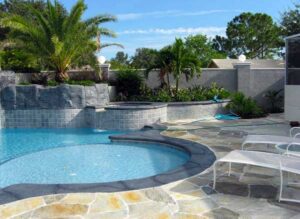
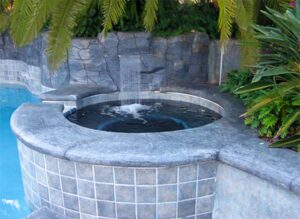
These pool builders are not based in St Cloud and don't emphasize their services here, but they've shown they work here, too — so check them out, too!
Tell us what your dream pool is all about, and where do you want it. We'll do our best to find a professional pool builder for your project.
Most St. Cloud pool work today happens in new-construction subdivisions. The city has grown hard toward Narcoossee and the Nova Road corridor, and much of the housing stock is recent, built on production-builder lots with an active homeowners association. That shapes the pool project before a contractor ever quotes it: many of these communities require architectural-review approval for a pool, the fence, and the screen enclosure, and the approval package has to line up with what the city permit will show.
Pick a builder who already works inside these subdivisions. A contractor with recent St. Cloud jobs knows which HOAs demand what, how tight the rear setbacks run on a standard lot, and where the utility easements sit along the back of the property. On a compact new-construction parcel, the four-foot barrier, the deck, and the equipment pad can eat the usable yard fast, so a builder should walk the lot and lay out the shell around those limits before drawing plans.
Verify the license regardless of how polished the sales pitch is. Florida pool builders are state-certified or state-registered through the Florida Department of Business and Professional Regulation, and the online lookup confirms the number, its status, and any complaints on record. A residential pool contractor carries a CPC- or RP-prefixed license. Confirm the coverage is current and that the company pulls the permit in its own name rather than pushing an owner-builder permit onto you.
Read the proposals side by side and study the scope. In St. Cloud the price spread between two bids usually comes down to the screen enclosure, the barrier fence, the paver deck, and the electrical bonding rather than the pool itself. A thin quote that leaves those out looks cheaper until the missing work is added back. Ask for references inside your own subdivision or a neighboring one, and confirm the builder will handle both the HOA submittal and the city inspections.
St. Cloud runs its own Building Department and issues its own pool permits, separate from Osceola County. Any residential in-ground pool or spa inside the city limits needs a building permit before excavation, filed with the City of St. Cloud Building Department at 1300 Ninth Street. The city has adopted the Florida Building Code, 8th Edition (2023), and reviews every pool application against it.
Homes just outside the city line sit in unincorporated Osceola County and are permitted by the Osceola County Building Department instead. St. Cloud has annexed land quickly, so a St. Cloud mailing address is not proof the property is inside the city; confirm jurisdiction from the property record before filing.
The permit package includes a site plan showing the pool against property lines, the house, and any easements, plus engineered structural drawings, the plumbing layout, and the electrical bonding plan. A notice of commencement has to be recorded and posted at the job site before the first inspection. Inspections follow the build in stages: steel and bonding before the shell pour, plumbing, the safety barrier, and a final after the deck and enclosure are done.
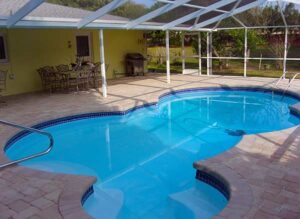
Chapter 515 goes one step further, requiring at least one added safety feature on new pools. That can be an approved safety cover meeting the ASTM F1346 standard, exit alarms on the doors and windows with direct pool access, or a self-latching device on those doors set out of a child's reach. Screen enclosures, common across St. Cloud's newer subdivisions, need a separate permit and inspection of their own.
Homeowners in St. Cloud tend to arrive with the paperwork on their minds. With so many pools here going into recent subdivisions, the first question is usually about the HOA: what the architectural committee wants to see, and how that submittal fits with the city permit. Owners want the two approvals to move together rather than stall each other.
The next cluster of questions is about the lot itself. Tight rear setbacks, utility easements, and the required barrier leave less room on a standard new-construction parcel than owners expect, and many want to know what will actually fit. Lakefront owners along East Lake Toho ask about their own set of rules. The questions below reflect what St. Cloud homeowners raise most.
St. Cloud runs its own Building Department and issues pool permits for property inside the city limits, reviewed against the Florida Building Code, 8th Edition. Homes just outside the line sit in unincorporated Osceola County and are permitted by the county. Since the city has annexed land quickly, confirm from the property record which office has jurisdiction before you file.
In most of the newer communities, yes. Many St. Cloud subdivisions require architectural-review approval for the pool, the barrier fence, and the screen enclosure before you build. The HOA package and the city permit have to agree on the same layout. A builder who works your community can prepare both so the two approvals move together rather than holding each other up.
Often it is tighter than owners expect. Standard production-builder lots in St. Cloud can have shallow rear setbacks and utility easements along the back line, and the required four-foot barrier and deck take their share of the yard. A pool builder who knows these subdivisions will walk the lot and lay out the shell and deck around the setbacks before drawing final plans.
Use the Florida DBPR license lookup. A qualified residential pool contractor holds a state license, typically with a CPC or RP prefix, and the record shows whether it is active and free of discipline. Confirm the license, check that general liability and workers' compensation coverage are current, and make sure the contractor pulls the city permit in their own name.
Yes, for a pool in St. Cloud you do. A notice of commencement is a recorded document identifying the property, the owner, and the contractor for a construction project. It has to be recorded and posted at the job site before the first inspection. Your licensed pool contractor normally prepares and files it as part of getting the permit going.
Yes. Screen enclosures are common across St. Cloud's newer subdivisions, and each one takes its own building permit and inspection apart from the pool shell. The enclosure has to meet the code for self-closing, self-latching screen doors. Fold it into the original contract so it is priced alongside the pool instead of billed as a later add-on.
If you didn't find a pool builder for your St Cloud passion project here, check out the neighbours: professional pool builders usually don't mind travelling a few miles to help new customers with the most exciting projects.