
Osceola County
Hallmark Pool & Spa World / Pool Builder Orlando
7.7
FloridaPoolz Score
DBPR verified
Since 1985
Pool builders by county
Pool builders serving Osceola County. Only Kissimmee and St Cloud run their own permitting, and much of what carries a Kissimmee address is really unincorporated county. Start with the shortlist, then confirm which office has your lot.
6 listings here 6 based here
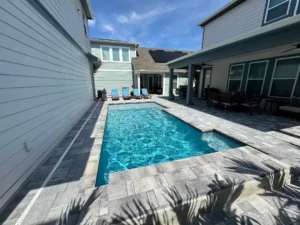
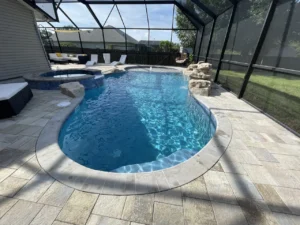
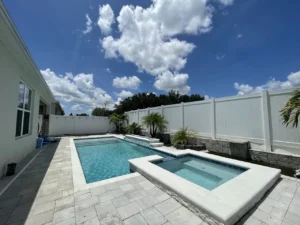
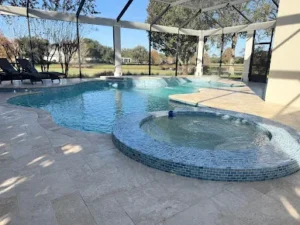
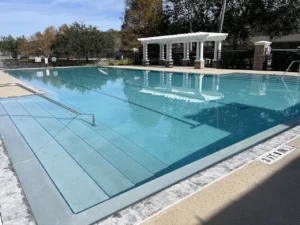

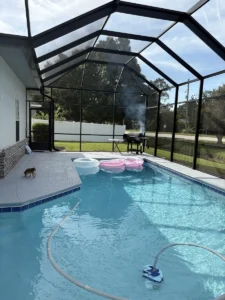
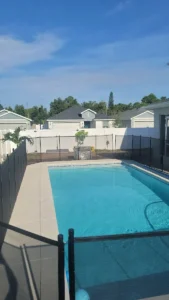
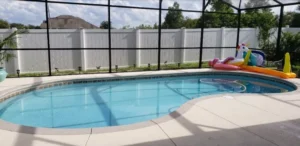
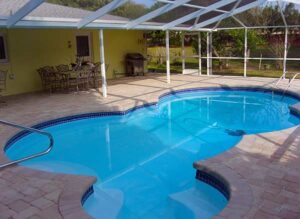
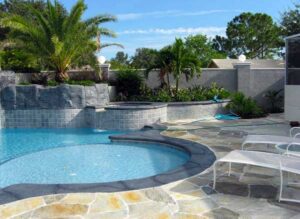
These pool builders are not based in Osceola County and don't emphasize their services here, but they've shown they work here, too — so check them out, too!
Tell us what your dream pool is all about, and where do you want it. We'll do our best to find a professional pool builder for your project.
Osceola holds only two incorporated cities, and a great deal of its newest housing sits outside both of them. Communities people casually call Kissimmee are frequently not in Kissimmee at all, which decides who reviews the pool plans.
| Where the lot sits | Who reviews the pool plans |
|---|---|
| Unincorporated — Celebration, Reunion, ChampionsGate and much more | The county's Community Development Department |
| Kissimmee, St Cloud | That city's own building department |
Kissimmee and St. Cloud are the only two incorporated cities inside Osceola County, and a lot of the county’s newest neighborhoods sit outside both of them entirely. Celebration, Reunion, ChampionsGate, and large stretches of what people casually call “Kissimmee” on a mailing address are actually unincorporated Osceola County, which means the county’s own Community Development Department runs the permit review, not a city hall.
If a property sits inside Kissimmee or St. Cloud city limits, the process instead runs through that city’s own building department — and all three offices use different online systems: the county issues permits through an Accela-based citizen portal, Kissimmee runs its permitting through EnerGov’s self-service system, and St. Cloud handles building-permit status and inspection scheduling through its own separate portal. None of the three cross-reference each other, so applying to the wrong office costs real time.
This causes more confusion in Osceola County than in a lot of Florida counties, because postal addressing here doesn’t reliably track city limits.
A “Kissimmee, FL” address is frequently unincorporated county land rather than the actual City of Kissimmee, and Poinciana — one of the area’s largest residential communities — straddles the line between Osceola and Polk counties entirely, so which county issues the permit depends on which side of that line a given section of Poinciana falls on. Before assuming who has authority over a pool project, it’s worth confirming the parcel’s actual jurisdiction rather than going by what the address says.
Regardless of which office reviews the paperwork, Florida’s Residential Swimming Pool Safety Act (Chapter 515, Florida Statutes) governs every new residential pool in the state, Osceola County included.
Before final inspection sign-off, the pool needs at least one of the following:
Building a new pool without one of these features is a second-degree misdemeanor, though the law gives homeowners a way to cure it — adding a qualifying safety feature and completing a drowning-prevention course within 45 days of a citation.
Pool construction in Florida is a licensed trade under Chapter 489 of the Florida Statutes, regulated statewide by the Department of Business and Professional Regulation. A Certified Pool/Spa Contractor (CPC) license is the credential built specifically for this work, though a Certified Building Contractor (CBC) license — a broader credential that also covers pools — qualifies too.
Because these are state licenses rather than local ones, a contractor holding either can legally build in Kissimmee, St. Cloud, or unincorporated county territory alike. DBPR’s public license search is the way to confirm a license is actually active, rather than trusting a truck door or a business card.
Whichever office ends up with jurisdiction, the shape of the process is similar:
How long that takes depends heavily on how busy the reviewing office is at the time, so it’s worth treating any timeline a contractor gives you as an estimate rather than a guarantee — and worth confirming, before applying anywhere, that you’re actually applying to the office with authority over your address.
A meaningful share of the pools going in around Kissimmee and St.
Cloud aren’t purely backyard projects, they’re part of homes bought specifically to operate as short-term vacation rentals near the theme parks, and that changes what homeowners tend to worry about first. Rental appeal becomes part of the calculation: a screened, heated pool with a spa spillover reads very differently to a paying guest than a plain rectangle, and homeowners in communities like ChampionsGate, Reunion, or Storey Lake are often weighing that question alongside the more ordinary one of what a project actually costs.
Cost itself is still the most common source of uncertainty, and for good reason: a rectangular pool, a round one, and an above-ground installation land in completely different price tiers, and gunite, fiberglass, and vinyl each carry their own cost curve on top of that.
Homeowners frequently wonder whether a number like $20,000 or $30,000 is realistic for an inground pool here. The honest answer is that it depends enormously on size, shape, and site conditions, and the only way to get a number that means anything for a specific lot is to collect quotes from a few licensed contractors rather than anchor to a figure seen online.
Permitting confusion is its own recurring theme, and it’s a genuinely bigger deal here than in a lot of Florida counties, because of how Osceola’s map actually works, covered in more detail in the Permits tab above. Homeowners often look for a way to check on a permit application or confirm what a permit will cost before they’ve even settled whether their address sits inside Kissimmee, inside St.
Cloud, or in unincorporated county territory governed directly by the county’s own building division. Figuring out which office actually has jurisdiction matters more here than the search for a fee schedule or a portal.
Timing carries a different wrinkle here than in older, already built-out parts of Central Florida.
Because so much of Osceola’s growth is happening inside large, still-being-built subdivisions, it’s common for a pool to go in on a lot that was only recently cleared, with drainage, retention ponds, and HOA architectural review all interacting with the building permit in ways that don’t come up in an established neighborhood. Homeowners in newer developments are often better served checking their HOA’s own pool approval requirements early, alongside whichever building department has jurisdiction, since either one holding things up delays the other.
Trust in the contractor is the last major thread, and it shows up as a fairly practical set of questions: is this company actually licensed, do they have a real track record building in this specific market, and will they still be around if something needs warranty work in a few years. Central Florida’s building boom has drawn plenty of legitimate builders to the Kissimmee and St.
Cloud corridor, but it’s also the kind of fast-growing market that attracts contractors who don’t stick around long. Confirming active DBPR licensing status and asking for references from jobs actually completed nearby, not just photos on a website, is a reasonable amount of diligence before signing anything.
It varies more than most people expect, since pool type (gunite, fiberglass, vinyl), size, shape, and site conditions all move the number independently of each other. Rather than anchoring to a figure seen online, the more reliable approach is collecting quotes from a few licensed local contractors and comparing them directly.
Neither figure is one we can stand behind for this county. What actually moves the number is shell type first, then size, site preparation, screening and the extras added before signing — and on the newer unincorporated subdivisions, how much room a machine has to reach the back of the lot. Compare itemised quotes from licensed contractors.
Each jurisdiction maintains its own permit-search tool tied to a property address, and confirming this before applying anywhere is worth the extra step, since the three offices don't share systems. If a project gets submitted to the wrong one, it simply doesn't move forward until it's resubmitted to the office that actually has authority over that parcel.
Yes. Permit fees are standard and generally scale with the declared value of the project; there's no free or no-fee path, and building without a permit doesn't avoid the cost, it just risks a stop-work order, retroactive inspections, or problems at resale later.
Generally yes. Florida's pool-safety requirements, and most local building departments' permit rules, apply to pools of meaningful depth regardless of whether they're in-ground or above-ground, not just full custom installations.
Yes, all three run separate systems: the county's own online permit center, Kissimmee's citizen self-service portal, and St. Cloud's own building-permit portal. None of them share a login or a queue with each other.
Through whichever office actually has jurisdiction over the address, using that office's own online system, rather than assuming the county's portal covers a property inside Kissimmee or St. Cloud city limits.
If you didn't find a pool builder for your Osceola County passion project here, check out the neighbours: professional pool builders usually don't mind travelling a few miles to help new customers with the most exciting projects.