
Pool builders by county
Pool builders serving Lake County. Five incorporated cities run their own building departments here, so a Clermont or Mount Dora mailing address does not tell you which desk reviews the plans. Start with the shortlist, then confirm the office.
13 listings here 12 based here
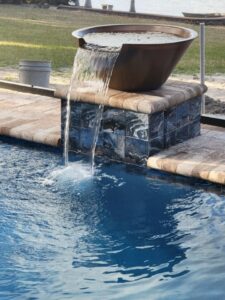
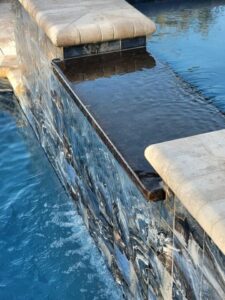
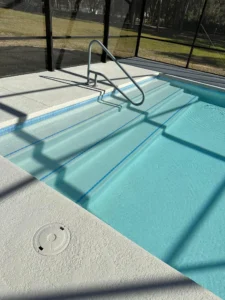
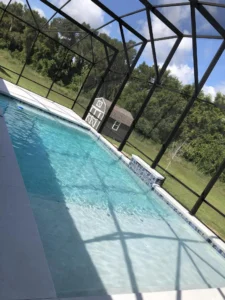
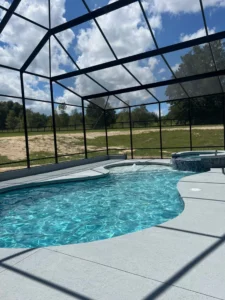
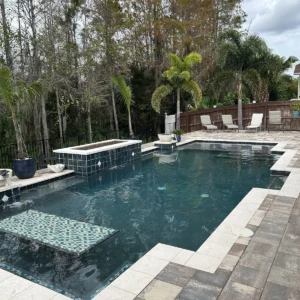
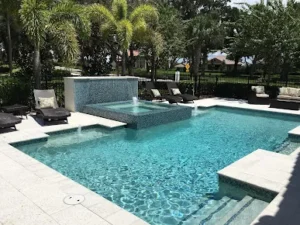
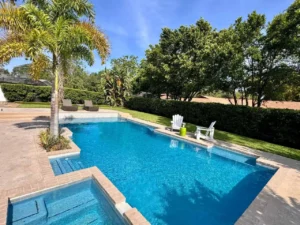
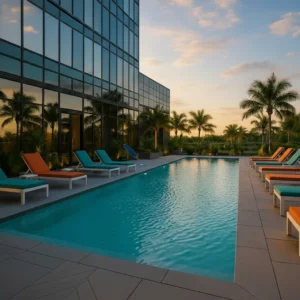
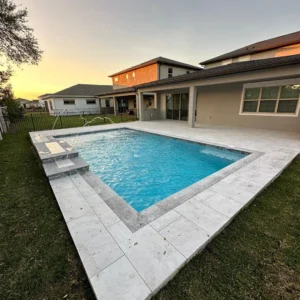
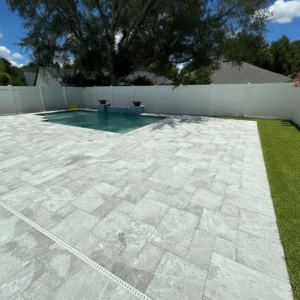
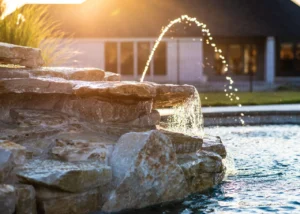
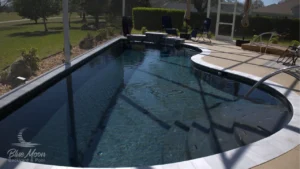
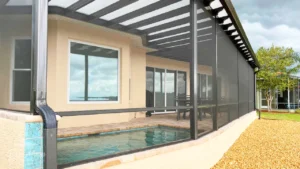
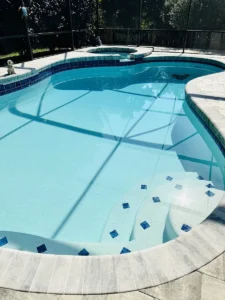
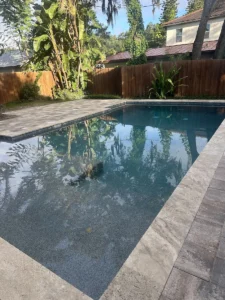
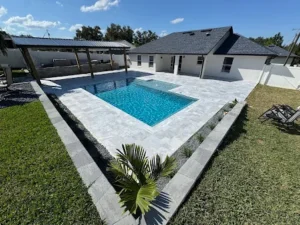
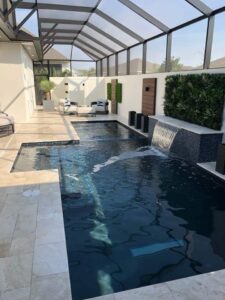
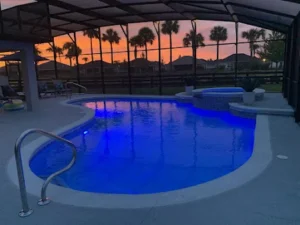
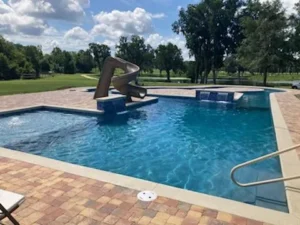



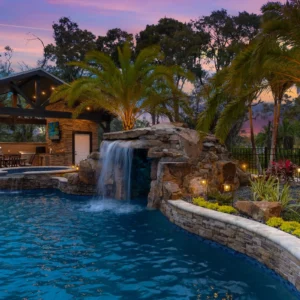
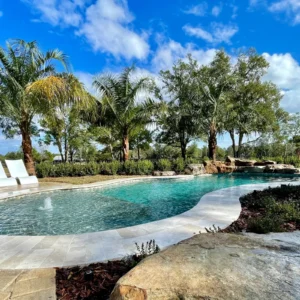
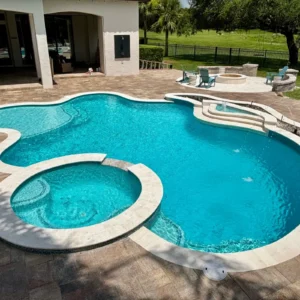
These pool builders are not based in Lake County and don't emphasize their services here, but they've shown they work here, too — so check them out, too!
Tell us what your dream pool is all about, and where do you want it. We'll do our best to find a professional pool builder for your project.
Lake County sits inland on the chain of lakes north-west of Orlando, and its permitting splits five ways before you count the county itself. A mailing address that says Clermont or Mount Dora does not settle which office has the lot.
| Where the lot sits | Who reviews the pool plans |
|---|---|
| Unincorporated Lake | Building Services, in the county's Growth Management department |
| Clermont, Mount Dora, Leesburg, Tavares, Eustis | Each runs its own building department, plans and inspections |
Lake County’s Building Services division, part of the county’s Growth Management department, issues permits and runs inspections for unincorporated Lake County. But five of the county’s incorporated cities — Clermont, Mount Dora, Leesburg, Tavares, and Eustis — each run their own separate building department, reviewing their own plans and inspecting their own permits independent of the county office.
A mailing address that says “Clermont” or “Mount Dora” doesn’t automatically mean the property sits inside that city’s limits — plenty of unincorporated Lake County addresses carry a nearby city name. The Lake County Property Appraiser’s site lists a millage group for every parcel that states plainly whether it falls inside a city boundary or in unincorporated territory, and checking it before calling anyone is the fastest way to find the right office on the first try.
Whichever office issues the permit, Florida’s Residential Swimming Pool Safety Act (Chapter 515, Florida Statutes) governs every new residential pool in the state, Lake County included. Before final inspection can pass, the pool needs at least one approved safety feature in place:
A code-compliant fence satisfies most homeowners’ needs, though any one of the listed options is legally sufficient on its own. Florida backs this up with an actual penalty: building a new pool without one of these features is a second-degree misdemeanor, though a homeowner cited for it can generally avoid that outcome by adding a compliant safety feature and completing a drowning-prevention course within 45 days.
Pool construction is a licensed trade under Chapter 489 of the Florida Statutes, regulated statewide by the Department of Business and Professional Regulation. The credential to look for is a Certified Pool/Spa Contractor (CPC) license, or in some cases a Certified Building Contractor (CBC) license, which covers a wider scope that includes pools.
Both are issued at the state level, so a properly licensed contractor can legally build in Lake County or anywhere else in Florida — a Lake County address doesn’t require a separate local pool license on top of it. DBPR’s public license lookup shows active status and any disciplinary history directly, which is worth checking before signing with anyone rather than relying on a company’s own claims.
Whether Lake County or one of its cities has jurisdiction, the shape of the process is similar everywhere:
How long that takes depends heavily on how busy the reviewing office is at the time, so it’s worth building flexibility into a construction timeline rather than assuming a fixed number of weeks.
Cost is where most Lake County pool searches start, and the pattern here has a particular shape: a lot of people are anchoring on a specific number — something in the neighborhood of $20,000 — and trying to figure out what that budget actually buys.
That’s a reasonable question with an unsatisfying answer: a smaller vinyl or fiberglass pool can land in that range, but a poured-gunite pool with any real customization usually runs past it. The honest way to close that gap is collecting quotes from a couple of licensed contractors for your own property rather than trying to reverse-engineer a number from what a $20,000 pool “looks like” in general.
Clermont pulls an outsized share of the county’s pool-related search activity, which tracks with how much of Lake County’s newer residential growth has clustered there over the past decade.
But Clermont-specific searches skew toward comparison shopping — fiberglass pricing, above-ground options, general affordability — more than they skew toward high-end custom builds, which lines up with a county that’s still more rural and lake-dotted than densely suburban. The Villages, the sprawling retirement community that spills across the Lake/Sumter/Marion county line, shows up constantly in the same search patterns, even though it sits mostly outside Lake County proper — a reminder that the local pool market here doesn’t stop cleanly at the county boundary, and a fair number of searches are coming from an older, retiree-heavy population weighing a pool addition against a fixed budget.
A second, distinct thread running through local search behavior is permit self-service — people looking to search Lake County permit records directly, by address or by owner name, rather than asking a contractor to confirm it for them.
That’s a healthy instinct: a permit history search is public information, and pulling it yourself before hiring anyone (or before buying a house with an existing pool) is one of the more useful, low-effort steps a homeowner can take. It’s also common for buyers doing due diligence on a resale property with an existing pool to check whether it was actually permitted, since an unpermitted pool can complicate closing.
Licensing comes up almost as often as cost, usually phrased simply as whether a pool contractor has to be licensed in Florida at all. It does — statewide, not just in Lake County — and the answer people are generally looking for isn’t the legal technicality so much as reassurance that the person they’re about to hire is the genuine article. Checking a license directly against the state’s own lookup, rather than trusting a truck door or a business card, remains the simplest way to get that reassurance.
A smaller number of Lake County searches go the other direction entirely, comparing round pools, above-ground kits, and fiberglass shells against each other on price alone, which points to a segment of homeowners treating a pool as a straightforward purchase decision rather than a custom design project. A handful of names come up repeatedly in that stretch of local search activity, alongside the county’s own established builders, suggesting most Lake County homeowners already have a short list of local companies in mind well before they start comparing quotes.
Taken together, these patterns describe a market that’s more budget-driven and self-directed than a dense urban county’s would be: homeowners comparing pool types on price before they compare contractors on reputation, a meaningful slice of demand pulled in from just across the county line, and a genuine appetite for checking the paperwork — permits and licenses alike — directly rather than taking anyone’s word for it.
Yes. Every in-ground (and most above-ground) swimming pool in Florida requires a building permit before construction begins. In Lake County, that permit comes from whichever office has jurisdiction over the property: the county's own Building Services division for unincorporated land, or the relevant city building department if the address is inside Clermont, Mount Dora, Leesburg, Tavares, or Eustis.
Building without a permit exposes you to real risk: the office with jurisdiction can issue a stop-work order and require costly retroactive inspections, or removal, of unpermitted work, and unpermitted pools frequently become a problem at resale once a buyer's inspector or title company checks the permit record. Skipping the process also skips the safety inspection that Florida's Residential Swimming Pool Safety Act requires before a new pool can legally be used.
There isn't one statewide fee. Each office that issues pool permits, whether that's Lake County's Building Services division or one of the county's five city building departments, sets its own fee schedule, typically tied to the value of the project. Confirming the fee directly with whichever office has jurisdiction over your address is more reliable than assuming a number from somewhere else.
It depends far more on shell type and site than on any headline figure. A simple, smaller shell sits at one end and a custom gunite pool with screening, heating or a spa at the other, and access to the back of the lot can move it again. Collect quotes from a couple of licensed contractors for your own property rather than working backwards from a number you saw advertised.
There's no single answer, since the price depends on the material (gunite, fiberglass, or vinyl), site conditions, and any add-ons like decking or a screen enclosure. A 12x24 footprint is on the smaller end of typical residential pools, which generally puts it toward the lower end of the cost range for its material type, but confirming that with a licensed local contractor is the only way to get a number specific to your property.
Yes. Pool construction is a licensed trade under Chapter 489 of the Florida Statutes, regulated statewide by the Department of Business and Professional Regulation. A contractor should hold an active Certified Pool/Spa Contractor (CPC) or Certified Building Contractor (CBC) license, which is checkable directly through DBPR's public license lookup rather than taking a company's word for it.
If you didn't find a pool builder for your Lake County passion project here, check out the neighbours: professional pool builders usually don't mind travelling a few miles to help new customers with the most exciting projects.