
Pool builders by service
A fountain swimming pool is one with moving water built into it, and in Florida that is worth more than decoration: everything a fountain throws into the air comes back cooler. Below, what deck jets, laminars and bubblers each need from the pump, what goes wrong with them, and the installers across the state.
156 listings here
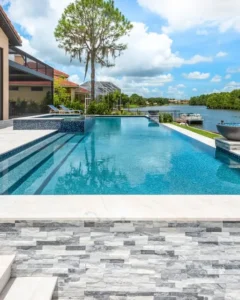
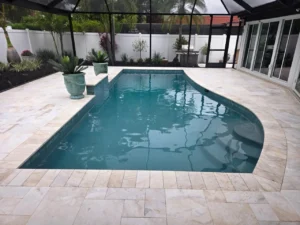
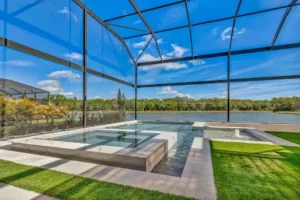
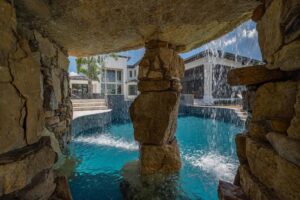
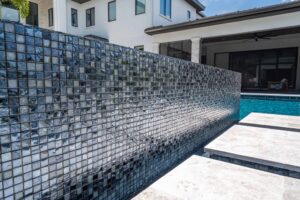
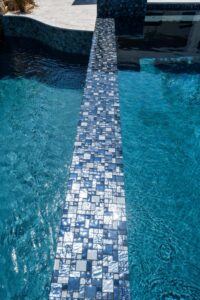
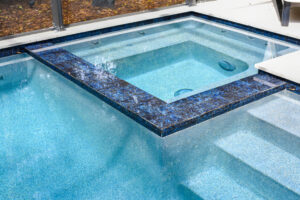
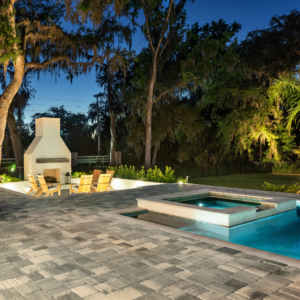
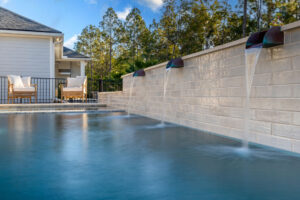
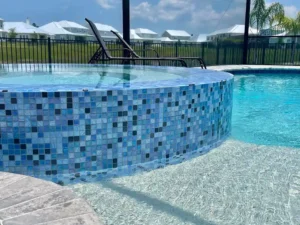
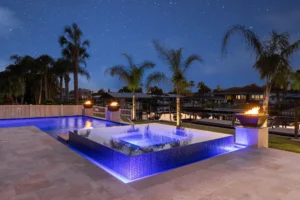
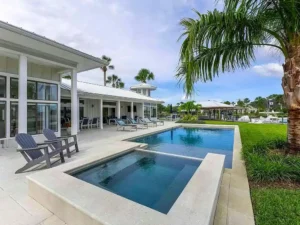

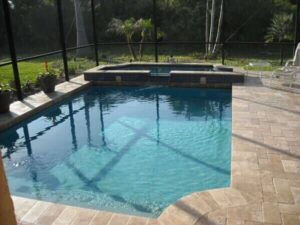
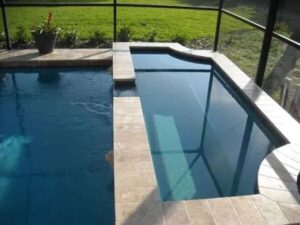
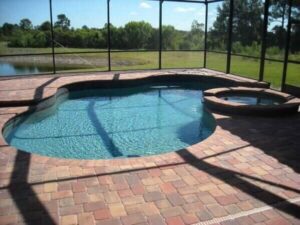
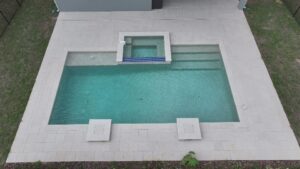
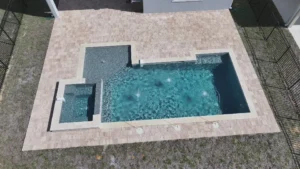
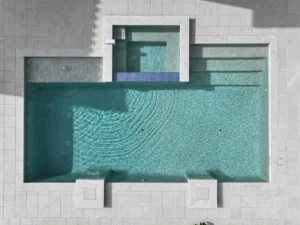
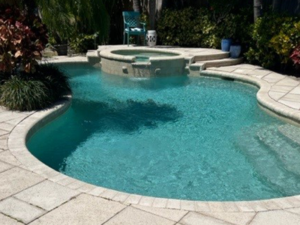
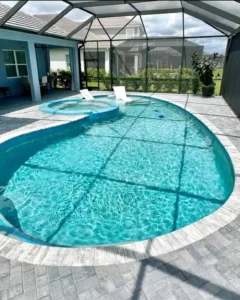
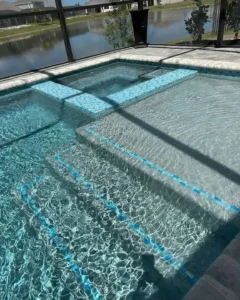
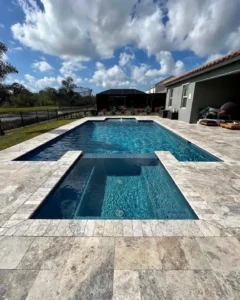
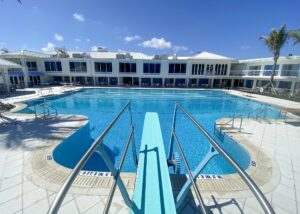
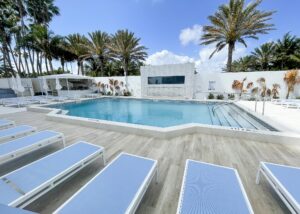

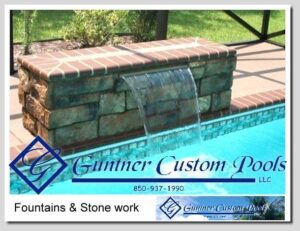

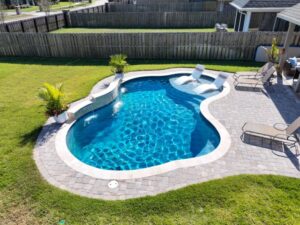
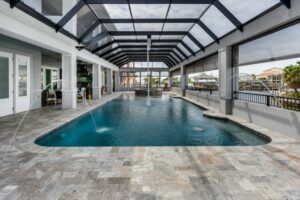
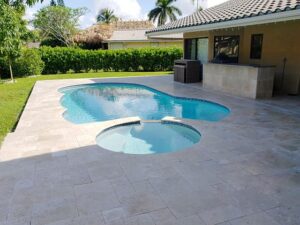
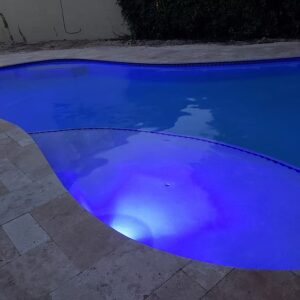
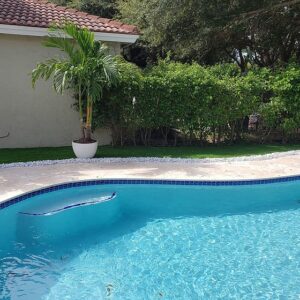
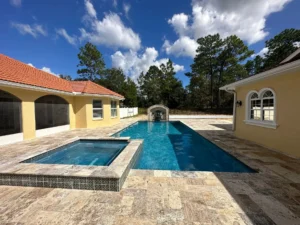
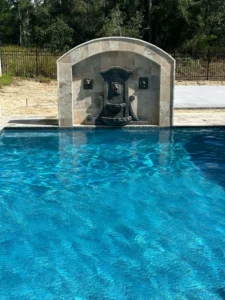
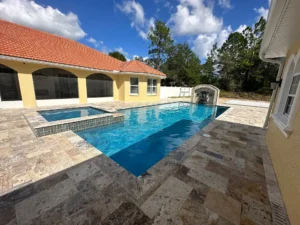
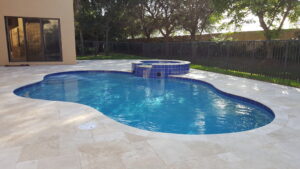
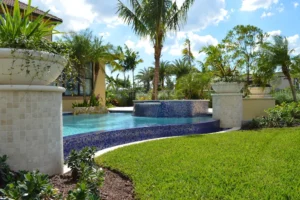
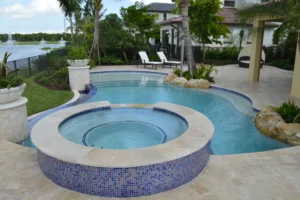
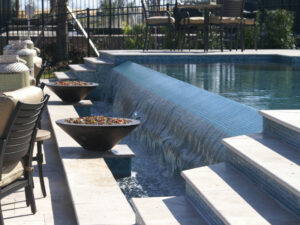
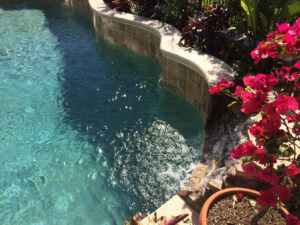
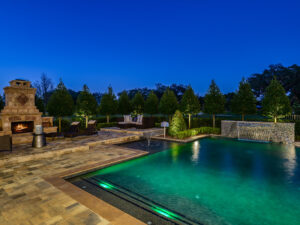
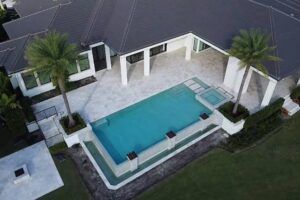
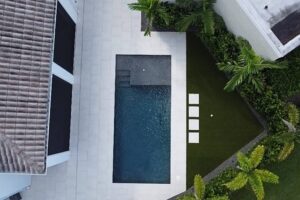
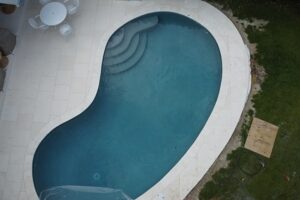
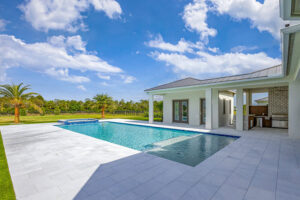
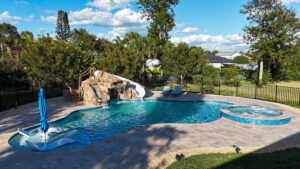
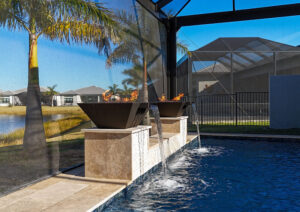
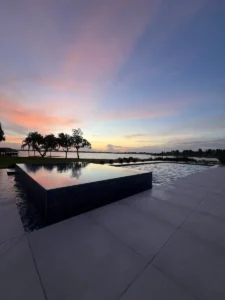
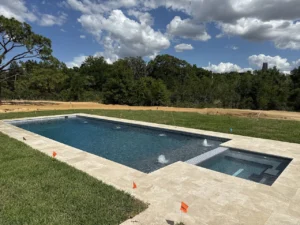
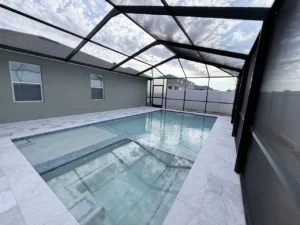

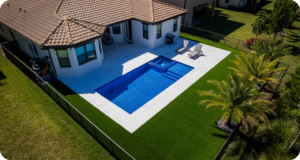

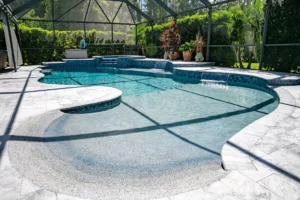
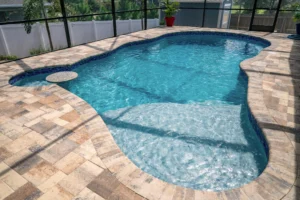
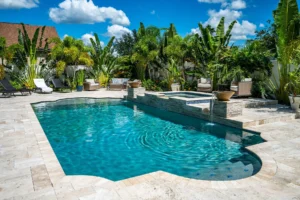
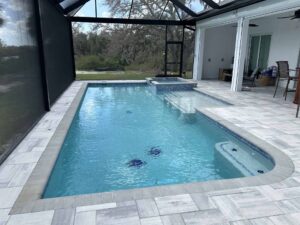
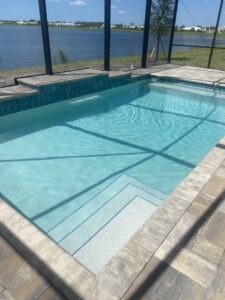
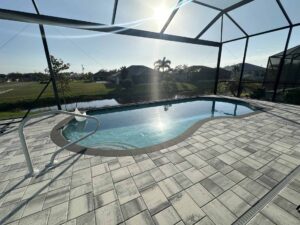
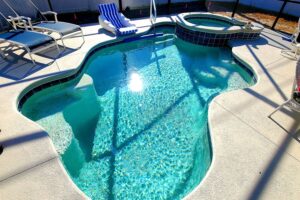
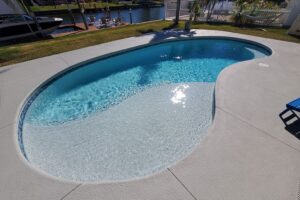
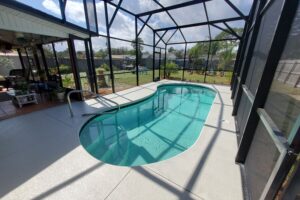
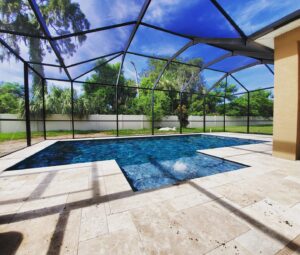
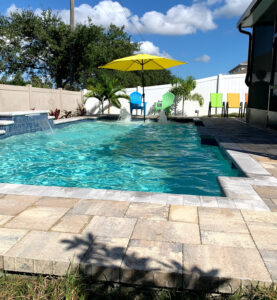
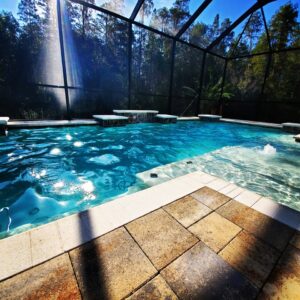
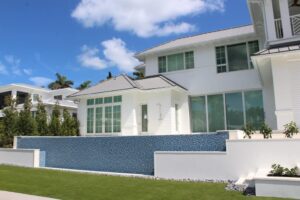
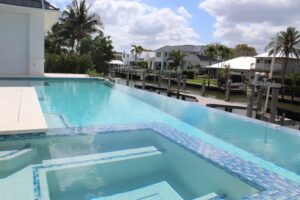
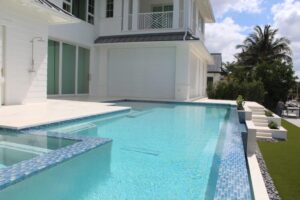

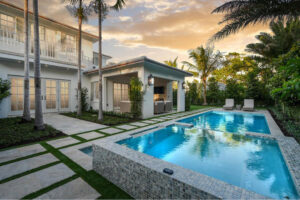

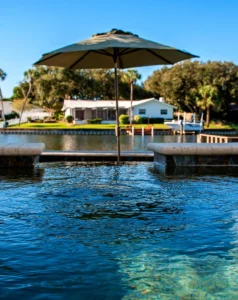
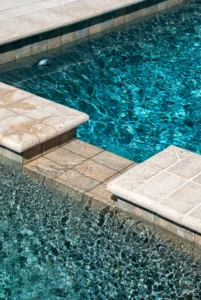
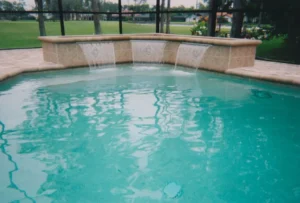
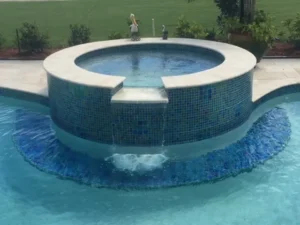
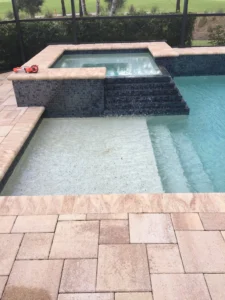
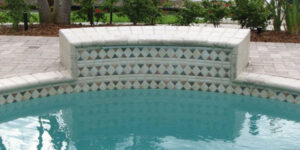
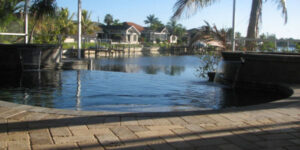
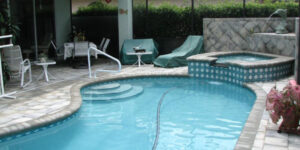
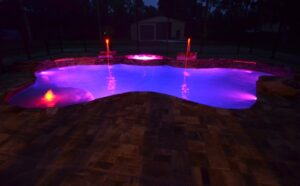
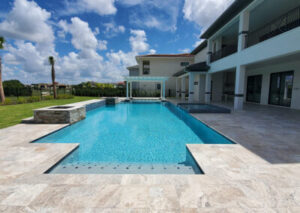
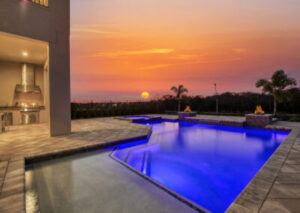
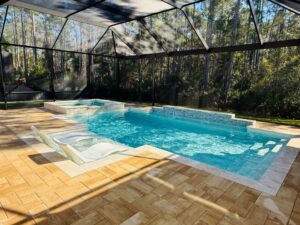
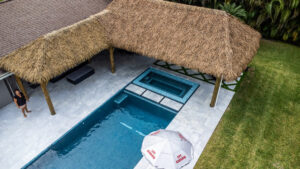
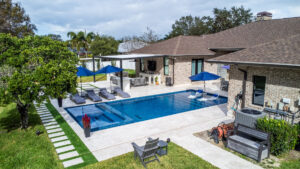
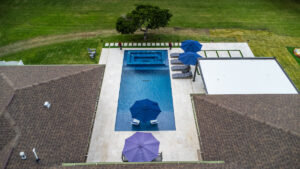
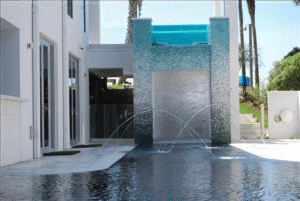
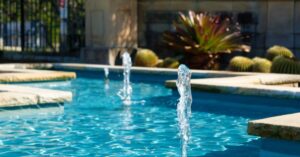
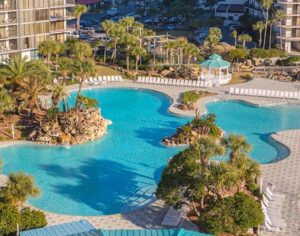
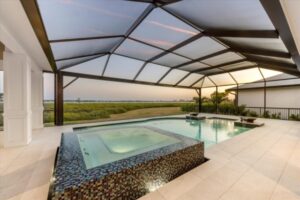
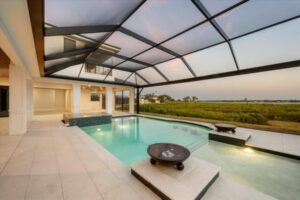
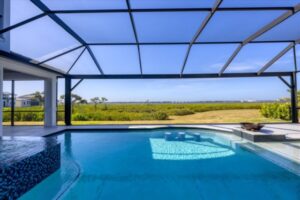
Two things, and only one of them is visual. The obvious one is that moving water gives a pool something to look at and something to listen to, and it turns the surface from a mirror into a place where something is happening. The second is that a fountain aerates, and aeration in Florida is worth more than decoration.
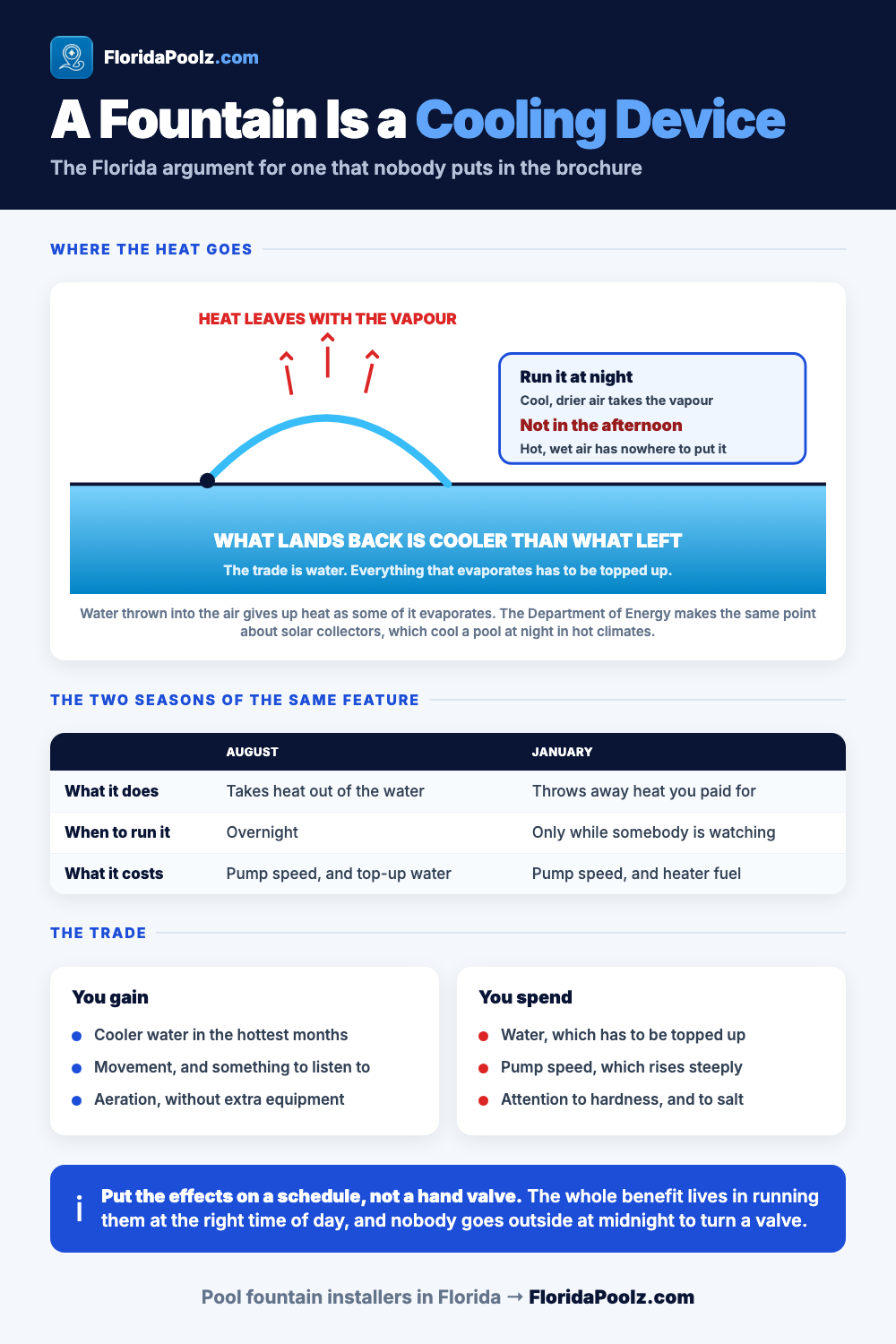
Water thrown into the air gives up heat as it evaporates, and the water that lands back is cooler than the water that left. That is the mechanism behind every spray aerator sold for cooling a pool, and it runs in reverse to a heater: a fountain in August is a cooling device, and a fountain in January is a way of throwing away the heat you paid for. The valve that turns it off is not an afterthought.
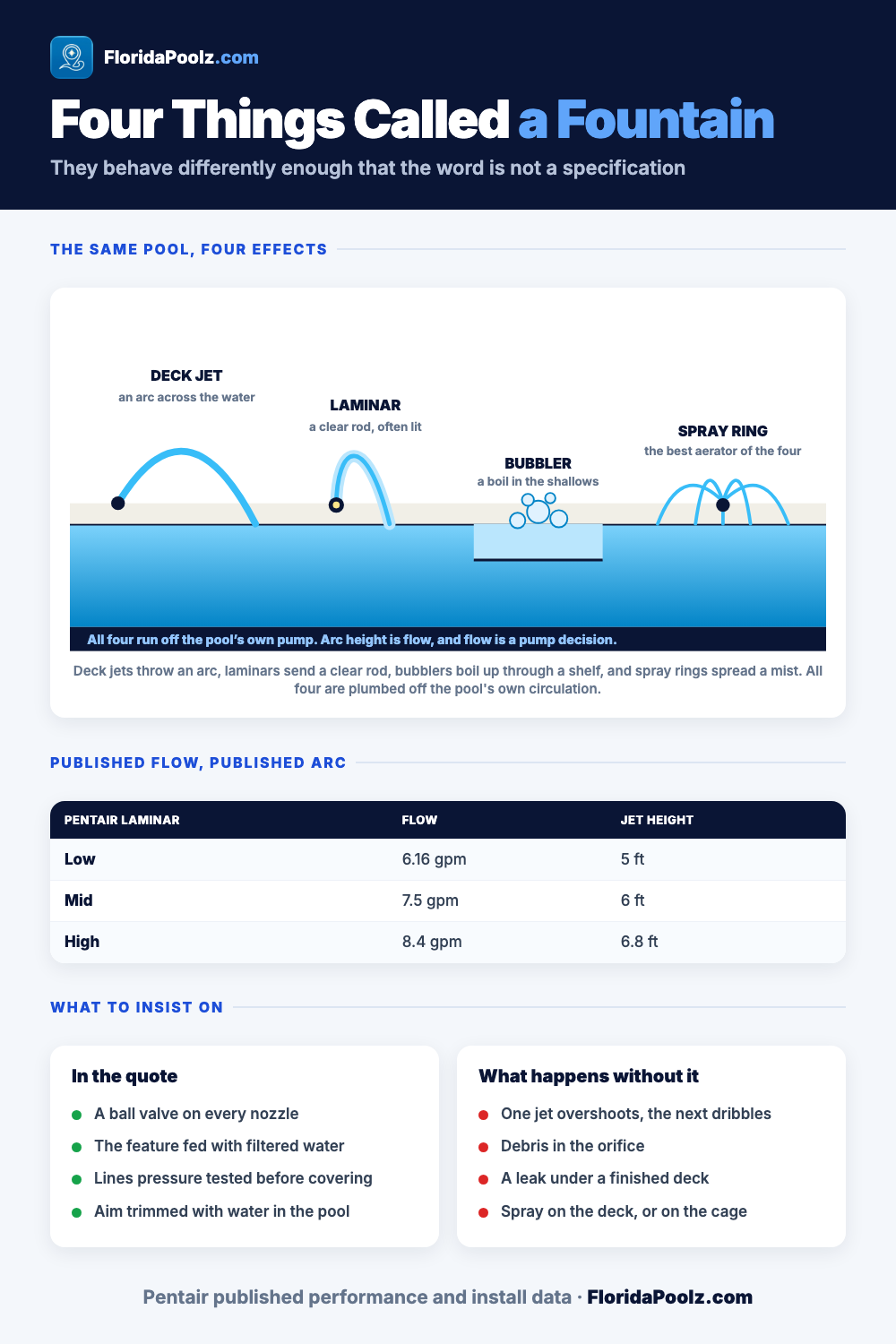
"Fountain" covers several genuinely different pieces of hardware, and they behave differently enough that the word alone is not a specification.
| Effect | What it does | Where it sits | Noise |
|---|---|---|---|
| Deck jet | A thin arc of water across the pool | In the deck, aimed at the water | Splash, and it carries |
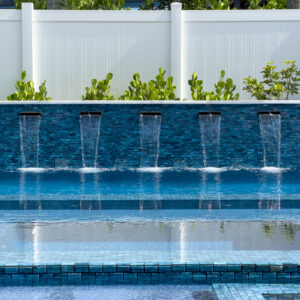
| Laminar | A clear glass-like rod of water, often lit | In the deck, on a return line | Quieter, and dramatic at night |
| Bubbler | A boil of water in the shallows | In a sun shelf or step | Low, close, constant |
| Spray ring or umbrella | A fine spread of droplets | Shallow water, often for children | Soft, and the best aerator of the four |
The published numbers are more useful than the marketing. Pentair rates its laminar at roughly 6.2 gallons a minute for a five-foot arc, rising to about 8.4 gallons a minute for a six-and-a-half-foot one. That is the whole hydraulic conversation in two figures: arc height is flow, flow comes from the pump, and a row of them is a pump decision rather than a nozzle decision.
Fountains are one of the few features where the plumbing is genuinely the whole job, and where getting it wrong is difficult to undo.
The valve is the detail most worth insisting on. Pentair's own installation instructions specify a ball valve on each deck jet so the flow to every nozzle sets independently. Anyone who has seen a row of jets where one overshoots the far coping and another dribbles knows why. Balancing them is a five-minute job at commissioning and a demolition job afterwards.
The other is filtration. The instructions ask for the feature to be fed with filtered water, which is a plumbing decision about where the line is taken from rather than a preference.
Water features are usually among the cheaper things on a pool drawing and among the most expensive to add later, which is a bad combination for anyone deciding by price alone at the design stage.
The pump line is the one that moves a quote. A single bubbler off an existing return is close to free. Four laminars along a raised wall is a flow requirement the existing pump may not meet, and at that point the fountain has quietly become a pump-and-plumbing job.
This is the Florida argument for a fountain and it is genuinely under-used. A pool that sits at bath temperature in August is a common complaint here, and the standard remedies are all evaporative: the Department of Energy notes that circulating a pool through solar collectors at night cools it in hot climates, and a fountain does the same thing with the same physics and no roof.
Running the feature overnight moves heat out of the water. Running it in the afternoon does far less, since the air it is evaporating into is already hot and wet. So the useful setup is not "on" or "off" but on a schedule, which is an argument for putting the effects on automation rather than on a hand valve.
The trade is water. Everything that leaves as vapour has to be replaced, and topping up with hard or iron-rich water brings its own problems, covered below.
Fountains fail in three characteristic ways, and none of them is the nozzle.
A nozzle throws water into the air, some of it evaporates at the orifice, and whatever was dissolved in it stays behind. On hard Florida water that builds at the outlet, the arc goes ragged and eventually the jet stops looking like a jet. That is a chemistry problem presenting as a hardware one, and the fix is calcium hardness in range rather than a new nozzle.
Water running down a raised wall or a spillway leaves whatever it is carrying on the surface it runs over. Iron from a well shows as rust-coloured streaks, and organics show as darker ones. The tell of a well-detailed feature is a clean, even wet line rather than two dark tracks.
A deck jet aimed for a still afternoon lands on the deck in a breeze, and on a screened lanai it lands on the cage. That is what the individual valves are for. It's why aiming gets trimmed with water in the pool rather than off a drawing.
A fountain has no equipment of its own. It runs off the pump already standing on the pad, and the cost of it is the difference between the pump running at filtration speed and running fast enough to throw an arc.
On a variable-speed pump that difference is real and it is worth understanding: power draw rises steeply with speed, so a feature that demands a high pump speed costs disproportionately more to run than the same pump at filtration speed. A fountain on a schedule is cheap. A fountain left on is not.
The rest of the running cost is water and chemistry. Evaporation takes water and leaves everything that was dissolved in it, so a pool with features running hard concentrates faster and wants closer attention to hardness and to salt, if it is a saltwater pool. Nothing here is expensive. All of it is the sort of thing that shows up as scale in year two if nobody mentioned it in year one.
The roster above is every builder profile tracked here that names fountain or water-feature work among its services, counted live. Two dozen have a fountain visible in the photographs reviewed for this directory, which is a much narrower group and a more informative one.
The gap between those two numbers is the honest picture of this term. Plumbing a bubbler is within any pool builder's competence, and a wall of lit laminars, aimed and balanced, is a different level of work. Look at photographs rather than service lists, and look in particular for a feature shot at night and a feature shot running, since those are the two things a portfolio can actually prove.
The features overlap, and the overlap is where the money is decided. A waterfall is the same conversation at a larger scale and with a different pump. A grotto is that again, with a structure behind it. Bubblers usually live in a sun shelf, which is the single most common place to put one, and an infinity edge is a water feature in its own right that changes the hydraulics of everything else.
The two practical dependencies are the deck and the light. Nozzles set into a pool deck want to be positioned before the surface goes down, and pool lighting is what turns a laminar from a stream of water into the reason people sit outside. Both are cheap now and expensive later.
Supply is broad. Orlando, Naples and Sarasota carry the deepest rosters, along with Orange and Collier counties.
A pool with a built-in water feature rather than a pool of a particular type. The term covers several different pieces of hardware: deck jets throwing an arc across the water, laminars producing a clear rod of water, often lit from inside, bubblers boiling up through a shallow shelf, and spray rings spreading a fine mist. They are plumbed off the pool's own circulation rather than run as separate systems, which is why the pump matters more than the nozzle.
Some of them, yes. A single bubbler or jet can often be taken off an existing return line with a valve, which is a modest job. Anything that needs new lines run under a finished deck is a different proposition, since the trenching is the cost rather than the hardware. The honest answer depends on what the pump can deliver: Pentair rates its laminar at about 6.2 gallons a minute for a five-foot arc and 8.4 for a six-and-a-half-foot one, so a row of them is a flow question before it is a plumbing one.
Each effect does, and it is worth insisting on. Pentair's installation instructions call for a ball valve on every deck jet so the flow to each nozzle sets independently. Without them a run of jets is one setting for all of them, which means one overshoots the far coping and another dribbles. Balancing them takes minutes at commissioning. Retrofitting valves under a finished deck does not.
Yes, by evaporation, and in Florida that is often the point rather than a side effect. Water thrown into the air gives up heat as some of it evaporates, and what lands back is cooler than what left. The Department of Energy makes the same observation about solar collectors, which cool a pool in hot climates when water is circulated through them at night. A fountain does it with the same physics and no roof. Run it overnight for the effect; running it in the afternoon into hot, humid air does much less.
Yes, and that is the trade for the cooling. Anything that leaves as vapour has to be topped up, and topping up brings in whatever the supply water carries. On hard water that means calcium, which is what eventually scales a nozzle. On a salt pool it means the salt reading drifts, since salt is not lost to evaporation but is lost when water splashes out of the pool. Neither is expensive to manage. Both are worth knowing before the feature goes in rather than after.
Almost always scale at the orifice. Some water evaporates right at the nozzle, and everything dissolved in it stays behind and builds up, which breaks the shape of the arc. It reads as a hardware fault and it is a chemistry one, so the fix is getting calcium hardness back into range rather than buying a new nozzle. On well water carrying iron, the other symptom is staining: rust-coloured tracks down whatever surface the water runs over.
They differ more than people expect. A deck jet is a splash, and splash carries, particularly on a screened lanai where the cage reflects it. A laminar is much quieter, since the whole point of it is an unbroken rod of water that enters the pool cleanly. Bubblers are low and constant and most people stop hearing them. Spray rings are the softest. If noise is a concern, ask to hear one running before committing to a row of them, and put every effect on its own valve, so turning it down is an option and not only turning it off.
Work from the roster on this page and narrow by city, then judge on photographs rather than service lists. Almost any pool builder can plumb a bubbler; a balanced wall of lit laminars is a different level of work. Look for features shot at night and features shot running, which are the two things a portfolio genuinely proves. Then ask whether each nozzle gets its own valve and whether the aim is trimmed with water in the pool.
Still weighing it up? These are the choices most people compare with Pool Fountain Installers in Florida.