
Pool builders by service
An infinity swimming pool works by building one wall deliberately too short: water sheets over the crest into a hidden basin and a second pump lifts it back. That makes it two bodies of water rather than one, and the basin is the expensive half. Below, what the lot has to offer, what the weir demands, and the builders across Florida who do this work.
168 listings here
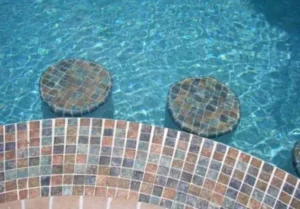
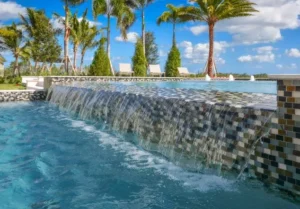
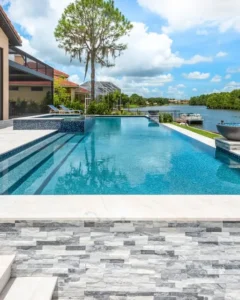
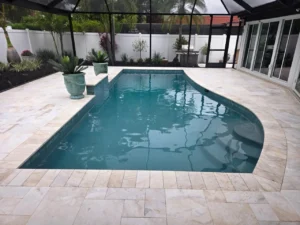
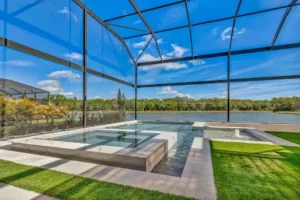
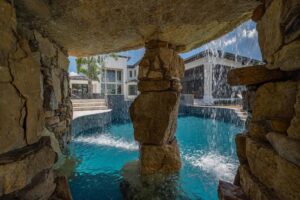
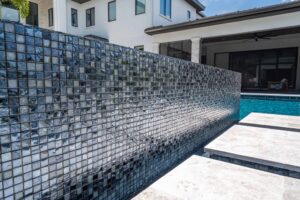
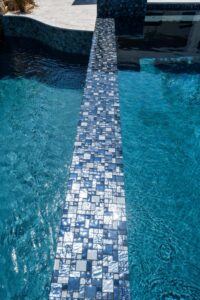
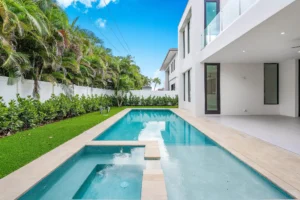
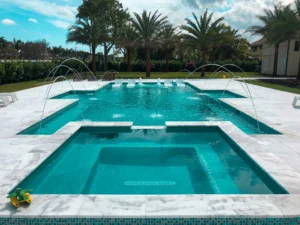
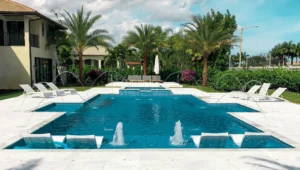
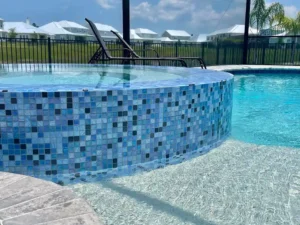
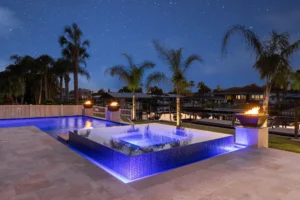
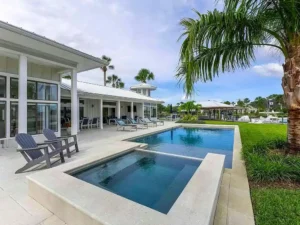
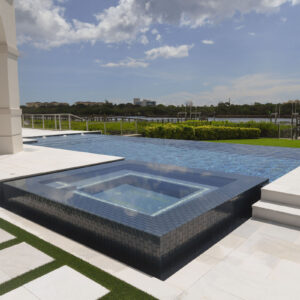
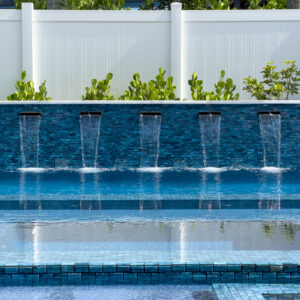
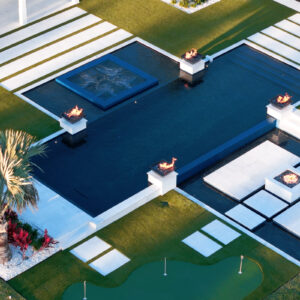
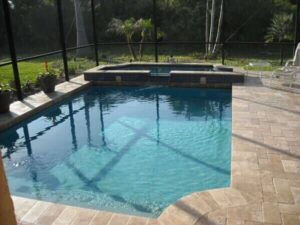
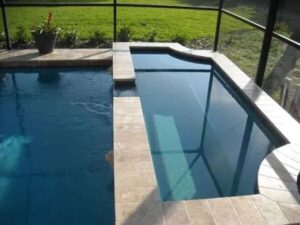
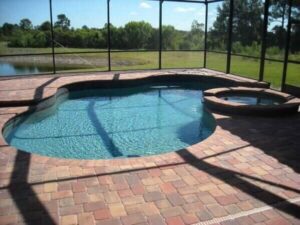
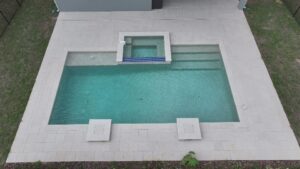
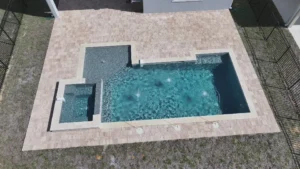
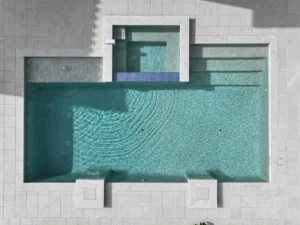
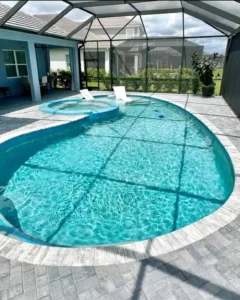
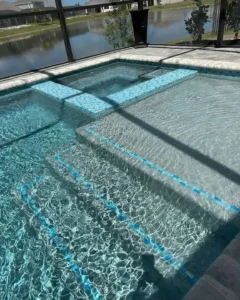
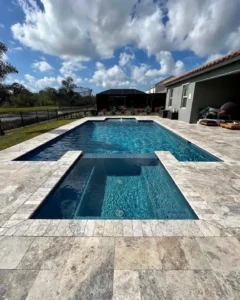
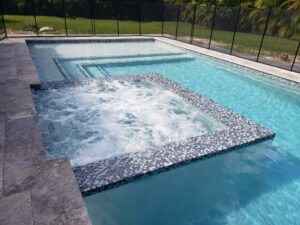
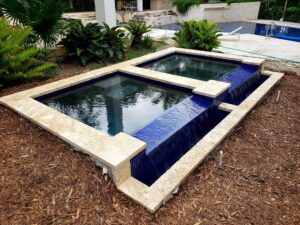
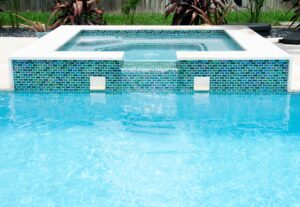
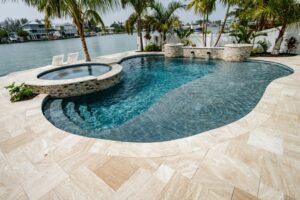

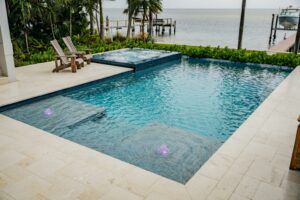
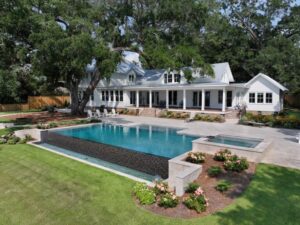
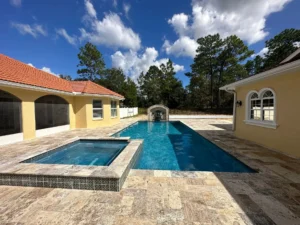
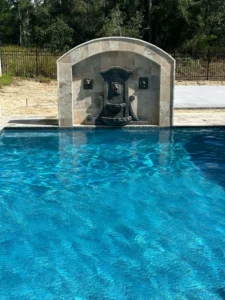
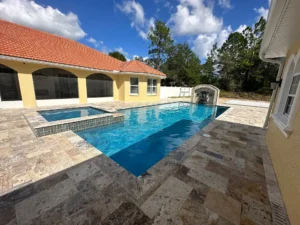
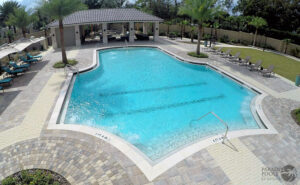
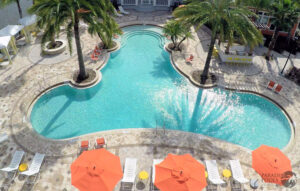
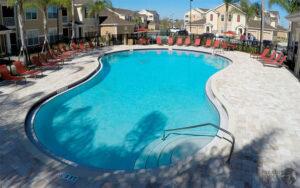
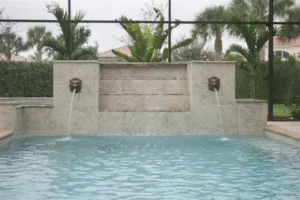
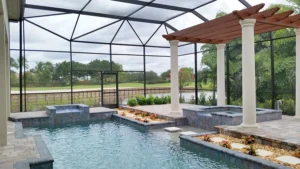
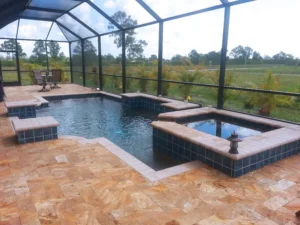
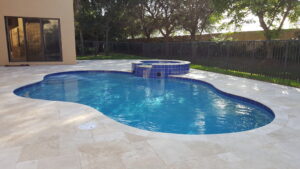
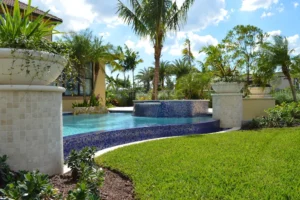
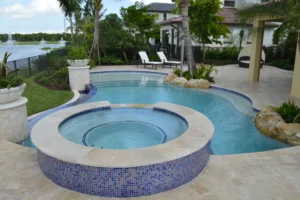
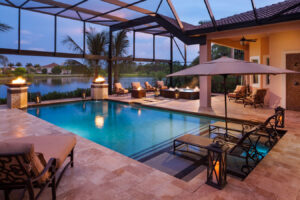
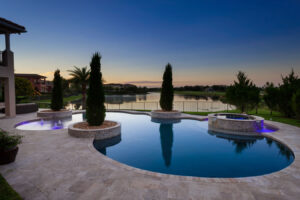
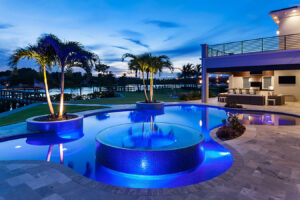
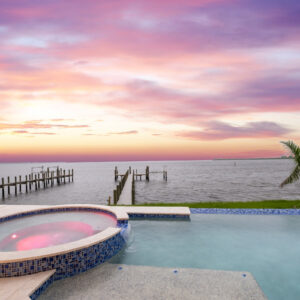
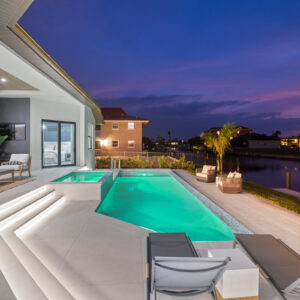
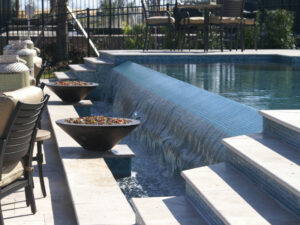
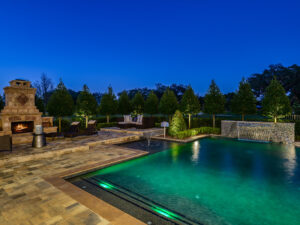
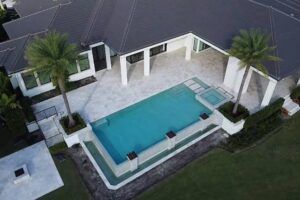
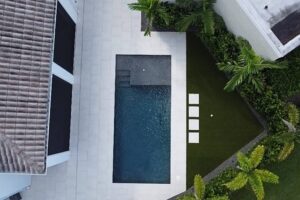
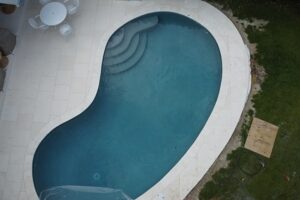
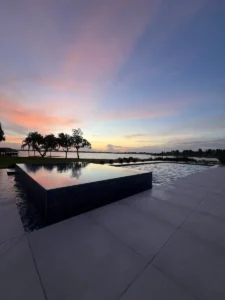
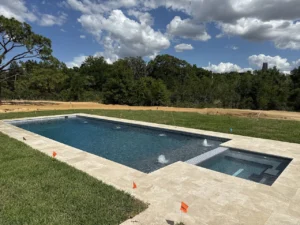
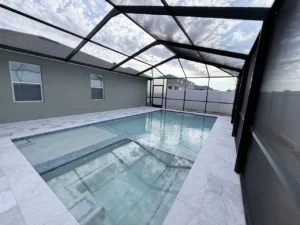
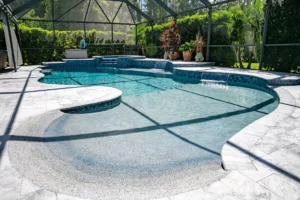
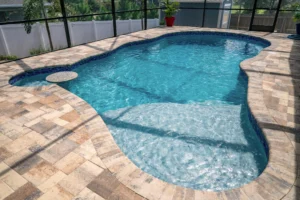
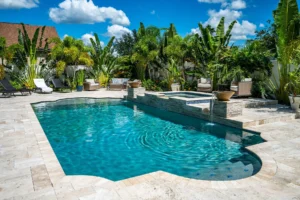
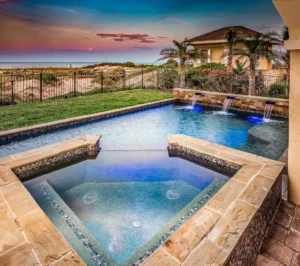
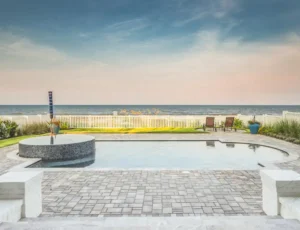
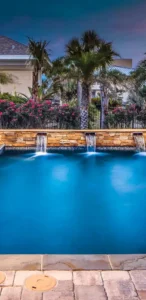
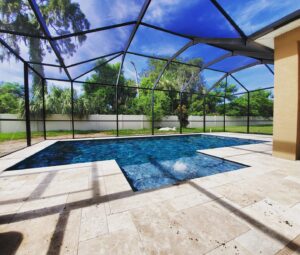
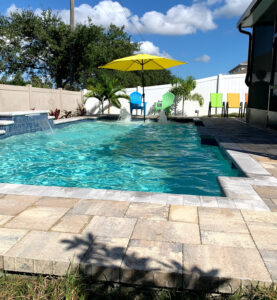
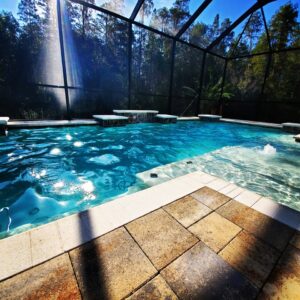
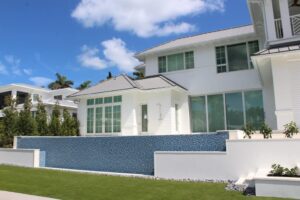
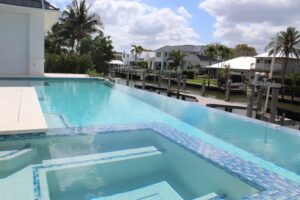
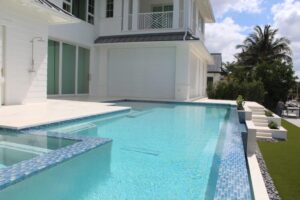
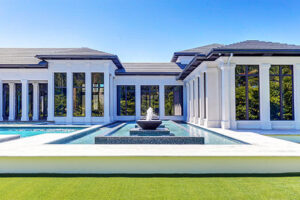
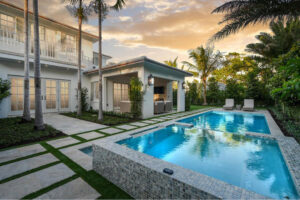
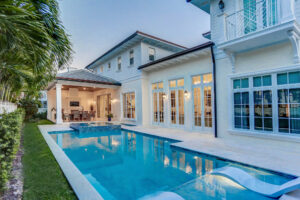
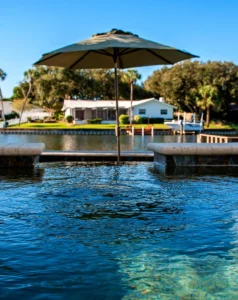
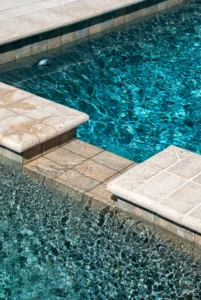

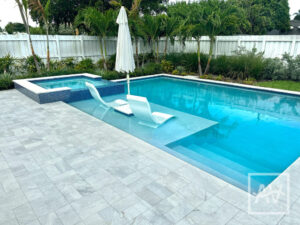
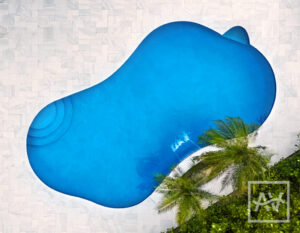
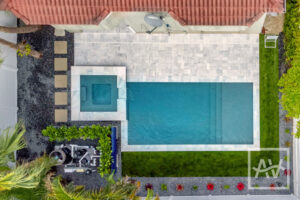
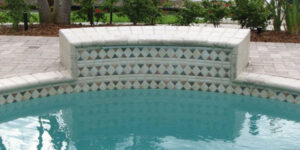
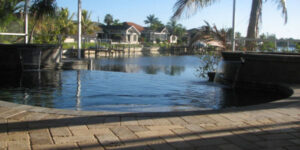
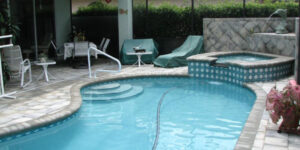
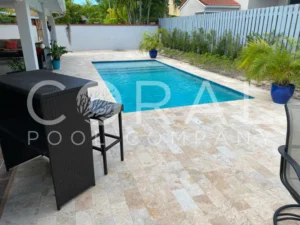
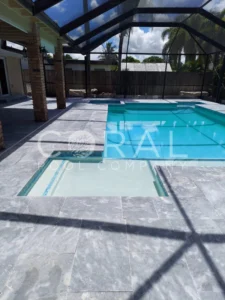
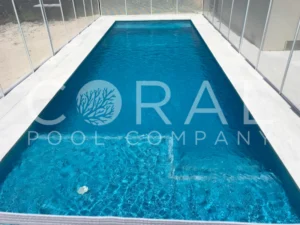
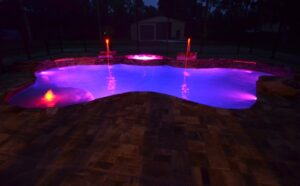
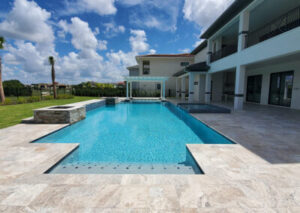
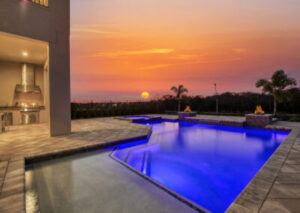
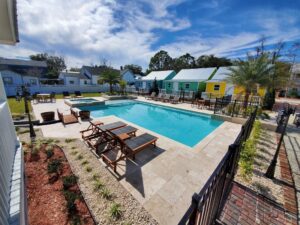

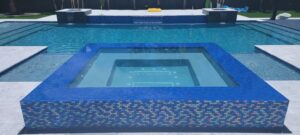
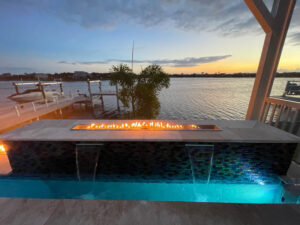
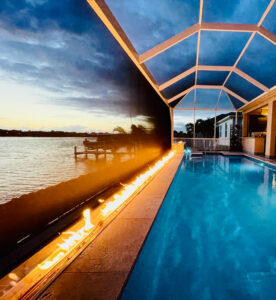
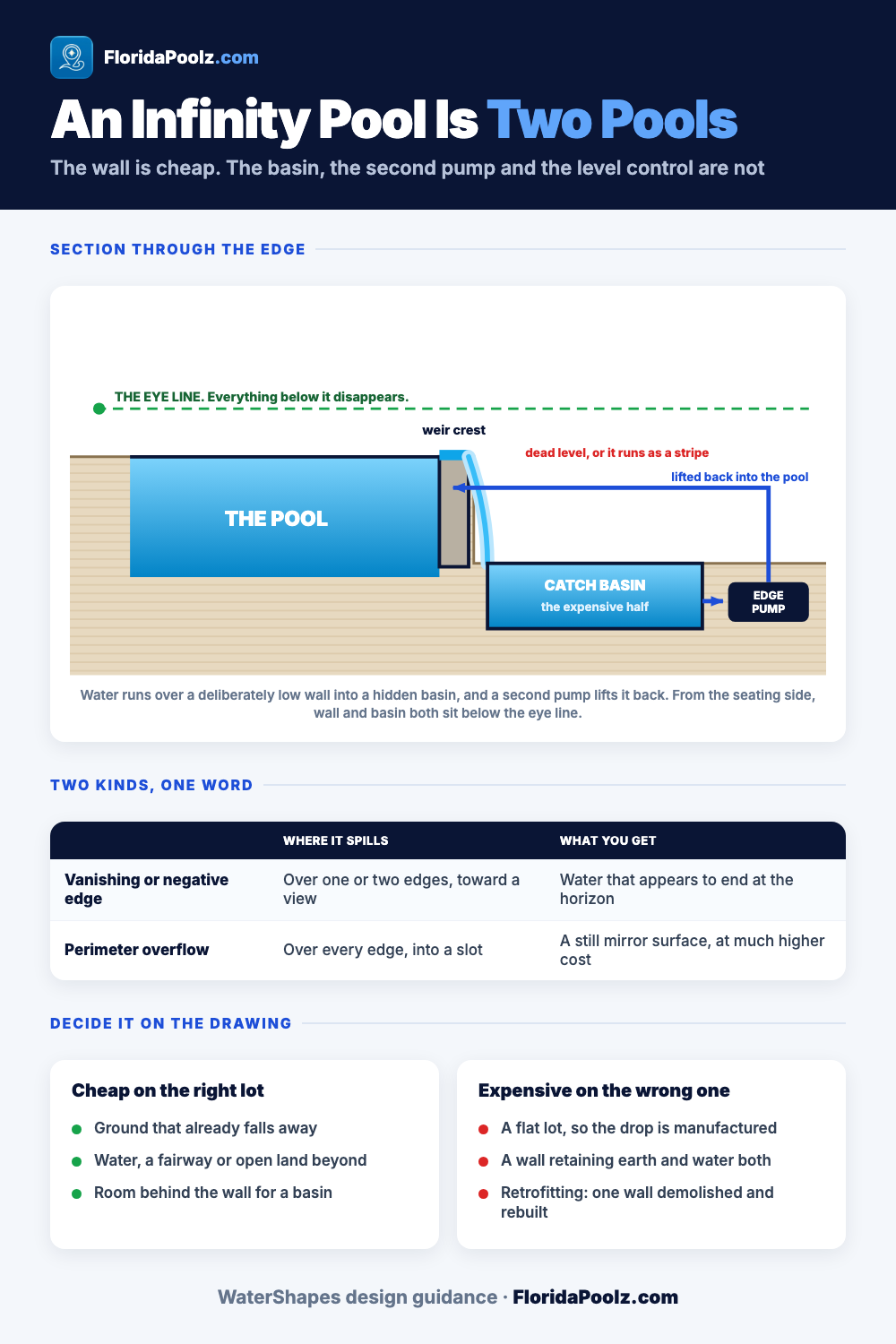
The trick is a wall built deliberately too short. Water runs over the top of it in a thin sheet, falls into a hidden basin below, and a second pump lifts it back into the pool. Stand on the right side and the water appears to end at the horizon, since the far wall and the catch basin are both below your eye line.
That means an infinity pool is really two pools with a pump between them, and almost everything difficult about the type follows from that sentence. The visible pool is ordinary. The catch basin, the second pump, the level controls and the plumbing between them are the project.
Two variations get confused, and quotes use the words interchangeably. They are not the same feature and they are nowhere near the same price.
| On the drawing | Where the water spills | What it looks like |
|---|---|---|
| Vanishing or negative edge | Over one or two edges, toward a view | Water that appears to end at the horizon |
| Perimeter overflow, or knife edge | Over every edge, into a slot around the pool | A still mirror, at considerably higher cost |
| Raised wall with a spillway | Into the pool, from a wall above it | A water feature, not an infinity edge |
An infinity edge needs something to vanish into. On a lot that falls away, or one with water or a golf course beyond it, the effect costs the wall and the basin. On a flat lot with a fence eight feet behind, the effect has to be manufactured: the pool gets raised, the ground beyond it gets dropped, and now there is retaining work, drainage, and a wall engineered to hold back earth on one side and water on the other.
Which is why the honest first question is not "can I have one" but "what is the eye line".
Retrofitting one into a finished pool means demolishing and rebuilding a wall, excavating a basin behind it and re-plumbing to the pad. That is a rebuild of one side of the pool rather than an addition, which puts it firmly in the "decide at the drawing" category.
The construction is ordinary. The tolerances are not.
Step three is the whole job. Water finds the low point of a weir with total reliability, so a crest that is out by a small amount over its length runs as a stripe rather than a sheet. That levelness is set with the tile, not with the concrete, and that is why an infinity edge is a tiling job wearing a structural one's clothes.
Step five is what keeps it from becoming a nuisance. Two water levels have to be managed rather than one, and the basin has to hold what the pool loses when twenty people get in, without running dry when the effect is switched on. That balance is automated on every good installation and improvised on the bad ones.
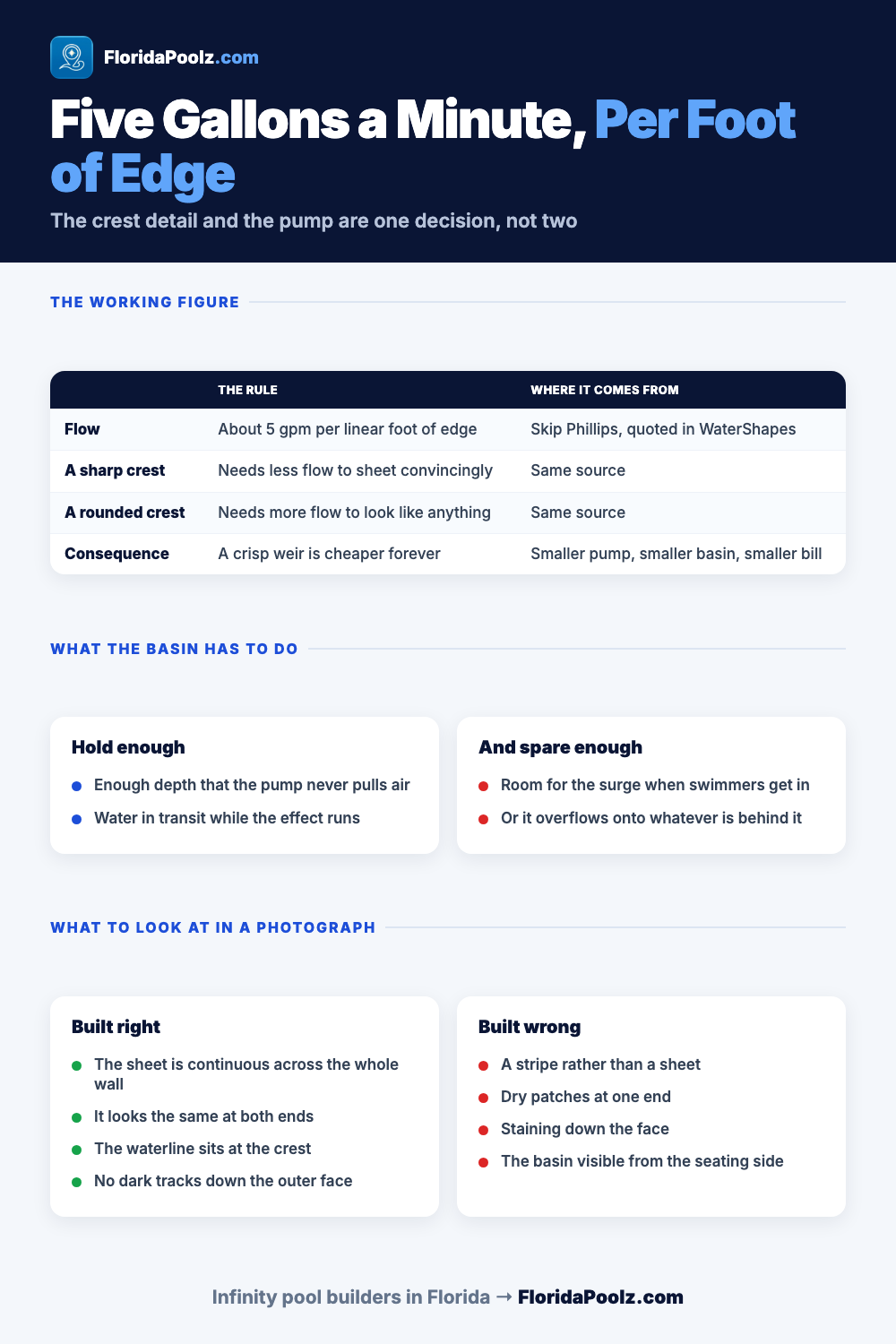
Flow over the weir is the number that decides how the edge looks and how much it costs to run. Skip Phillips, one of the designers who defined the modern practice, told WaterShapes he keeps flow on vanishing edges in the vicinity of five gallons per minute per linear foot of edge. The same piece gives the rule that explains the range around it: the sharper the edge, the lower the flow, and the larger the radius at the crest of the weir, the more flow is required.
So the edge detail and the pump are one decision. A crisp, well-formed crest produces a convincing sheet on less water. A rounded one needs more water to look like anything, which means a bigger pump, a bigger basin and a bigger bill forever.
The basin has two jobs and they pull in opposite directions. It must hold enough water that the effect can run without pulling air into the pump, and enough spare volume to take the surge when swimmers displace the pool. Undersized in the first direction and the pump vortexes. Undersized in the second and the basin overflows onto whatever is behind it, which on a sloping lot is usually the reason there is a slope.
An infinity edge either works or is obviously wrong, and the difference is visible from a photograph.
Staining on the outer face is the one to look for in older installations. Water running over a wall carries whatever is in it, and iron or organics leave tracks down the face that no amount of pressure washing takes out. A clean face after some years is evidence of both chemistry and detailing.
The other thing worth checking is what the edge does when the effect is off. Most systems are run on a schedule rather than continuously, and a well-designed pool still looks intentional with the sheet stopped. A badly designed one looks like a pool with a wall missing.
An infinity edge is among the most expensive features per square foot of anything on a residential pool drawing, and the wall is not the reason.
The two that get underestimated are the last two. A wall holding water on one side and earth on the other is an engineered structure with a drawing behind it. And a basin nobody can reach is a basin nobody cleans, which turns into a call-out every year rather than ten minutes twice a year.
Three things run forever here, and only one of them is a pump.
The edge pump is a real load, and it is separate from the filtration pump. Running the effect all day is a bill. Running it in the evenings and when people are outside is a fraction of that, which is why automation is not decoration on this feature. The flow rule works in the same direction, since a sharper crest that needs less water needs less pump.
Evaporation is larger here than on an ordinary pool. A thin sheet of water spread over a wall in Florida sun is an efficient evaporator, so an infinity pool loses water faster than the same pool without one, and everything dissolved in that water stays behind. The auto-fill handles the volume. The concentration is the owner's problem, and on a saltwater pool it shows up in the salt reading.
Maintenance is the one people forget when they sign. The basin is a body of water with its own surface, and leaves get into it. So does everything the sheet washes off the wall.
The roster above is every builder profile tracked here that names vanishing or infinity edge work among its services, counted live. Sixty have one in the photographs reviewed for this directory.
That gap is worth taking seriously on this term more than on most. An infinity edge is the feature where the difference between a builder who has done twenty and one who is doing their first is visible in the finished result, from the far side of the garden, forever. Ask to see photographs of the sheet running, ask how many they have built, and ask who does the weir tile.
An infinity edge is the feature that most often turns a pool into a luxury pool project, and it is a structural decision, so it belongs with the shell. That makes it a gunite or concrete conversation, since a moulded fiberglass shell cannot produce a vanishing edge.
Everything at the edge is finishing work. The weir tile, the coping and the pool deck at the crest are one continuous detail, and pool lighting aimed at a moving sheet is what makes the feature work after dark. If there is a spa spilling into the same pool, the two spill effects have to be balanced against each other rather than designed separately. A waterfall on the same pool is a third demand on the same pump capacity.
Supply is concentrated where the lots have views. Naples, Miami and Sarasota carry the deepest rosters, along with Collier and Miami-Dade counties.
The far wall is built deliberately lower than the water level, so water runs over its crest in a thin sheet and falls into a hidden catch basin below. A second pump lifts that water back into the pool continuously. From the seating side the wall and the basin are both below the eye line, so the water appears to end at the horizon. That is why an infinity pool is really two bodies of water with a pump between them, and why the basin, the pump and the level controls are the expensive part rather than the wall.
Not in any useful sense. It means demolishing and rebuilding one wall of the pool, excavating and forming a catch basin behind or below it, running new lines back to the equipment area, and adding a second pump with level control. That is a rebuild of one side of the pool, not an addition to it. If there is any chance of wanting the effect, it belongs on the first drawing, since the wall, the basin and the plumbing are all built at the same time as the shell.
It needs an eye line, which is not quite the same thing. Where the ground falls away, or there is water or open land beyond, the effect costs the wall and the basin and nothing more. On a flat lot the drop has to be manufactured: the pool is raised, the ground beyond it is cut, and the wall now retains earth on one side and water on the other, which brings structural engineering and drainage with it. Buildable either way. Different budget.
Roughly five gallons a minute for every linear foot of edge is the working figure Skip Phillips gave WaterShapes, and the same piece explains why designs vary around it: the sharper the crest, the less flow it takes to produce a convincing sheet, and the more rounded the crest, the more water it needs. That makes the edge detail and the pump one decision rather than two. A crisply formed weir is cheaper to run for the life of the pool.
The crest is not level. Water finds the low point of a weir with total reliability, so an edge that is out by even a small amount across its length runs as a stripe instead of a sheet. Levelness is set with the tile rather than with the concrete underneath, which is why the weir is a precision tiling job. Increasing the flow will mask a small error and make the running cost worse permanently. Correcting the crest is the actual fix.
Yes, and noticeably. A thin sheet spread across a wall in Florida sun evaporates efficiently, so the pool loses more water than the same pool without the feature. The auto-fill deals with the volume. What it does not deal with is concentration: everything dissolved in the water that evaporated stays behind, so hardness climbs faster, and on a salt pool the salt reading drifts with the top-ups. Running the effect on a schedule rather than continuously reduces all of it.
Work from the roster on this page and narrow by city; supply follows the lots with views, which in Florida means Collier, Miami-Dade and the coastal counties. Then judge on photographs rather than service lists, since this is the feature where inexperience shows in the finished result permanently. Look for the sheet running evenly across the full width of the wall, ask how many the builder has completed, and ask who lays the weir tile.
Still weighing it up? These are the choices most people compare with Infinity Pool Builders in Florida.